 Pet News


Summary
In the emotional landscape of pet ownership, few decisions are as heart-wrenching as the choice to euthanize a beloved companion. This article delves deeply into the complexities of this decision, which is done as an act of compassion aimed at alleviating a pet’s suffering. It guides dog owners through the journey—from understanding the medical recommendations and trusting their own instincts, to considering veterinary hospice care and choosing the location of euthanasia.
Furthermore, this article touches on the significance of memorials and the careful handling of a pet’s remains, offering insights on how to navigate these emotional waters with preparation and love.
I took a moment outside the consultation room, preparing myself for what lay ahead. Pushing the door open, I found Mrs. Martinez cradling her elderly Labrador, Luna, with tears in her eyes.
“Hello, Luna,” I murmured, reaching out to touch the dog’s silky ears. She gave a soft whimper, her once bright eyes now clouded with age and fatigue.
Mrs. Martinez looked up, her voice shaky. “Luna’s been with me since she was a pup. Twelve years. Through all life’s ups and downs, she was there, wagging her tail. Now, watching her suffer, it’s breaking my heart.”
I nodded, understanding the weight of her words. “It’s a profound bond you share. Luna’s been a true friend.”
She swallowed hard. “Lately, it’s been so hard. She doesn’t enjoy her walks, barely eats, and her joyful eyes… they’ve changed.”
Taking a breath, I replied, “Choosing the right moment to say goodbye is one of the most challenging decisions we face as pet owners. Sometimes, it’s also the most loving.”
“I want what’s best for her,” Mrs. Martinez whispered, her fingers entwined in Luna’s fur. “I want her to find peace.”
Luna leaned into her touch, a silent understanding passing between them.
I gently squeezed Mrs. Martinez’s arm. “Whatever you decide, remember it’s coming from love. And I’m here to support you every step of the way.”
Introduction
Euthanasia literally means good death, or the hastening of a death to prevent further suffering. Sad but grateful dog parents have often said we are fortunate in veterinary medicine that when the time comes, we can euthanize our beloved pets to prevent their suffering. This is in contrast to human medicine, where we don’t have that option in most cases.
It is a sober honor to assist in the passing of a beloved pet. Helping dog owners make the decision to euthanize their companion is important, difficult, and emotional for everyone involved, yet it is a privilege to share that time and those decisions together.
It is important to follow the recommendations of your veterinary team. Blood work, radiographs, ultrasound, and other tests are crucial to obtain diagnostic information which will help determine your dog’s condition. But keep in mind that you know your dog better than anyone. If you say they are not feeling well, you know it’s true, even if they don’t show it at the veterinary hospital.
If your dog still has some energy and you’re not quite sure it’s time yet, consider veterinary hospice care for their remaining time. With the support of a veterinarian, hospice veterinary nurses (Licensed Veterinary Technicians) can come to your home and provide:
- Comfort care.
- Subcutaneous fluids.
- Pain management.
- Management of a feeding tube if appropriate for your dog’s condition.
- Other appropriate comfort measures or medical issues such as wound care.
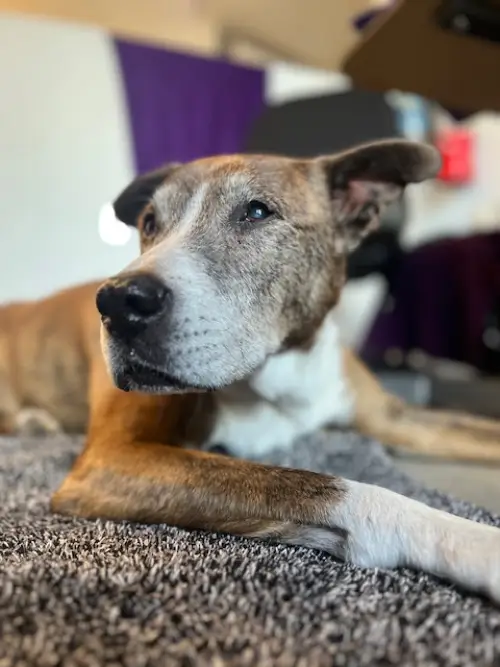
Photo by the author.
Before it is time for your pet to be euthanized, take some time to consider your options. Most veterinarians provide euthanasia for their patients at their veterinary hospitals. However, a house call can be a very peaceful option to the busyness and noise of a clinic.
Your dog can stay snuggled in their bed, and doesn’t have to get bundled into the car or carrier. This is especially great for dogs with mobility issues, or those who get very nervous at the veterinary clinic. Some options to consider include:
- Your regular veterinarian may occasionally do house calls for their patients, so it is worth asking if they will provide this service.
- A house-call veterinary practice. However, if you are not a patient of record they may not accept you for a euthanasia call. It might be worth becoming established as a client for this reason alone.
- Euthanasia veterinary practice. Specifically tailored for house-call pet euthanasia services.
- Consider having a back-up plan. In bad weather or if mobile services fail for some reason, you might be able to contact your regular veterinarian and bring your dog to the clinic as a back-up plan to a house call.
On your dog’s last day, let them do and have whatever they want. If they want steak, bring it on! If they want peanut butter, smear their Kong toy all over with it. Let them chew their yak milk bones until they can’t chew any more.
Let them lick your ice cream cone and eat from your plate. Now’s the time to party! (With discretion–of course you don’t want to bring on a stomach-ache or bloat).
Advertisement
Put some squeeze cheese inside their Kong for a fun licking experience. It will entertain them for a while and be fun to watch as you lay by their side.
These Yak Cheese dog “bones” are highly palatable and most dogs love them. If your dog doesn’t seem interested in chewing them, pop one in the microwave according to the directions, and it will puff up into a cheesy popcorn-type of treat. (Make sure it cools completely before feeding.)
Most dogs with a very poor appetite will enjoy these high-value liver treats. On their last day, let your dog really enjoy them.
People often ask if they can be present when their dog is euthanized. Of course they can. If your veterinarian doesn’t want you present during the euthanasia, find out if there are compelling reasons why. If there is not a very good reason, find another veterinarian, possibly at the same clinic. (It is possible that they had a bad experience and no longer wish to do euthanasia with pet owners present).
The process of euthanasia itself is usually in two steps for dogs. First, a sedative injection is given, which may include some pain control. This can be either subcutaneous or intramuscular, and may sting a little, but often is not noticed by the pet. After 5-10 minutes, a second injection is given, which stops brain activity and thereby stops the body’s organ function, causing euthanasia.
The second injection is typically given intravenously, usually in the leg. When the euthanasia drugs are given in the leg vein the pet will pass away very quickly; usually by the time it takes the veterinarian to listen for the heartbeat, the heart has stopped. If the dog has fragile veins, the veterinarian can utilize different approaches as needed.
In this case, since it will take a variable time for the drug to reach the dog’s brain, it can take a longer time for the brain activity to shut down and thus for the organs to stop, roughly 5-45 minutes, depending on the route of drug administration.
When you are present with your dog at their euthanasia appointment, your only role is to be there with your dog and provide them comfort. Your job is to love your dog the whole time, making room for the veterinary team to do their job as needed. They may need to borrow your pet for a few minutes to put in an intravenous catheter, but as soon as they are back, you get to love your dog some more.
The veterinarian will usually inform you when they give the injections so that you are prepared. Your pet will typically fall asleep after the first injection, or be resting deeply sedated, relaxed and comfortable. This is often a great relief if your dog has been very uncomfortable with their illness.
After 5-10 minutes, or when the veterinarian feels your dog is ready, they will choose the best route to administer the second injection, which stops the brain activity, causing organ function to stop, and causing euthanasia. Your role is to love your dog and hold their paw the whole time if you wish.
If you prefer to stand nearby or leave the room, that’s OK. If you prefer to go home, that’s fine too. Whatever you need to do for your dog, their memory, yourself, or your family, do that.
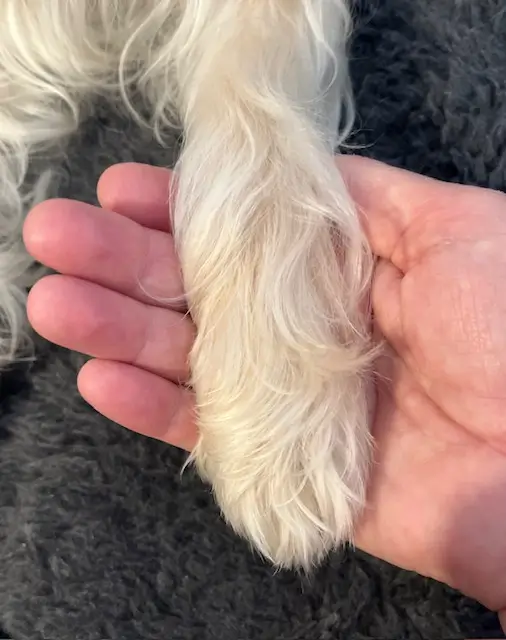
Photo by the author.
Once a dog has had the second injection, they almost always slip peacefully away, as their brain shuts down, their heart stops beating and they quietly stop breathing. Sometimes their body will make a few loud breaths or move a little, which is normal.
Your veterinarian will confirm that your pet has passed away by checking for a heartbeat with a stethoscope. They should allow you to spend time in the room with your dog after they have passed, if you wish.
You have options for your dog’s remains including:
- Home burial–you will need to check with local laws and ordinances
- Burial in a pet cemetery
- Cremation
- Aquamation (water cremation)
- Private cremations–usually you will get your dogs’ ashes back
- Non-private cremations–usually you do not receive any ashes
If you wish to briefly take your deceased dog home so that your other pets can acknowledge their passing, please do so. This is an excellent way to help the other pets understand that your dog has passed. This helps them move on, and helps prevent their searching for their friend.
Your veterinary team can help you with blanketing and carrying your deceased dog in a respectful way for the trip home, and arrange for a time to return your dog back to the clinic. (You may want to arrange ahead of time for a friend to help you.)
As you approach this difficult decision of euthanasia, please take time to consider your options.
- Do you want hospice care for your dog as they approach the end of their life?
- Where do you want the euthanasia to be, and who do you want to provide the service?
- What kind of option do you want for your dogs’ remains?
Also, another thing to consider is the possibility of a memorial for you to remember your dog by. There are so many options available. Some can be provided by your veterinarian, and some by a crematory service. The following are just a few options:
- Nose prints
- Paw prints
- Fur clipping
- Urns–wood, aluminum, ceramic, or eco-friendly
- Cremation jewelry–pendants, lockets, beads
Purchasing your urn online may be less expensive than purchasing through your crematorium, and you may find it less stressful to buy it in advance. However, you may want to contact the crematorium ahead of time to get their recommendation.
Advertisement
This kit allows you to make and display your own paw print. It’s pretty easy if your dog is not too sensitive about having their feet handled. It can be fun, especially with kids. This frame is a nice way to display the pawprint along with a photo of your dog.
You can make your own dog’s nose print and have fun in the process. Be sure to give lots of treats and wear black clothes because it might get a little messy!
This sweet gift can be personalized and is a lovely way to display your beloved dog’s collar.
Although it can be overwhelming, just like for people, it helps to think about these things beforehand. The more you can address questions like “Do I want a home euthanasia?”, the more prepared and hopefully calmer you will be. Consider what you would like for your dog’s remains. Would you like ashes back or not? Are memorials important to you?
If you think you might like a nose print for a memorial, be sure and tell your veterinarian, or the crematorium. Those memorials are precious and the opportunities are fleeting. It’s hard to make decisions when you’re under stress or emotions are running high. Try not to wait until the last minute, when chances are you might forget something important, and possibly have regrets.
Most importantly, know that your dog knows you love them. Just being there for them, loving them, and even if you aren’t able to stay in the room with them, sending them loving thoughts, are what they need. You’ll do the right thing when it’s time. You’ll make the tough decision, the right one for you and your pet.

Please see our other PetHealthHarbour.com articles on Is My Senior Dog In Pain, and pet hospice and cremation.

By Karen E. Mueller DVM, AVCA Certified
Dr. Mueller has over 30 years of experience in general small animal veterinary practice, feline medicine, and shelter medicine. Dedicated to preventing pain in pets and improving their quality of life, she currently has an animal chiropractic practice in Bellingham, WA. Dr. Mueller is also passionate about reducing pet overpopulation and works with high-volume, low-cost spay and neuter nonprofit programs throughout the Pacific Northwest.