 Pet News


Summary
Oral health is a crucial aspect of your cat’s overall well-being. Brushing your cat’s teeth regularly can help prevent dental diseases, reduce bad breath, and ensure your feline friend remains healthy and happy. This guide will walk you through the process of brushing your cat’s teeth, covering necessary supplies, preparation, brushing techniques, and aftercare.
Why It's Important to Brush Your Cat's Teeth
Maintaining your cat’s oral hygiene is vital for several reasons:
- Prevent Periodontal Disease:
- Plaque and Tartar: Frequently brushing your cat’s teeth helps remove plaque before it hardens into tartar, which begins to happen within hours of plaque formation. Tartar buildup can lead to gingivitis, periodontal disease, and tooth loss.
- Inflammation and Infection: Periodontal disease causes painful inflammation and infection of the gums and supporting structures of the teeth, that can even spread to neighboring areas, such as abscesses in the eye socket. This can result in chronic pain, difficulty eating, and severe oral infections.
- Severe periodontal disease often leads to bone loss, which in turn can lead to the loss of teeth, the need for extractions, and can even cause bone or mandibular symphyseal fractures.
- Keep Their Breath Fresh:
- Halitosis (Bad Breath): One of the earliest and most noticeable signs of poor oral health in cats is bad breath. Regular brushing–ideally daily but at least 2-3 times a week–helps eliminate the bacteria that cause bad breath, helping to keep your cat’s mouth smelling fairly neutral, rather than developing a bad odor.
- Prevent Systemic Health Issues:
- Bacterial Spread: Oral bacteria can enter the bloodstream and spread to vital organs, potentially causing serious health issues such as heart, liver, and kidney diseases.
- Overall Health: Good oral hygiene contributes to your cat’s overall health and well-being, reducing the risk of systemic infections and other health complications.
- Ensure Comfortable Eating:
- Pain-Free Eating: Dental issues can make eating painful for your cat. Regular tooth brushing prevents dental problems, ensuring your cat can eat comfortably and maintain a healthy appetite.
- Nutritional Health: A cat with healthy teeth is more likely to chew their food properly, aiding digestion and nutrient absorption.
- Prolong Their Life:
- Longevity: Just as in humans, maintaining good dental hygiene can extend your cat’s life by preventing oral and systemic diseases. Healthy teeth and gums contribute to a longer, happier life for your feline friend.
- Cost-Effective Preventive Care:
- Routine Prophylactic Dental Cleanings: The better your home tooth brushing routine is, the better and less complicated your cat’s regular prophylactic dental cleanings will be.
- Avoiding Extractions: Preventive dental care through regular brushing can help you save your pet’s teeth. Many pets are prone to early periodontal disease and subsequent early tooth loss, and the best deterrent to this is lifetime regular tooth brushing.
- Avoiding Dental Surgery: Some dental related surgical complications such as oronasal fistulas can be avoided if extractions can be prevented.

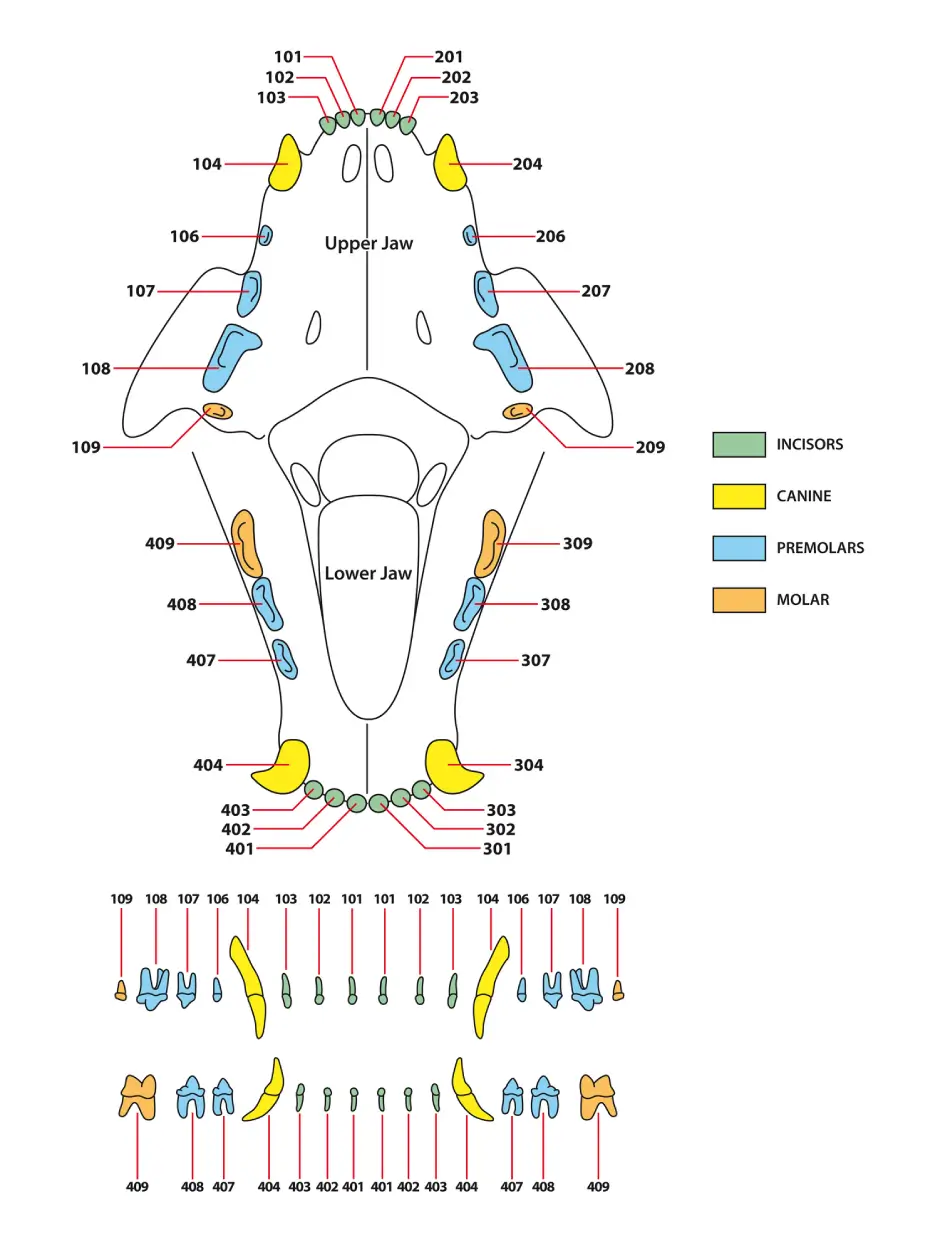
An abscess is a collection of pus that spreads along the path of least resistance from the apex of the tooth to various locations. It can move through the apex of the tooth and the facial bones, and create cellulitis leading to a draining tract through the skin of the face. A
lternatively, it can move through the bone around the tooth, and to drain through the alveolar mucosa above the mucogingival line (parulis) inside the mouth. The former is not very common in cats, and the latter is more likely to be found by your veterinarian during an oral examination.
In the vast majority of cases (90%), a broken tooth is the cause of the abscess. Usually a fracture with an open pulp canal is the culprit. Sometimes a tooth with a pulp canal that is barely sealed can be abscessed.
Although the exact cause of the abscess may not be known, the treatment remains the same—drainage of the abscessed site. Unfortunately, drainage of the site of an abscessed tooth almost always means extraction of the tooth.
Apical abscesses can involve any teeth, although the majority involve the maxillary fourth premolars. These are important teeth in the upper jaws that are used for powerful functions such as tearing, crushing, and chewing food and bones.
For this reason they take the brunt of wear and tear, and unfortunately are prone to injury, particularly slab fractures which can allow bacteria to enter the pulp canal, inviting an abscess to form.
Advertisement
Possible Contraindications to Toothbrushing in Cats
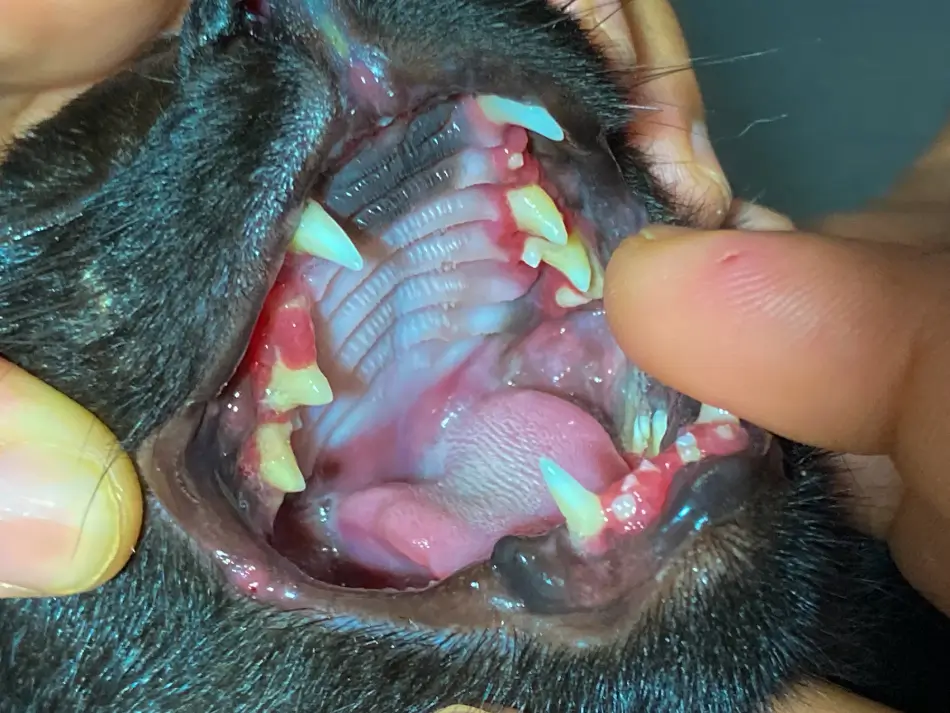
- If your cat has severe periodontal disease, they may be too painful to start brushing immediately.
- If their gums look red or irritated, or they have halitosis, have them evaluated by your veterinarian before starting toothbrushing.
- Your veterinarian will probably recommend an anesthetic evaluation including x-rays to check to be sure each tooth is healthy.
- Once periodontal disease is treated and the gums are healthier, toothbrushing training can begin.
- If your cat is suffering from feline odontoclastic resorptive lesions (FORLs), or cavities, you will not be able to brush their teeth comfortably because these lesions are painful.
- Often FORLs develop below the gumline, so are only detected by x-rays, which is one of the reasons why regular veterinary examinations under anesthesia are so important.
- If you see redness on the tooth itself, or your cat acts painful when you touch its tooth, it may have a FORL.
- See your veterinarian for a consultation; your cat will need an anesthetic evaluation including x-rays.
- FORLs are usually treated with extraction because they are progressive. Their cause is currently unknown.
- Once FORLs are extracted and the gums have healed, toothbrushing training can begin.

Supplies You'll Need For Toothbrushing
Before you start brushing your cat’s teeth, gather the following supplies:
- Cat-specific toothbrush: Choose a brush with soft bristles. Double-sided brushes with different sizes can be useful for reaching various areas in your cat’s mouth.
- Cat-friendly toothpaste: Use toothpaste formulated specifically for cats. These are usually flavored to appeal to cats, such as poultry or fish flavor. Do not use human toothpaste as it frequently contains ingredients such as xylitol which makes it toxic to cats.
- Gauze or finger brushes: These can be helpful in the initial stages of training your cat to accept dental care.
- High-value treats: Tiny treats your cat loves will be essential for rewarding and encouraging good behavior throughout the process.
- Dental wipes: These can be used to supplement brushing, but they’re not a substitute. Dental wipes can have good enzymatic activity and breath freshening effect, but they cannot scrub well between the teeth.
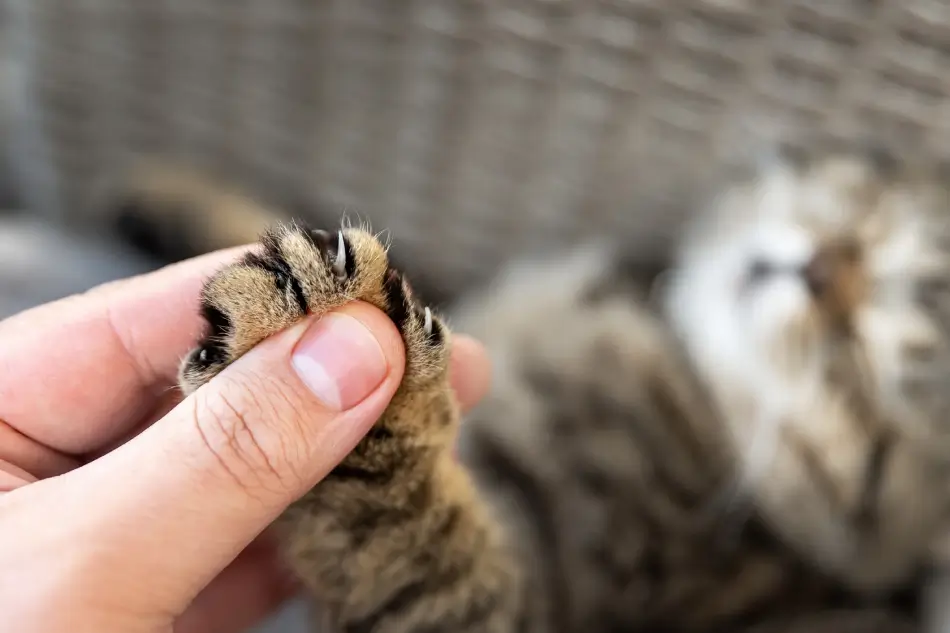
- Nail trimmers: It’s probably a good idea to trim your cat’s nails before starting. See our Pet Health Harbour article How to Trim Your Cat’s Nails.
Advertisement
Preparation
Choosing the Right Environment
- Find a quiet spot: Select a calm, quiet area where your cat feels secure. A small bathroom or a corner where your cat cannot easily escape works well.
- Have good lighting: Make sure you have enough light to see well. A head lamp might be helpful.
- Have supplies handy: Position your supplies readily available to your dominant hand, as your other hand will be holding your cat.
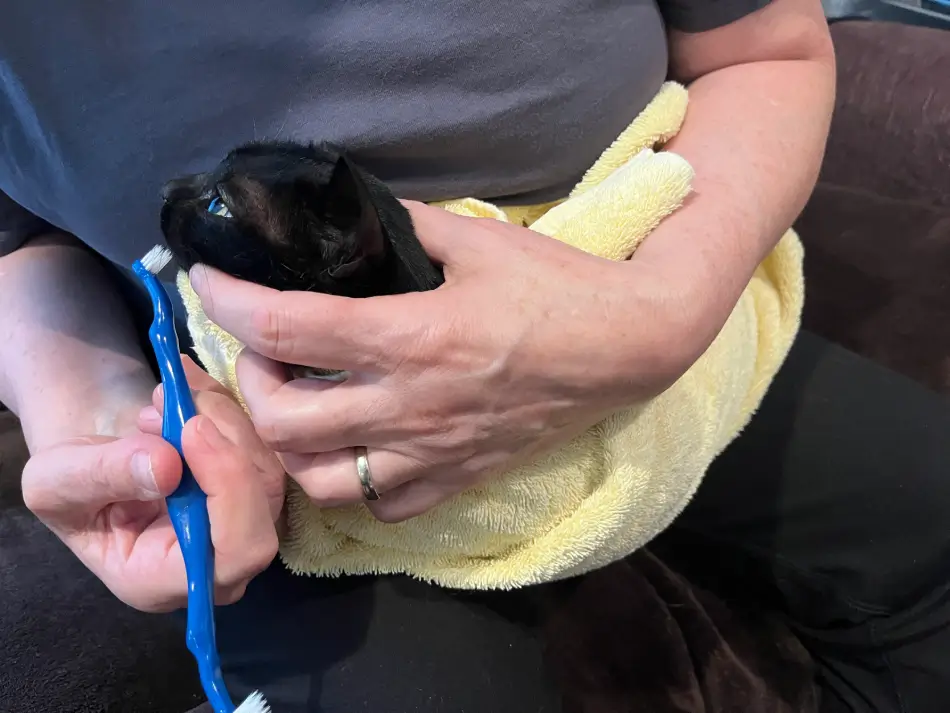
- Sit together comfortably: Position yourself with your cat in your lap.
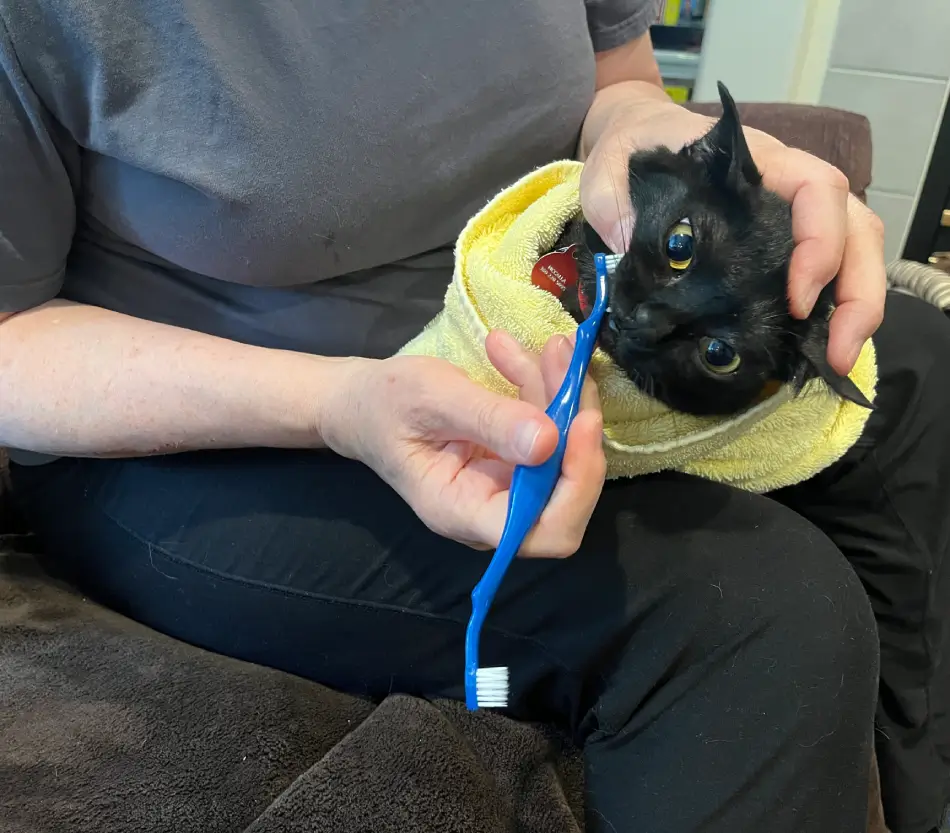
- You may need to restrain your cat: To prevent your cat from running away or scratching you, you may need to wrap them snugly in a comforting wrap. Using the Calm & Cozy Cat Wrap is an excellent way to swaddle your pet and reduce their anxiety, while allowing you to handle them calmly and safely and access their head and face. Wrapping them in a large towel is also handy and can help them feel secure. See our PHH article on How To Trim Your Cat’s Nails for photos and a description of how to wrap your cat in a towel.


Start Slowly and Calmly
- Starting Slowly: Begin by simply touching your cat’s mouth and one tooth with your bare finger, then praise and pet your cat, and give a high-value treat if they like them. Do this for several days, gradually increasing the number of teeth you touch.
- Treats and Praise: Always start and finish each session with a high-value treat. Praise your cat generously to create positive associations with the process.
- Routine Building: Establish a consistent routine by brushing your cat’s teeth at the same time and same place each day. Use a treat jar that rattles to signal the start of tooth brushing time.
Step-by-Step Brushing Process
Initial Training
- Using Gauze or Finger Brushes:
- Gauze: Wrap a piece of gauze around your index finger (we suggest 3” x 3” woven gauze squares). Touch your cat’s tooth with the gauze-covered finger, then reward them with praise and a treat. Gradually increase the number of teeth you touch each day. Gauze is disposable or compostable in certain city programs.
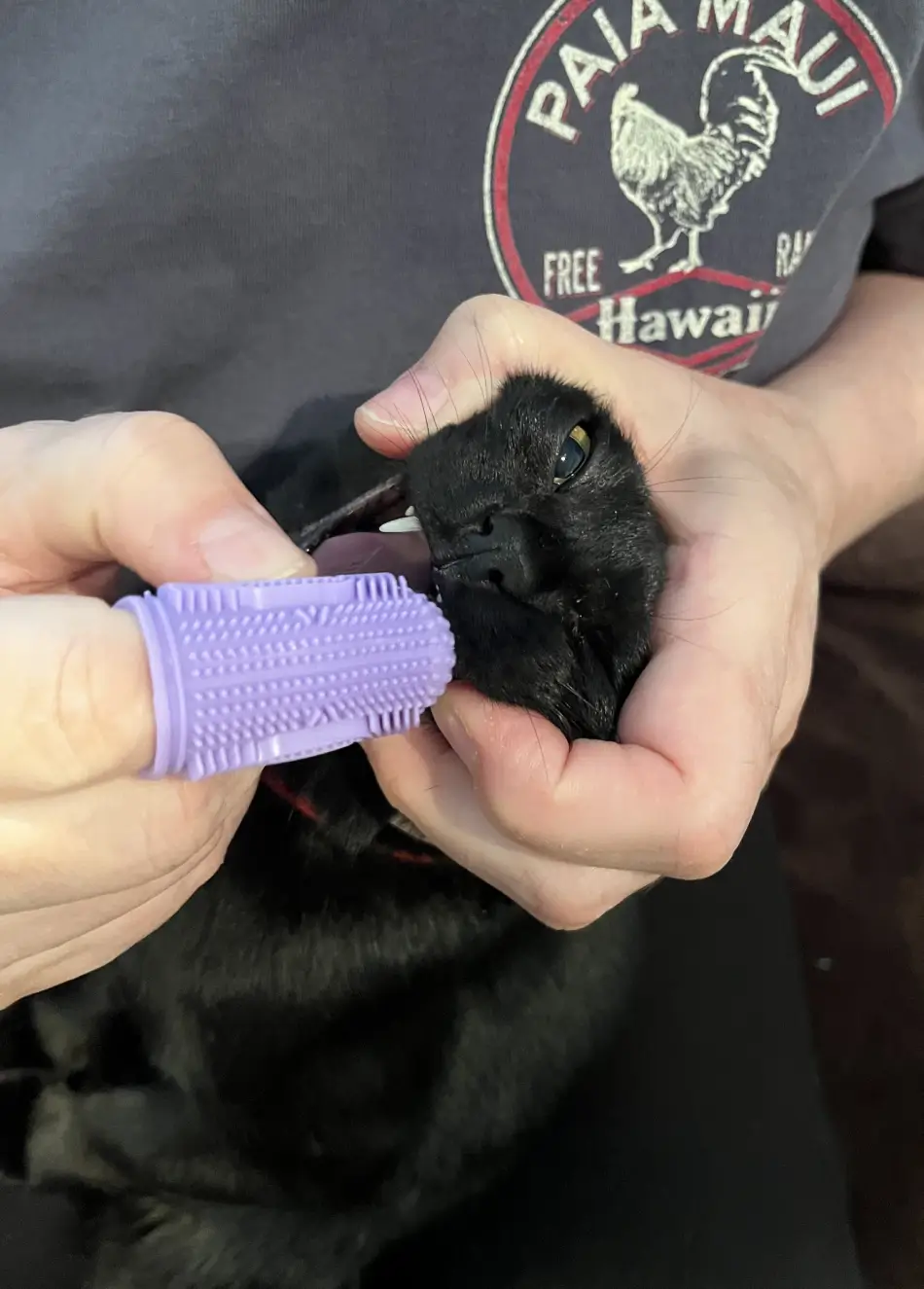
- Finger Socks: These are tiny dental cleaning socks that fit over your finger. They are great if you find wrapping gauze around your finger too cumbersome or difficult. Use them in the same way as gauze. They are similarly effective at scrubbing teeth. Finger socks are washable and reusable until they wear out.
- Finger Brushes: These are useful for initial training but generally don’t scrub well, as the bristles bend too much for good scrubbing and don’t reach well into tooth crevices or along the gumline. If neither the gauze nor the finger socks work for you, or your cat is doing great with either or both, and you want to try another form of brushing, try the finger brush.
- Introducing Toothpaste:
- Initially, do not use toothpaste, as it can cause your cat to focus on licking rather than allowing you to touch their teeth.
- If your cat resists having their teeth touched, apply a small amount of cat-friendly toothpaste to the gauze or finger brush. Let your cat lick it off to get accustomed to the taste.


Transitioning to a Toothbrush
- Gradual Introduction:
- Once your cat is comfortable with having their teeth touched with gauze or a finger brush, introduce the toothbrush. Touch one tooth with the brush, then reward with praise and a treat.
- Gradually increase the number of teeth you touch with the toothbrush each day. This process may take 1-2 weeks.
- Brushing Technique:
- Hold the toothbrush at a 45-degree angle to the teeth.
- Use gentle, circular motions to brush the teeth and gum line.
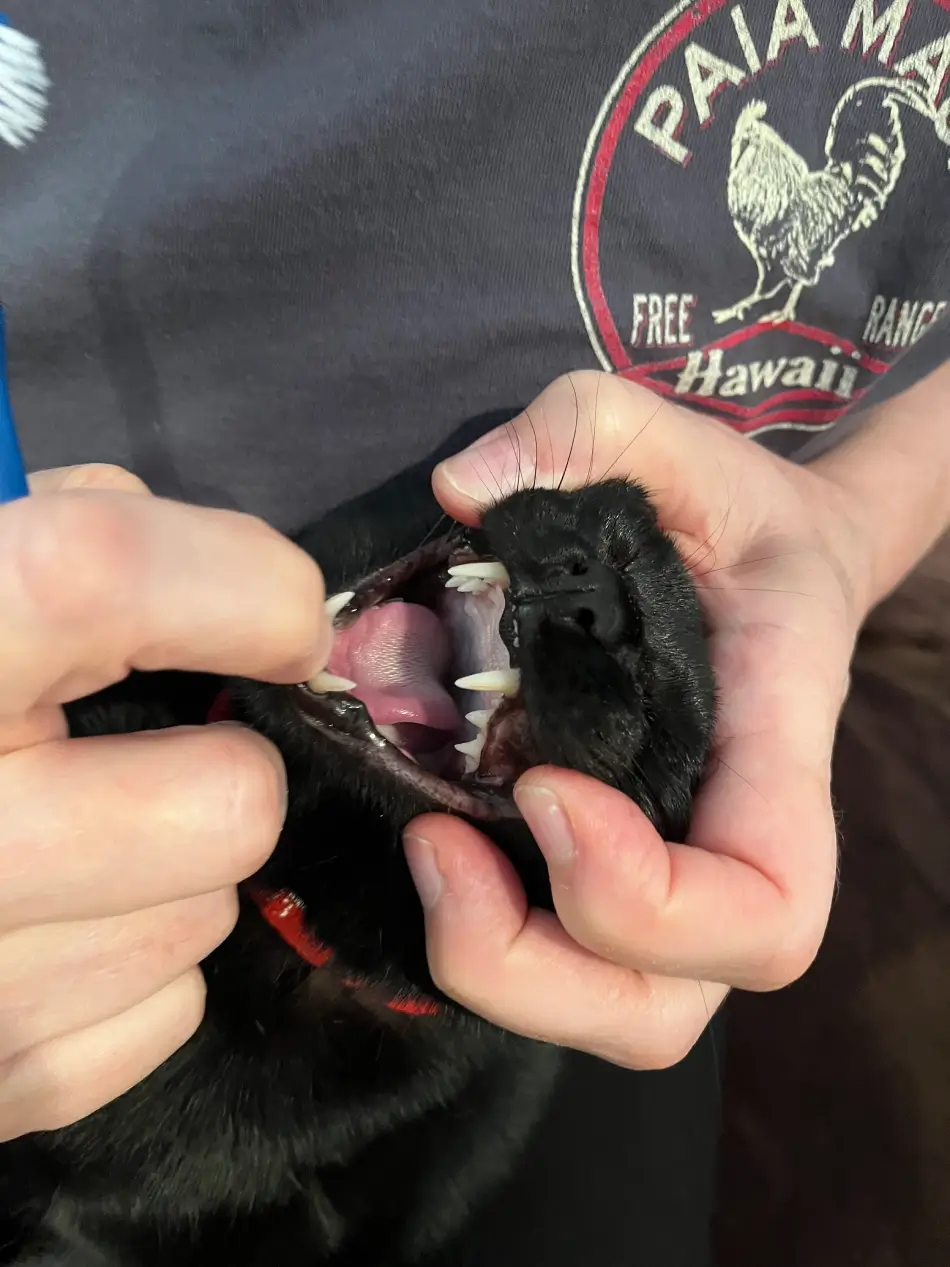
- Focus on the outer (buccal) surfaces of the teeth. It is easier to reach these areas when your cat’s mouth is closed.
- If possible, brush the inside (lingual) surfaces of the teeth, but only if you can do so safely without risking a bite.


Daily Brushing
- Establish a Routine:
- Aim to brush your cat’s teeth daily. Consistency is key to maintaining good oral health. Daily is ideal, but brush at least 2-3 times a week to try to keep tartar from forming.
- Use a treat jar that rattles to signal the start of tooth brushing time.
- Always start and finish each session with a high-value treat.
- Sing a song or talk to your cat to keep the process enjoyable and to ensure you spend enough time with your routine.
- Five minutes should be enough time to thoroughly brush your cat’s teeth, then do a happy dance or song with praise and treats when you finish!
- Don’t forget to rinse their toothbrush well and hang or stand it up to dry daily, and wash finger socks with soap and water following each use.
- Using Dental Wipes:
- If brushing is not possible, use veterinary-approved dental wipes. These can be effective at preventing plaque and tartar on reachable surfaces, but they do not clean well between the teeth.
- Dental wipes are good for lazy days when you don’t feel like brushing, or when you are traveling.
- Some wipes come in travel packs which adds convenience.
- Wipes can be cut into smaller pieces for easier handling and cost efficiency; cut them no smaller than 3” x 3” to wrap around your index finger.
- Really scrub the outer surfaces of the teeth with the wipe, reaching as far back as possible, and rub as much of the lingual surfaces as your cat will safely allow.
Advertisement
Aftercare
- Post-Brushing Treats and Praise:
- Always end each brushing session with a treat and plenty of praise. This reinforces positive behavior and makes future sessions easier.
- Monitoring Oral Health:
- Regularly check your cat’s mouth for signs of dental issues, such as redness, swelling, or bad breath. If you notice any problems, consult your veterinarian.
- Dental Chews:
- Veterinary-recommended dental chews can help prevent plaque and tartar when used regularly. These can be a good addition to your home dental care program, but are NOT a substitute for teeth brushing.
- Professional Dental Care:
- Schedule regular dental check-ups with your veterinarian. Professional cleanings and dental X-rays under general anesthesia are typically necessary to maintain your cat’s oral health, usually once every year or two for younger cats, and annually for middle-aged cats; sometimes more often for senior cats. This depends greatly upon your pet’s breed and individual dental health.
- The better and more thoroughly you brush your cat’s teeth, the better the results will be at their veterinary check-ups!
Troubleshooting Common Issues
- Resistance to Brushing:
- If your cat resists brushing, take a step back and spend more time getting them comfortable with having their mouth touched. Use treats and praise liberally.
- Clicker-training can be a valuable tool for all kinds of cats of all ages. Consistently spending a few minutes a day doing clicker training can be a lot of fun, and really helps build the bond between you and your cat. It’s also a lot of fun to show off what your cat can learn to do! Follow a step-by-step guide if you’re new to clicker-training, and watch some of the many excellent YouTube videos available to build your confidence and help you get started.
- Difficulty Using a Toothbrush:
- If you and your cat struggle with using a toothbrush, continue using gauze, finger socks, or dental wipes. Try your best to actually scrub with these products. Use dental toothpaste if not using an enzymatic dental wipe. These methods are much better than not brushing the teeth at all.
- Behavioral Challenges:
- Some cats may be more stubborn or cautious. Be patient and persistent. Progress might be slow, but consistency will yield results.
- If your cat is too anxious, go back to the beginning. Make sure you are staying calm yourself. Take it slow and go one step at a time.
- Try brushing one tooth per day and gradually increase the number of teeth as your cat becomes more comfortable. Use plenty of treats and positive reinforcement.
- Ask a friend or family member to help hold and comfort your cat.
- Try working with your cat on a table instead of on the floor–some cats just prefer to be higher up.
- If Your Cat Is Aggressive:
- If your cat becomes aggressive, stop, and do not run the risk of getting bitten.
- Consult with your veterinarian for tips to help.
- They might suggest a mild sedative for home use such as gabapentin to use for a while, as your cat is learning, and a pheromone spray and diffuser such as Feliway® for the room where you’ll brush your cat’s teeth, or where your cat spends much of their time. (Both are available in our online store.) Do not give them catnip, as it can make some cats aggressive.
Maintaining a Long-Term Routine
- Consistency is Key:
- Make tooth brushing a daily habit. The more consistent you are, the more your cat will get used to the routine, and the better your results.
- Reordering Supplies:
- Ensure you always have dental care supplies on hand. Reorder toothpaste, gauze, dental wipes, or other supplies before you run out.
Advertisement
Conclusion
Brushing your cat’s teeth is an essential part of their overall health care routine. While it may take time and patience to get your cat accustomed to the process, the benefits far outweigh the challenges. By following the steps outlined in this guide, you can help ensure your cat maintains healthy teeth and gums, preventing dental diseases and promoting a happier, healthier life. Remember to start slowly, use positive reinforcement, and be consistent with your efforts. Your cat’s dental health is worth the investment of your time and care.


By Karen E. Mueller DVM, AVCA Certified
Dr. Mueller has over 30 years of experience in general small animal veterinary practice, feline medicine, and shelter medicine. Dedicated to preventing pain in pets and improving their quality of life, she currently has an animal chiropractic practice in Bellingham, WA. Dr. Mueller is also passionate about reducing pet overpopulation and works with high-volume, low-cost spay and neuter nonprofit programs throughout the Pacific Northwest.