
 Pet News

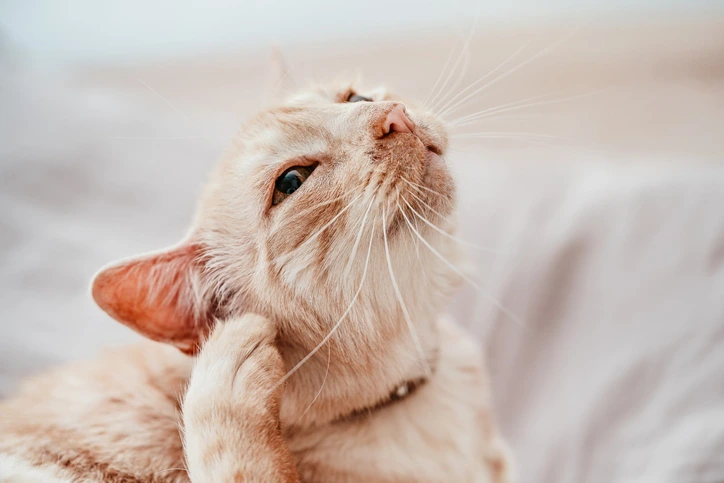
In the early morning light, a kitten named Whiskers entered my clinic, her ears twitching and scratching incessantly. The culprit: Otodectes cynotis, the ear mite, an unwelcome invader creating havoc within the serene canal of her tiny ear. Armed with my otoscope and mineral oil slide, I examined the blackish debris they left behind, a telltale sign of their presence. Gently, I cleansed Whiskers’ ears, removing the persistent parasite bit by bit. The first salvo in our war was fired: a dose of selamectin to the skin. The battle against these invaders wasn’t over yet, but at the end of this first skirmish, Whiskers sat purring softly on my table, a beacon of resilience in the face of discomfort.
Ear Mites are caused by an infestation of the ear canal by the mite Otodectes cynotis. This primarily occurs in kittens and cats, but can also occur in puppies and adult dogs.
Advertisement
Causes and Risk Factors
Most kittens (probably 99%) are unplanned. Most are from young moms, often “teens” barely 6-7 months old, or minimally-cared for cats, who often haven’t seen a veterinarian yet for vaccines, worming, and parasite control.
These young or minimally-cared for moms share their mite burdens with their kittens. Another possibility is that the environment where they raised their babies was already infested with mites.
Please do see this as a call to spay and neuter your cats by 5 months of age, as they can often get pregnant by that time!
Symptoms
Pets with ear mites will usually show some itchiness by pawing at their ears, shaking their head, or scratching at the base of their ears. There will usually be some dark or blackish buildup in the ears, which can appear like coffee grounds. In cats, sores can form on the head and ears from persistent scratching due to itchiness. In dogs, there may be scabs and dander along the neck and rump due to scratching.
Diagnosis
If you suspect your pet has ear mites, see your veterinarian. They will take a few steps to diagnose and treat your pet. The great news is that ear mites are usually easily diagnosed and successfully treated.
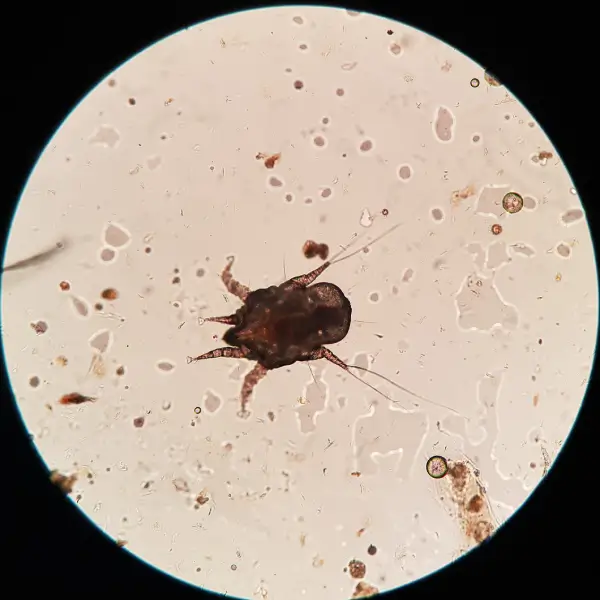
Ear mites are readily diagnosed by swabbing the ears, and examining the swabbed material in mineral oil under a microscope. The mites can be seen moving around in the oil, and occasionally their eggs are seen as well.
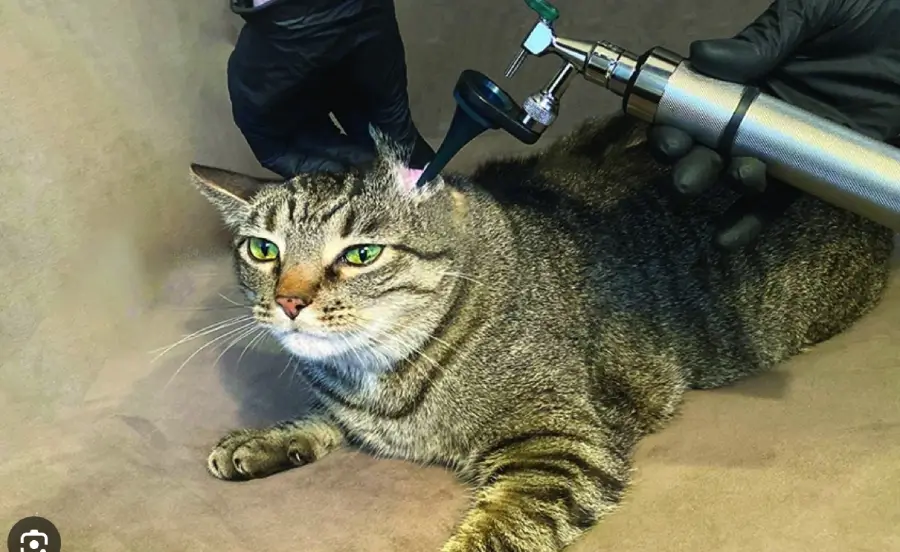
Because of their relatively large size (for a microscopic animal), mites are sometimes seen during an otoscopic exam of your pet’s ears; their whitish color helps them be distinguished against the dark debris they create in the ear canal.
Occasionally, ear mites are suspected but cannot be confirmed by microscopic examination. Perhaps the owner cannot afford the extra cost of the ear slide examination, or the ear slide does not show mites, yet the ears have blackish debris present. It may be appropriate to treat for ear mites, and if the pet responds favorably, the ear mite diagnosis is made.
Treatment
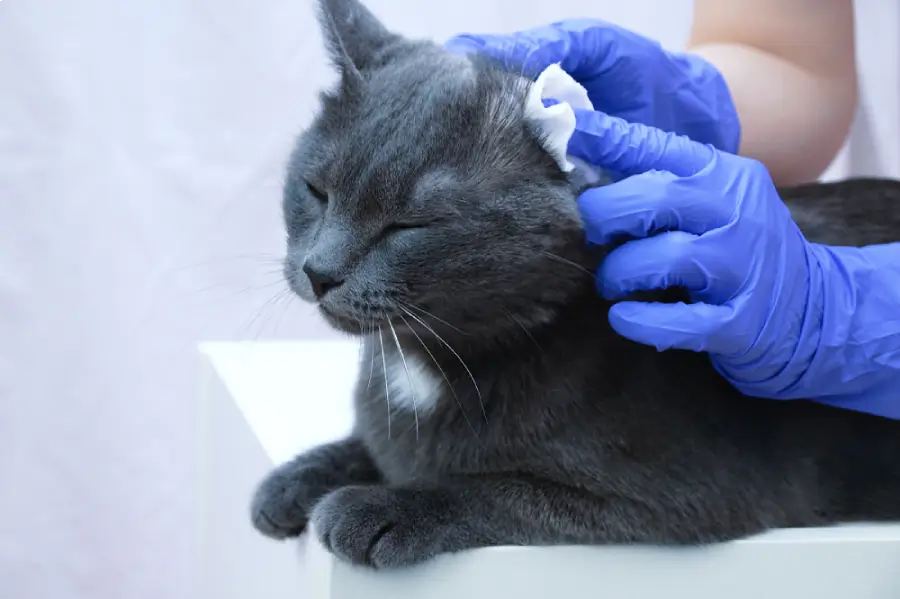
The treatment for ear mites begins with a gentle, but thorough, ear cleaning. Your veterinarian will usually take your pet to the treatment room for this procedure, because it can be messy. Your pet may be wrapped in a towel to keep them as dry as possible.
Then they will use a bulb or regular syringe, and/or innumerable cotton swabs, and gentle cleanser, to flush and clean the ears. They may need some time to soak, to soften the crusty ear mite debris, and more time to gently loosen and remove an inordinate amount of buildup.
It is quite remarkable how much may need to be cleaned out of the ears. Your pet may actually hear much better after this procedure! After the cleaning, your team may apply some soothing ointment, and/or the first ear mite treatment, depending on their treatment choice.
Keep in mind that the ears may not look perfectly clean, as it is impossible to remove thousands of particles of ear mite debris in a single cleaning, and your veterinary team does not want to over stress your pet with the cleaning process.


There are two main options for treating ear mites: topical spot-on flea treatments such as selamectin (Revolution), and topical ear treatments containing miticides (usually pyrethrins). Also, available (in the future) will be a Pet Ear Care Kit.*
- Selamectin is a spot-on medication applied to the skin on the pet’s neck, and is dosed according to the label directions and the pet’s weight —usually as a single dose or repeated in two weeks. Subsequent monthly doses may be needed to treat reinfestations.
-
Topical ear treatments are miticides that are used for 7-10 days to eradicate mites and eggs, usually containing pyrethrins. Treatment continues for 2-3 treatment cycles to prevent reinfestation from hatching eggs.
Usually this consists of daily drops in both ears for one week on, then one week off, repeated 2-3 times, depending on the product used. Keep in mind, this is only as effective as your persistence in administering the medication.
Additional Considerations
If symptoms of ear problems persist after treatment, there may be other problems present, such as ear infections or ear polyps that weren’t noticeable until the ear mites were taken care of.
Keep in mind it is important to treat all pets that have contact with your pet. If your pet gets repeated bouts of ear mite infestations, they may be picking them up from other animals they have contact with.
Keeping your pet on a high-quality flea control product that is approved for ear mites should prevent a repeat infestation. Or they may be reinfesting from their environment. You may need to treat their outdoor area with the safest product available that will control ear mites.
Fortunately, most animals quickly recover from even severe ear mite infestations, once successfully treated. And once in a clean environment, most pets never reinfest with ear mites.

By Karen E. Mueller DVM, AVCA Certified
Dr. Mueller has over 30 years of experience in general small animal veterinary practice, feline medicine, and shelter medicine. Dedicated to preventing pain in pets and improving their quality of life, she currently has an animal chiropractic practice in Bellingham, WA. Dr. Mueller is also passionate about reducing pet overpopulation and works with high-volume, low-cost spay and neuter nonprofit programs throughout the Pacific Northwest.