 Pet News


Summary
This article guides cat owners in recognizing and managing eye pain in their feline companions. It highlights key signs like squinting, tearing, and redness, and stresses the importance of timely veterinary consultation. The piece offers practical advice on gentle eye cleaning, especially for fragile conditions, and underscores the need for expert guidance. It emphasizes understanding the subtle ways cats show discomfort and provides strategies for effective eye care, ensuring the well-being and comfort of your pet.
Introduction
Recognizing signs of eye or eyelid pain in cats can be challenging, as they are masters at concealing their discomfort. Cats with eye pain may exhibit subtle and sometimes contradictory clinical signs. Cat owners must be vigilant and observant of any unusual behaviors or changes in their pet’s eye appearance, and seek professional veterinary advice when any signs of pain or discomfort are observed. Prompt consultation with a veterinarian is essential for a proper diagnosis and treatment plan. In some cases, referral to a veterinary ophthalmologist may be necessary.
Some common signs of eye pain in cats include squinting, tearing, redness, swelling, corneal abnormalities, pawing at the eye, pupil changes, and sensitivity to light. Other possible signs include alterations in facial expression, and behavioral changes such as increased aggression, irritability, or withdrawal. These signs may vary depending on the underlying cause of the pain, which could range from corneal ulcers to glaucoma or infections.
When it comes to caring for a cat with a painful eye, cleaning should always be done under professional guidance, especially if the eye is fragile. Medication administration should be done with care, and any changes or worsening of the condition should be reported to your veterinarian immediately.
Even with meticulous preventive care, your cat may experience eye problems, such as corneal ulcers, infections, or eyelid wounds. These issues necessitate an altered approach to the regular cleaning regimen, prioritizing the cat’s comfort and the safety of the affected eye or surrounding area. If you are afraid that the eye has ruptured or might rupture, do not clean it; keep your cat quiet and seek immediate veterinary care.
As a pet parent, your responsibility doubles when your cat’s eyes are compromised and painful. Not only do you need to keep tissues clean, but you also need to prevent further irritation or infection and avoid further injury. Proceed with caution and consult with your veterinarian before attempting to clean your cat’s eyes if they have an existing condition, especially if your cat is fractious.
Please review Part 1 and Part 2 of this three-part series on how to clean the eyelids and eyes of your cat, before reading Part 3.
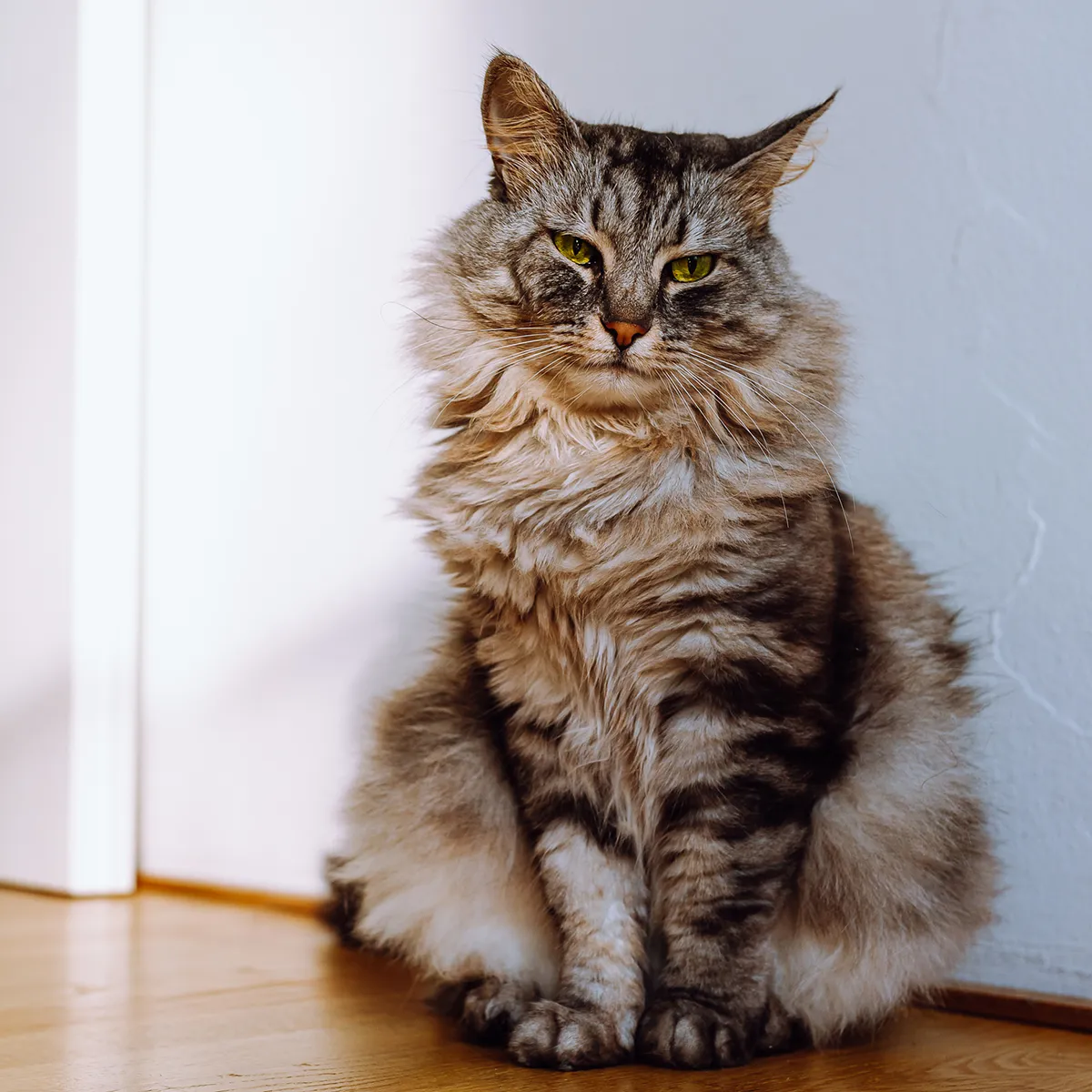
How can you tell if your cat’s eye and/or eyelids are painful?
It’s important to note that signs of pain can be subtle and vary between cats. Just as some people are highly tolerant and others are highly sensitive to pain, the same is true of cats and dogs—but even more so. They instinctively hide their pain, or show it in ways that we cannot easily interpret. A cat with a painful eye might show no obvious signs of pain. If you suspect your cat is in pain, it’s crucial to consult a veterinarian promptly for an accurate diagnosis and appropriate treatment. Given the complexity of eyes, your veterinarian might refer your cat to a veterinary ophthalmologist for diagnosis and/or treatment.
As with all pet care, pet parents must be vigilant in studying their cats. Subtle signs can indicate big problems!
Here are possible signs of a painful eye in cats:
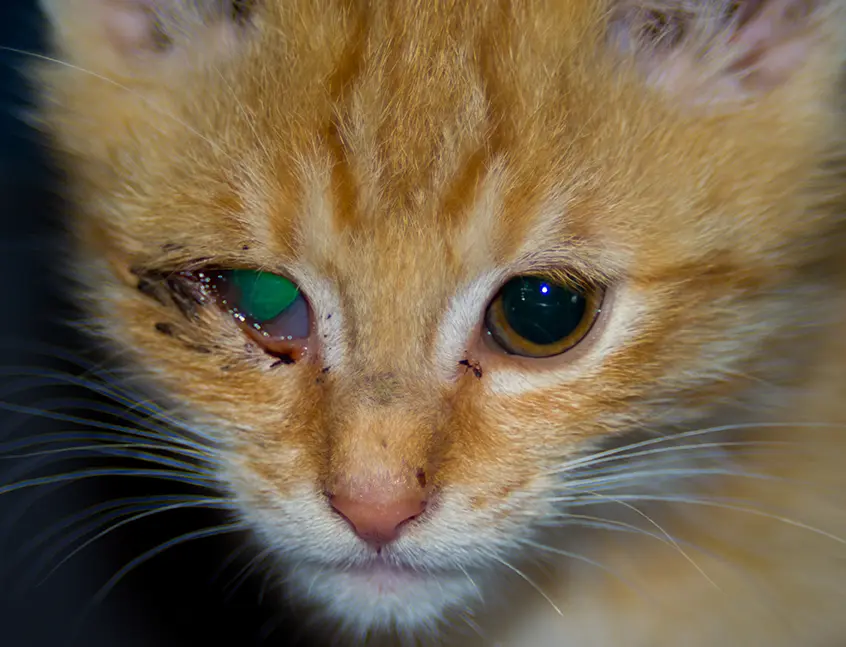
- Squinting or closing the eye: Cats with eye pain often squint or keep the affected eye closed.
- Tearing or discharge: Excessive tearing or unusual discharge from the eye can indicate irritation or pain.
- Redness: Redness or bleeding of the eyelids, in the white part of the eye (sclera and/or overlying conjunctiva), or in the cornea (blood vessel ingrowth, or fibrin/blood clot on the cornea), or inside the eye (bleeding in the anterior chamber or behind the lens, or congestion (dilation) of blood vessels in the iris).
- Swelling: Swelling around the eye, in the conjunctiva or in the eyelids. The eye can also protrude forwards if there is swelling behind the eye in the eye socket (orbit). The eye can also stretch and swell in size secondary to glaucoma.
- Corneal crater or elevation: Eyes with deep corneal ulcers can have a crater in the cornea or an uneven corneal surface. They may also have focal bluish-grey clouding of the cornea surrounding the defect. If the ulcer ruptures (or if a cat claw corneal laceration is present) the cornea will often have a bump of tissue stuck to it, that looks like a blood clot, or is a pale pink or dark brownish-black mound of jelly-like tissue. Other causes of elevation include an extruding corneal sequestrum or a foreign body.
- Shrinking: If the cornea has ruptured, fluid will leak out through the hole and the eye will suddenly become flattened and appear shrunken. The hole can quickly (but temporarily) seal with a fibrin/blood clot and “re-inflate” so that the eye no longer looks shrunken.
- Pawing at the eye: A cat may try to rub or paw at a painful eye or eyelid.
- Pupil changes: If a painful eye has acute uveitis or trauma, it can have a constricted pupil. Alternatively, painful eyes sometimes have a more dilated pupil, as is often the case when glaucoma is present. Pupils can also change size and be irregular if there are adhesions inside the eye.
- Photophobia: Photophobia is sensitivity to light, leading the cat to seek out darker areas.
- Change in eye appearance: Cloudiness of the cornea, or the anterior chamber, or the pupil (which is usually caused by a cataract). The iris can be red due to congested blood vessels, or it can have a “muddy” appearance due to uveitis, that is especially noticeable in blue eyes. Other color changes associated with pain can be bluish-grey cloudiness of the cornea (caused by corneal edema), and/or pink or whitish masses inside the eye (tumors or fibrin/blood clots). However, pain is sometimes not present with these types of color changes.
- Elevated third eyelid: A prominent third eyelid can sometimes be associated with eye distress—either secondary to pain, injury, or sometimes due to swelling behind the eye (exophthalmos) pushing the eye and third eyelid forwards. In the latter case, the third eyelid ends up being trapped against the bony rim of the orbit, causing poor circulation and swelling within the third eyelid.
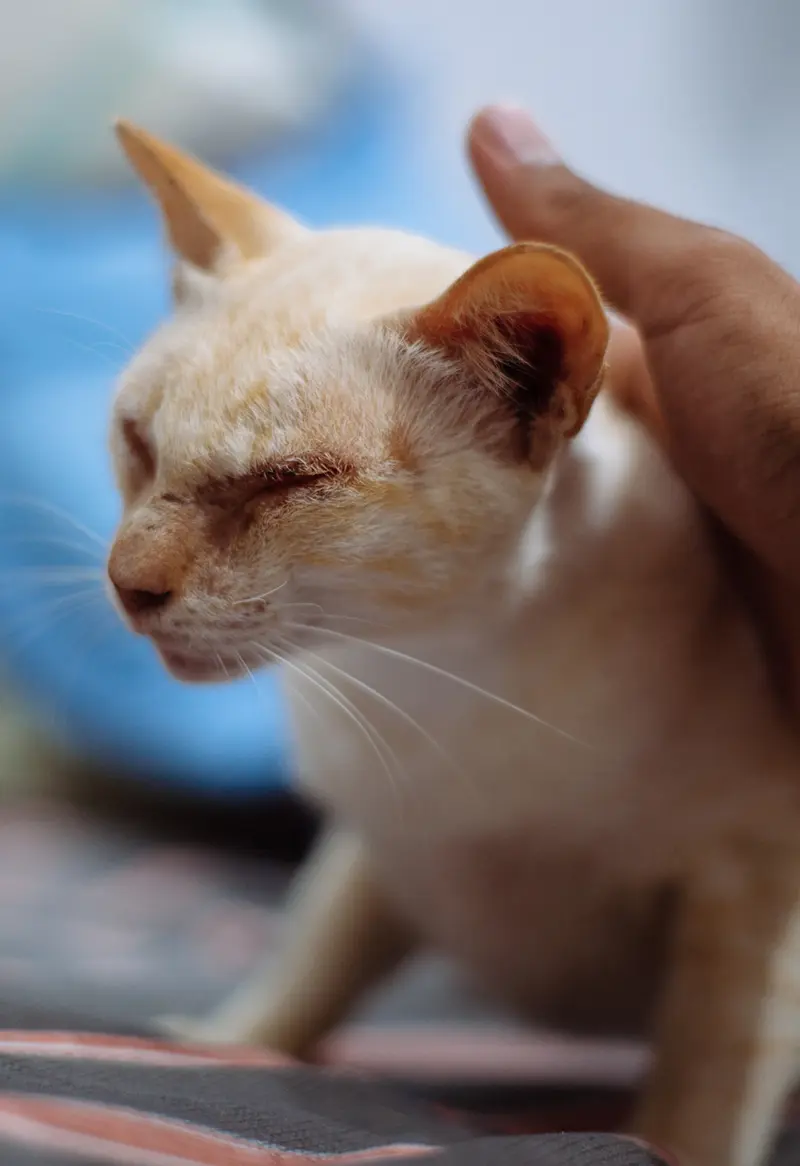
- Reduced joy in being petted, especially on the head. The sensitive whiskers near a painful eye can also trigger pain if they are touched. When people have glaucoma, they often complain of headache. Cats with glaucoma don’t complain, but we must assume that in moderate to severe cases of glaucoma, their heads hurt. It is my experience that cats with uncontrolled glaucoma are not as playful or active as they should be; they do not feel well.
- Altered facial expression: Feline facial expressions of pain can be subtle, and require some study for you to become familiar with what your cat’s face is telling you. Common signs of feline pain include: head lowered or tilted; flattening of the ears; narrowing of the eyes due to tightening of the muscles around the eye; muzzle tension (muzzle is not as rounded); and whiskers straight and pointing more forwards.
- Behavioral changes:
- Changes in behavior such as increased aggression, irritability or withdrawal can be associated with eye pain. Cats can hide and not play with their usual vigor, or become more needy or demand constant petting.
- Reduced appetite. Cats have open eye sockets (orbits), which means that when cats open their mouths, a part of their lower jawbone moves into the orbital space and presses on the eye. This is painful when eyes or surrounding tissues are swollen and painful.
- Cats don’t get shingles but they can get very painful flare-ups of feline herpesvirus (FHV1) around the eye in which the eye(s) often look normal or nearly normal, but pain is severe. These cats are depressed, “shut down” and miserable.
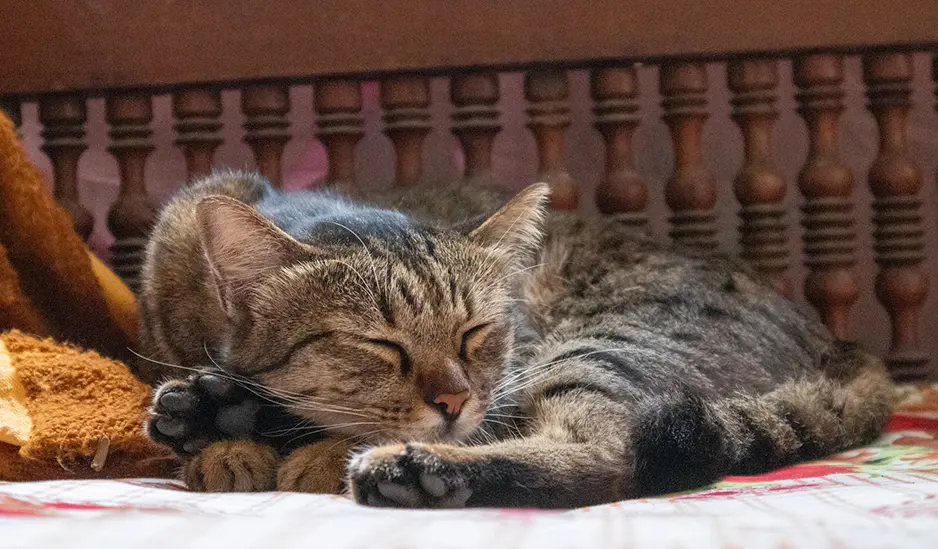
- A cat in pain might groom less (leading to a scruffy coat) or excessively groom a specific area (which might indicate pain in that area). During the act of grooming, the cat might suddenly hiss and bolt, if it groomed a painful area.
- Increased meowing, growling, hissing, or other vocalizations.
- Sleeping more than usual or in unusual positions.
- Pain can lead to avoiding the litter box, especially if it has high sides or the cat has mobility issues. Additionally, if a cat thinks that the source of pain is the litter box, it will avoid using the litter box.
If your cat acts painful around the eye(s) and is depressed, but your veterinarian can’t find anything wrong (other than perhaps conjunctivitis), the pain might be neuralgia caused by feline herpes virus (FHV1). Conjunctivitis alone is not a condition that causes severe pain. This is similar to the terrible pain that people experience with shingles, which is caused by human herpes virus. These cats suffer silently and need pain medication and control of stress.
Advertisement
- If corneal ulceration is present and/or if signs of pain (squinting, lethargy, pulling away from being petted around the head) are present:
- Consult a veterinarian first: Before attempting any care at home, it’s crucial to consult a veterinarian. A painful eye that might rupture is a serious condition that requires professional evaluation. Your cat may need urgent referral to a veterinary ophthalmologist.
- Keep a vigilant eye on your cat’s behavior. Increased squinting, cloudiness, redness, or a change in amount or color of discharge can indicate a need for a vet visit.
- Prior to cleaning, pain medication and possibly additional sedation might be necessary. The best time to do the best job of cleaning will be 1 hour after giving pain medication and/or a sedative, such as gabapentin (which both sedates and can help with pain).
- Instead of (or in addition to) oral gabapentin, cats with severe pain often require combination pain therapy, such as oral buprenorphine
- If pain medication and/or sedation have not prescribed, ask your veterinarian if they are OK with prescribing these kinds of medications for your cat.
- Follow the steps outlined in Part 2 for cleaning healthy cornea/conjunctiva, but with great care and patience.
- It is essential to use preservative-free saline solution. CAUTION: Never use contact lens cleaning solution! It contains enzymes harmful to the cornea and conjunctiva.
- Consult a veterinarian first: Before attempting any care at home, it’s crucial to consult a veterinarian. A painful eye that might rupture is a serious condition that requires professional evaluation. Your cat may need urgent referral to a veterinary ophthalmologist.
- Use 2×2 or 3×3 inch gauze sponges or facial tissue. Do not use cotton balls or cotton-tipped applicators or anything else that might shed fibers onto or around the eye.
- Cotton-tipped applicators are not safe near the eye, and should never be used on the surface of the eye or on eyelids by anyone other than veterinary professionals. The risk is too great: any sudden movement by the animal could turn the applicator into a weapon that injures the eye either directly or through a “punch” to the overlying eyelid (I think I know what you mean but the ‘punch’ is throwing me off.
- Remove discharge from the surface of the eye before medicating. Discharge interferes with topical medication properly contacting the eye. If there is much discharge on the surface of the eye, it is ideal if you can safely remove it before applying eye medication. After applying eye rinse solution to the eye, wait at least 5 minutes before applying a topical medication, or else the eye rinse solution will “hang around” long enough on the surface of the eye to dilute whatever is next applied to the eye.
- If there is discharge that looks bloody or like “snot” stuck to the surface of the cornea, this is likely a blood/fibrin clot plugging a hole or laceration in the cornea. It might even look ropy or like a very stretchy string of mucus. STOP. Do not try to pull it off or wipe it off, and seek immediate veterinary care.
- If the eye also looks flattened or “collapsed”, it might have ruptured (typically from a cat claw laceration).
- If the cornea has a bulging spot (that is typically cloudy blue), the eye might have ruptured (often due to a cat claw laceration) and then temporarily resealed with a blood and/or fibrin clot. These eyes can re-rupture at any time.
- If there is discharge that looks bloody or like “snot” stuck to the surface of the cornea, this is likely a blood/fibrin clot plugging a hole or laceration in the cornea. It might even look ropy or like a very stretchy string of mucus. STOP. Do not try to pull it off or wipe it off, and seek immediate veterinary care.
- No pressure. Never wipe the surface of the eye directly, and do not place your fingers any closer to the eye than the bony orbital rim.
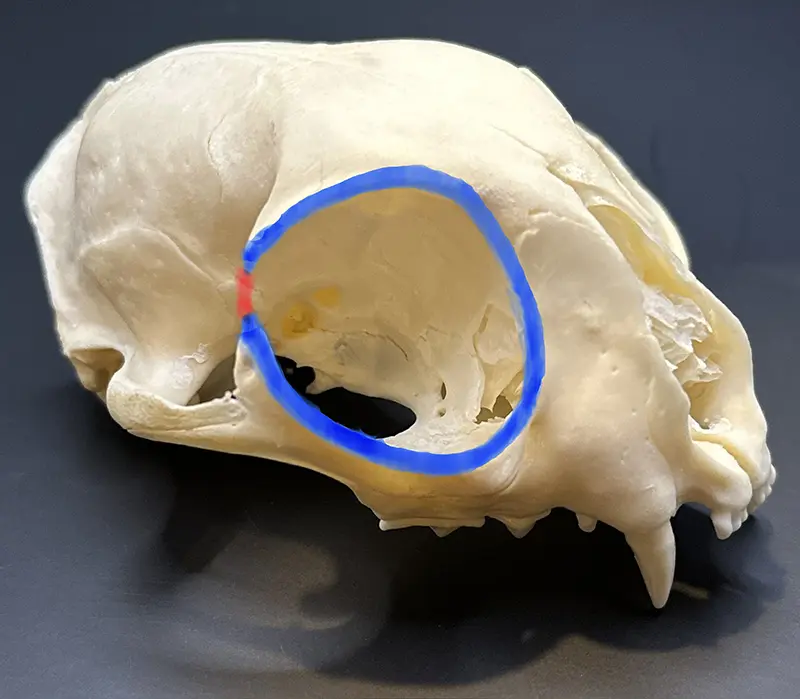
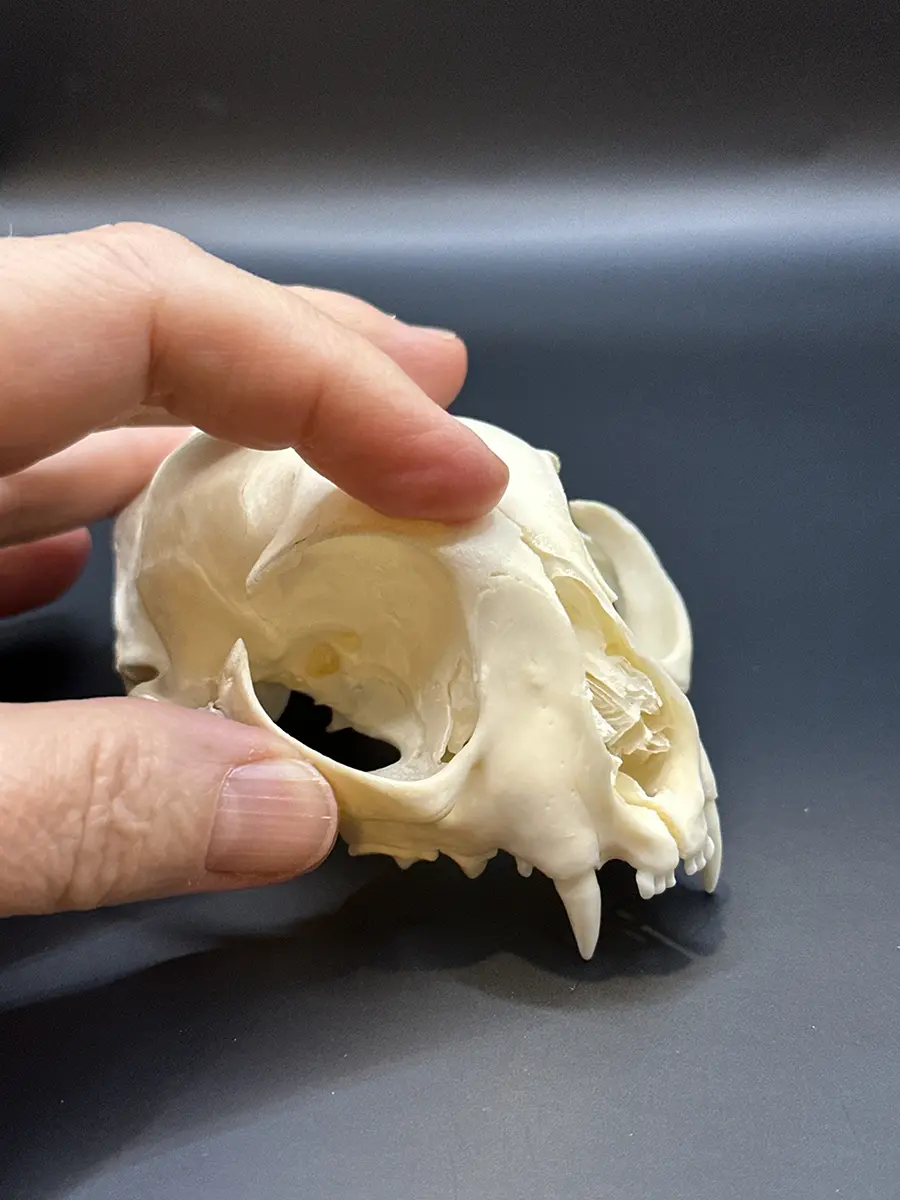
- Get to know the boundaries of the orbital rim during a petting/cuddling session with another kitty, by gently feeling where the rim is located. You could also do this on the non-painful eye of your cat (assuming that both eyes are not affected).
- Do not place any pressure on the eyeball in case the cornea is fragile (i.e., a deep ulcer that could rupture).


- Also, when you are opening the eyelids to apply drops or ointment, your fingers must not be closer to the eye than the bony orbital rim.
- If the eye is fragile, do not use a flea comb to comb out the softened discharge.
- Avoid direct contact. Never touch the eyeball directly with anything. To clean discharge from the surface of the eye:
- Tilt the cat’s head up, lift the upper lid, gently hold a gauze sponge or folded facial tissue 1” below the lower lid margin, then drip (do not squirt!) 2-4 drops of preservative-free saline onto the surface of the eye at the 12:00 position above the limbus (on the white part of the eye).
- An alternative is to position the cat as described above, but roll out the lower lid to create a pocket, into which you drip 2-4 drops of preservative-free saline onto the surface of the eye at the 6:00 position below the limbus (on the white part of the eye).

Advertisement
- Discharge will then loosen and float on the surface of the pool of saline, where you can wick it off the edge of the eyelid with a gauze sponge or a folded facial tissue. Do NOT try to swab or pick any discharge off of the surface of the eye.
- Frequent cleaning: Clean the eye and/or eyelids as often as needed to prevent buildup of discharge. However, if your cat will only give you one shot at treatment, prioritize the eyeball over the eyelids. If your cat becomes more and more difficult to treat, STOP and ask your veterinarian for guidance.
- With some cats, you will never get to first base (started?) with cleaning severely matted eyelids, so your veterinarian may need to get the ball rolling and do the first cleaning, possibly under sedation. Let the cat win the battle at home and have your veterinarian and staff win it at the hospital.
- It is often the case that once medication has been prescribed for a sick eye and you are treating it, discharge will quickly improve and then you won’t have to clean the eye as often.
- Monitor for changes: Watch for decreased comfort level or changes in the eye’s appearance, such as increased cloudiness, and report these to the veterinarian immediately.
- Medication administration: If your veterinarian prescribes medication (eye drops or ointment), make sure that you understand how to administer it correctly. Be extra gentle and careful not to touch the eye with the medication applicator.
- Avoid contaminants: Keep the cat indoors and away from dust, smoke, and other irritants that could aggravate the eye condition. If your cat is wearing an E collar, your cat must stay indoors.
- Comfort and calming: Ensure your cat is in a comfortable, low-stress environment, as stress can worsen health issues. Consider pheromone therapy.
- Regular veterinary check-ups: Follow up with regular veterinary appointments to monitor the condition and make any necessary adjustments to the treatment plan.
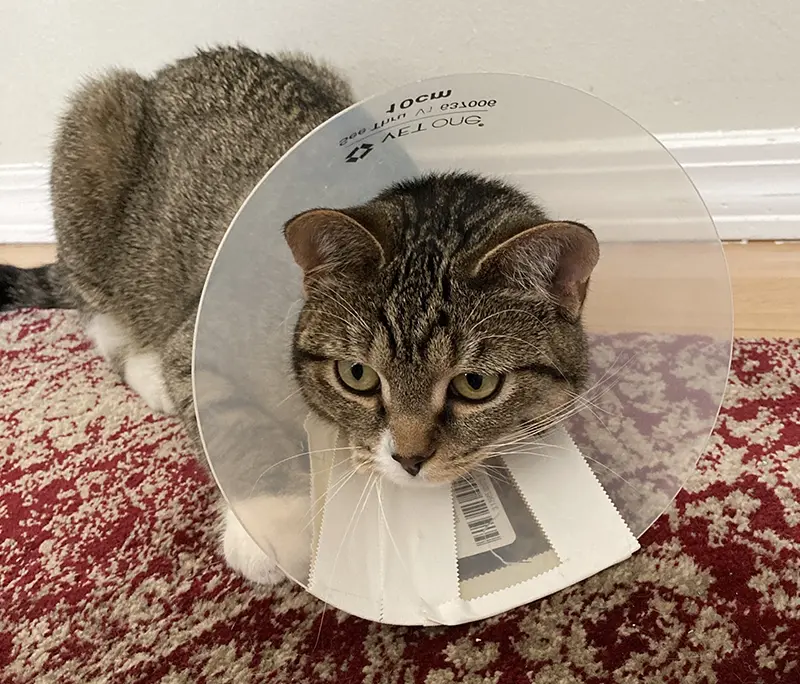
- Prevent self-inflicted injury: Use an E collar (Elizabethan collar/cone) if your veterinarian dispenses one! This is because a single rub of a fragile eye by your kitty can rupture it, and then the eye will either need to undergo emergency corneal repair surgery (by a veterinary ophthalmologist) or be surgically removed by your veterinarian or by a veterinary ophthalmologist. Unless otherwise determined by your veterinarian, cats with fragile eyes at risk for rupturing must be placed in an E collar. No one likes E collars but they are necessary for these patients. Do not modify the E collar (no cutting and not trimming). Use it as prescribed. Ensure that the E collar is long enough. The E collar must be rigid plastic (do not use donut collars or soft-sided E collars).
Remember, a painful eye that might rupture is a critical condition. While these steps are helpful for basic care, professional veterinary guidance (often by a veterinary ophthalmologist), is essential for proper diagnosis and treatment.
Cleaning the Eyelids:
- Some cats (not the majority!) tolerate and even enjoy having a warm moist compress applied to their face for 5 minutes or so, to begin softening of eyelid discharge. If the cat resists, do not apply a compress.
- To clean eyelid discharge when corneal ulcers and other painful wounds are present:
- Moisten a gauze sponge with sterile preservative-free eye rinse solution.
- Wipe away discharge carefully and with a light touch.
- Be careful not to touch the cornea with the gauze, and do not apply pressure to the eye.
- Never place your fingers on the eyelids unless the eyelid tissue is directly over the bony orbital rim.
- NOTE: If the discharge on the eyelid is “ropey” and connected in one piece to discharge on the surface of the eye, and the cornea is bulging/cloudy (or you can’t visualize the surface of the cornea due to discharge), STOP and seek veterinary care. The eye might have ruptured (typically from a cat claw laceration) and then temporarily sealed with a blood/fibrin clot that often looks like bloody mucus.
- If the discharge is severe and/or there are hard crusts and mats in the fur around the eyes, use Lid ‘n Lash® Vet (pump gel or wipes, but the gel is best in severe cases).
In painful cats with severe discharge, ask your veterinarian to please do the initial “deep cleaning”. Be aware that sedation might be needed. This will make it much easier for you to continue the task at home.
- Use the gel or wipes to soften ‘chunks’ of crusts on the lids. The gel is best at soaking severe crusts. As described in Part 2 of this article series, use Lid ‘n Lash® gel or wipes to coat discharge/crustiness on the eyelids or surrounding fur. The gel works better to remove severe discharge.
- Also, some cats do better if you avoid the wipes and instead touch their lids with your familiar fingers to strategically apply the gel.
- Coat the crusts by applying the wipe, or by squirting a pea-sized blob of gel on your finger (short fingernails are essential), then gently “painting” to coat the crusts. If Lid ‘n Lash® product accidentally contacts the cornea or conjunctiva, these tissues are not harmed.
- After waiting 5-10 minutes (sometimes longer) to allow softening of the crusts into “goo”, gently wipe away with a gauze sponge moistened with preservative-free saline.
4) You might need to repeat this, as the deeper “core” layers of crusts
progressively soften.
5) The underlying fur might be so matted and stuck to the discharge that it needs to be carefully cut away. This might need to be done by your veterinarian under sedation, as the skin underneath the mats is often inflamed and painful (“tear burn”), making this a difficult procedure.
5) You might need to use a flea comb to tease out the softened crusts stuck to fur. Make sure the comb is parallel to the surface of the eyelid and points away from the cornea. Never place any pressure on the eye during this task! If the eye is fragile, do not use a flea comb.
If both the eyelids and the eyes need cleaning, it is usually best to clean the most painful tissues last. However, if your cat has a short fuse, first clean whatever is the most important, knowing that you might need multiple sessions to get the job done. And consider pretreating your cat with a prescription oral sedative and pain medication, such as gabapentin, to help you both get the job done with minimal stress. Consult with your veterinarian re: prescribing gabapentin (or similar medication) for your cat. And remember that this medication is also great to give to fractious cats 1-2 hours prior to veterinary visits.
Conclusion:
Recognizing signs of eye or eyelid pain in your cat can be challenging due to their ability to mask discomfort. Cats may display subtle yet crucial symptoms like squinting, redness, or behavioral changes. To ensure the well-being of your feline friend, it’s vital to remain vigilant and seek professional veterinary care if any concerning signs emerge. Prompt consultation is crucial for accurate diagnosis and tailored treatment, often involving specialized care from a veterinary ophthalmologist.
When dealing with a cat’s painful eye, gentle cleaning is essential, but it should be performed under expert guidance, especially if the eye is fragile or if signs of pain are evident. Use preservative-free sterile saline solution and handle the eye with care during medication administration. Any deterioration or changes in the condition should be reported to the veterinarian immediately. Because some painful eyes can deteriorate quickly, cat owners should be proactive in seeking help. With proper care, many eye conditions in cats can be effectively managed, ensuring their comfort and overall quality of life. Whatever strategy you choose to clean the eyes and/or eyelids, what really matters is to be patient and use kind, positive words. And give treats!

By Terri L. McCalla BSc, DVM, MS, Diplomate ACVO
Dr. Terri McCalla Dr. McCalla received a BS in Animal Health Science from the University of Arizona, followed by her DVM degrees from both Oregon and Washington State Universities in 1984. She completed a 3 year residency in Comparative Ophthalmology from the University of Missouri and became board-certified in the American College of Veterinary Ophthalmologists (ACVO) in 1989.