
 Pet News


Summary
Dogs face a heightened risk of toxicity from human eye medications (HEM) due to distinct physiologic, anatomic, and metabolic differences between dogs and humans. Human eye medications are designed solely for humans. Toxicity also can arise from the erroneous assumption by pet parents that all eye medications are safe for their dogs.
Eye physiology, anatomy, and tear film properties in dogs can lead to increased drug concentration in tissues, heightened sensitivity to medications, and altered drug absorption. Grooming behaviors in dogs and their ability to lick their nose (and even their eyes) may result in accidental ingestion. Factors like higher body temperature, the presence of a third eyelid, and tear duct anatomy (particularly in brachycephalic and long-muzzled breeds) further influence the effects of ophthalmic medications.
Human eye medications often contain substances or drug concentrations unsuitable for dogs, risking overdose or adverse reactions. Eye diseases often present differently in dogs compared with humans, necessitating consultation with your veterinarian and/or a veterinary ophthalmologist before using any HEM.
Introduction
Please read Part 1 of this article series for an introduction to giving human eye medications (HEM) to your dog.
The amount of variation in size and shape observed in the dog surpasses that of all living land mammals. A foundational rule of healthcare in dogs is that one size does not fit all!

How do differences between dogs and humans increase the risk of toxicity from HEM in dogs?
Dogs can have an increased risk of toxicity from HEM due to several physiologic, anatomic, and metabolic differences between dogs and humans:
-
Metabolic differences: Dogs metabolize many drugs differently than humans. Dogs have different metabolic rates and pathways, which can affect how they process medications.
-
Anatomic variations: The structure of the eyes in dogs differs from humans in terms of size, shape, and the presence of certain anatomical features. This can affect how medications are absorbed and distributed within the eye, potentially leading to an increased concentration of the drug in the eye tissues.
-
Sensitivity: Dog eyes are more sensitive to certain medications due to differences in pH levels and tear production. These distinctions are important when considering treatment options.
-
Size and weight differences: The smaller size and body weight of dogs compared to humans mean that a dose of medication that is safe for a human could be excessive for a smaller animal. Even small amounts of certain drugs can be toxic to pets.
The dose of drug per eye drop can increase: keep in mind that the “bottom of the bottle” might have a higher concentration of drug, similar to more cocoa being present at the bottom of a cup of hot chocolate. This is especially the case with ophthalmic suspensions.
-
Grooming: Dogs like to groom their faces by rubbing a paw over their face and then licking the paw. Likewise, other dogs (and cats!) in the household might groom and lick the faces of their dog buddies. If an eye medication (drop or ointment) is applied to the eye and some of the medication ends up on the eyelids or dribbles down the face, it could be licked and ingested, potentially causing illness. Additionally, dogs can lick their own noses (and some dogs can lick their own eyes!) increasing the amount of drug in an eye medication that is ingested.
-
Higher body temperature: Dogs have higher normal body temperatures than humans. This can affect the absorption of eye medications by tissues.
-
The third eyelid: Unlike humans, dogs have a third eyelid. This structure protects the eyes by sliding up over the surface to block the eye from injuries. It also acts as a “squeegee” to sweep debris off of the cornea. Topical eye medications are absorbed by the cornea and the conjunctiva. The third eyelid is covered by conjunctiva (front and back). Since dogs have more conjunctival surface area than humans do, more drug can be absorbed by dogs.
-
Differences in tears: The pH and composition of tears can vary between species, which may affect the solubility and absorption of ophthalmic drugs.
-
Differences in tear production and drainage: The tear film and its production, as well as the drainage system in dogs, differ from those in humans. This can influence the duration and intensity of exposure to a drug administered as eye drops, potentially leading to increased toxicity.
Brachycephalic dogs:
-
Tears normally drain out the tear duct (nasolacrimal duct) into the nose near the nostril (which is why we need to blow our noses when we are tearing excessively). After application to the eye, eye medications mix with tears and then either drain out the tear duct or spill over onto the surface of the eyelids/face. Human nasolacrimal ducts have one opening into the nose near the nostril.
-
Most tears are swallowed. Some dogs (namely brachycephalic dogs) have two outflow pathways from each tear duct:
The primary one where tears exit the tear duct into the nose near the nostril.
The second accessory pathway where tears exit the tear duct into the back of the nasal cavity and then drain into the back of the throat where they are swallowed.
In one extensive study of 51 brachycephalic dogs (Pugs, French Bulldogs, and English Bulldogs), 98% were found to have this accessory pathway, and of these dogs 86% only had the accessory pathway. Therefore, nearly all brachycephalic dogs only drain their tears into the back of their throats and thus swallow all the tears! This means that all eye medications draining out the tear ducts in flat-faced dogs are ingested, potentially increasing toxicity.
Dogs with long muzzles: Medications applied to the eye drain out the tear duct, and during their passage through the tear duct some of the drug is absorbed into the bloodstream through the wall of the tear duct. Dogs with long muzzles (dolichocephalic) have much longer tear ducts than humans do. Therefore, long-nosed dogs can potentially absorb more of an eye medication.
Poor tear drainage: Dogs with slow/poor tear drainage through their tear ducts could have more of an eye medication absorbed into their bodies. These dogs also have overflow of tears onto their face (epiphora), which could increase the dog’s skin exposure to and absorption of a topical drug.
Eyelid conformation: The longer an eye medication stays on the surface of the eye, the more of the drug can be absorbed by the tissues. Some dogs have deep eye sockets (orbits) or other anatomic features that result in enophthalmos, creating a “pocket” of extra “dead space” between the surface of the eye and the eyelids. This pocket retains medications longer before they drain out the tear duct.
-

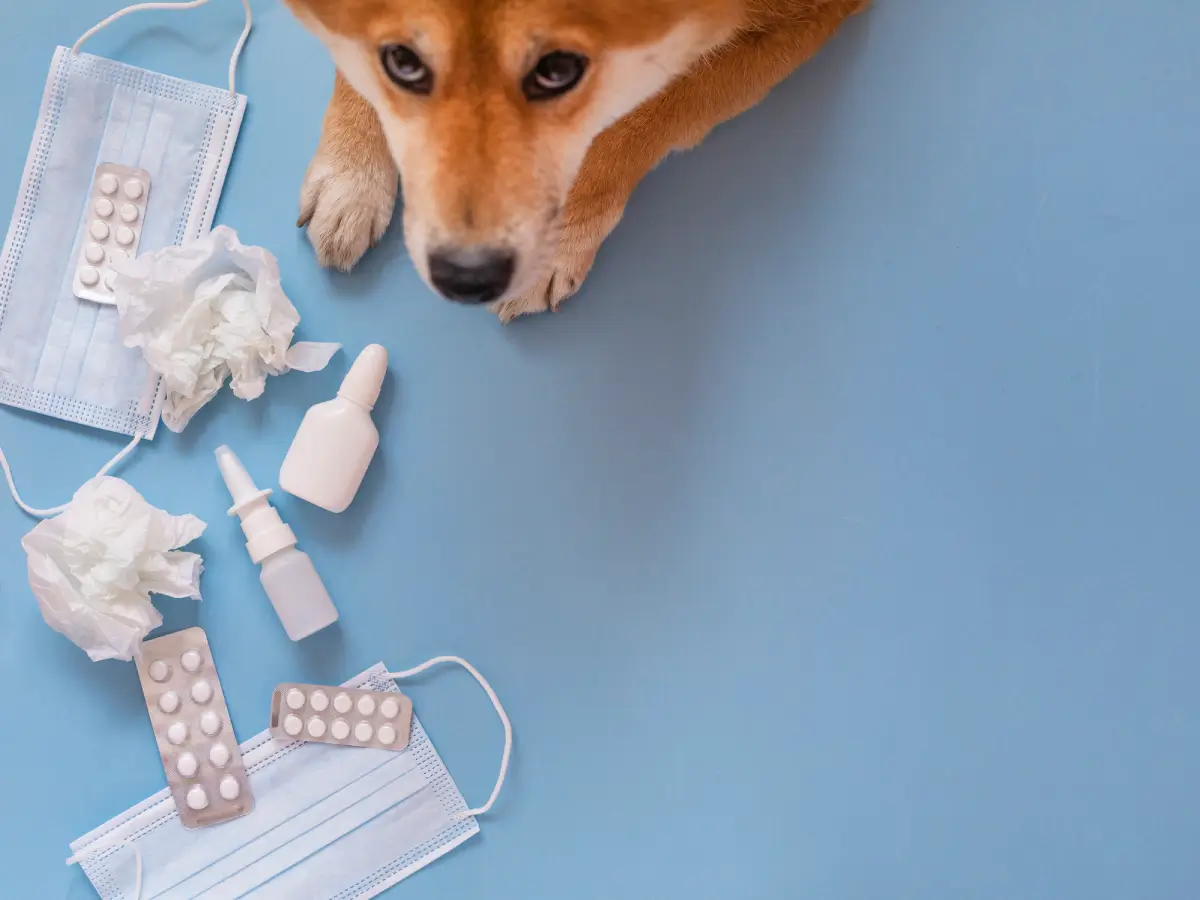
What are the Risks of Using Human Eye Medications in Dogs?
-
Chemical Composition: Many human eye drops contain chemicals and preservatives that can be harmful to pets. For example, zinc sulfate, found in some human eye products, can be very irritating to dog eyes.
-
Dosage Differences: The concentration of active ingredients in human eye drops is often not suited for the smaller bodies of dogs, especially small breeds of dogs, potentially leading to overdosing.
-
Allergic Reactions: Pets can have allergic reactions to components in human eye drops, which can exacerbate eye issues rather than alleviate them.
-
Human vs Dog Eye Disease: It should never be assumed that an eye medication for human eye disease is safe and effective to treat the same condition in dogs. The mechanisms of how some eye diseases in dogs occur can differ from how they occur in humans.
For example, glaucoma occurs in both humans and dogs, but some drugs developed for glaucoma in humans might have a different effect in dogs with glaucoma. Human eye medications are tested in animal models of human disease (typically mice, rats, and rabbits), but it is rare for dogs to be an animal model for human eye disease.
Certain eye diseases in dogs require specific treatments that HEM cannot provide, or cannot provide in the dosage protocol that works in humans. Using the wrong medication or using the right medication the wrong way can worsen the condition and delay proper care.
What are Some of the Most Toxic Human Eye Medications?
When addressing drug toxicity, one thing to keep in mind is that your pet might have an underlying condition that you may or may not know about, such as glaucoma or heart disease, which could make your pet more at risk for experiencing harmful side effects of some HEM.
Here are three HEM to keep in mind. Some of these drugs are prescribed by veterinarians and veterinary ophthalmologists for specific patients under specific circumstances.
-
Apraclonidine (Iopidine®) and brimonidine (Alphagan®): These are glaucoma drugs that lower intraocular pressure (IOP) by decreasing the amount of aqueous humor produced in the eye. They are in a class of drugs called alpha-2-adrenergic agonists and can be toxic to dogs.
-
Vomiting. Vomiting is to be avoided in glaucoma patients, as it can increase the intraocular pressure.
-
Cardiovascular Effects: These medications can cause bradycardia in dogs and also hypotension. This is due to the drug’s action on receptors in the body which regulate cardiovascular functions.
-
-
Timolol and other beta-blocker medications: These are used to treat glaucoma. Topical administration can affect the heart and lungs, and commonly causes bradycardia and hypotension. These drugs can be harmful In dogs undergoing sedation or general anesthesia, and dogs with preexisting heart issues whether or not they are being sedated or anesthetized.
In dogs susceptible to cardiac arrhythmias (irregular heartbeats) such as heart block, these drugs can increase the risk of cardiac arrest.
Many breeds of dogs are susceptible to heart block (e.g., Miniature Schnauzers, West Highland White Terriers, and Pugs among others). Two potential signs suggestive of cardiac arrhythmia and heart block are poor exercise intolerance and even syncope (fainting spells), especially when the dog is excited.
-
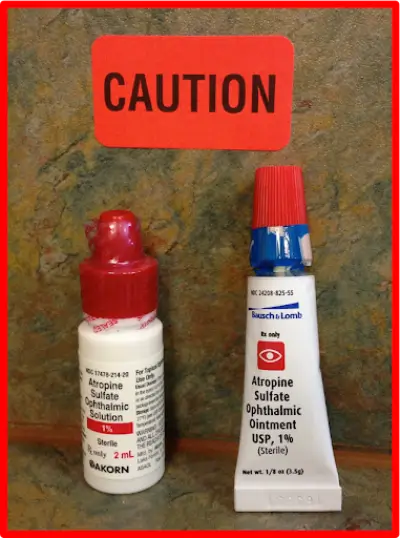
Atropine: Topical atropine is used to reduce painful smooth muscle spasm inside the eye, and also dilates the pupil. It is also used during anesthesia as an injection to increase the heart rate if needed.
Atropine is very bitter-tasting, and if applied to a dog’s eye, the drug will pass through the tear duct to the nostril/mouth and be tasted; dogs will sometimes drool and paw at their mouths. This happens especially quickly if drops are applied rather than ointment.
-
Topical atropine will dilate the pupil for days at a time—even up to a week if multiple doses were given. This is to be expected and is not an adverse reaction, but owners should be aware of this effect.
-
Topical atropine can be absorbed by the body and cause side effects, especially in small dogs and especially if multiple doses are given. These include a fast heart rate (tachycardia), central nervous system excitement, hyperthermia, and slowing of the GI tract.
-
If a dog already has glaucoma, this medication can make the glaucoma worse, which could lead to permanent loss of vision.
-
Atropine is also available as an injection. However, drop for drop, atropine eye drops are over 18x more concentrated than injectable atropine, increasing the risk of toxicity with ophthalmic atropine.
-
If a dog ever ingested a bottle of atropine eye drops (doubtful because of the bad taste), the toxic reaction could be quite serious and even fatal. Likewise, it could be fatal if a person ingested a bottle of atropine eye drops. Just nine drops (about ½ ml = not quite ⅛ of a teaspoon) of ophthalmic atropine ingested by an infant child could also be fatal.
-
-
Eye Medications containing thimerosal: Thimerosal is a preservative that contains mercury, that historically has been commonly used in eye medications. Due to its potential to cause mercury-related toxicity, especially with prolonged or repeated exposure, thimerosal has been removed from many eye products.
Thimerosal is nearly 50% mercury by weight, so even though thimerosal is used in small quantities as a preservative, the proportion of mercury is high compared to its total mass.
One HEM that commonly contains thimerosal is flurbiprofen, which is a topical non-steroidal anti-inflammatory medication.
Advertisement
If my dog has been prescribed a HEM, what can I do to decrease the risk of toxicity?
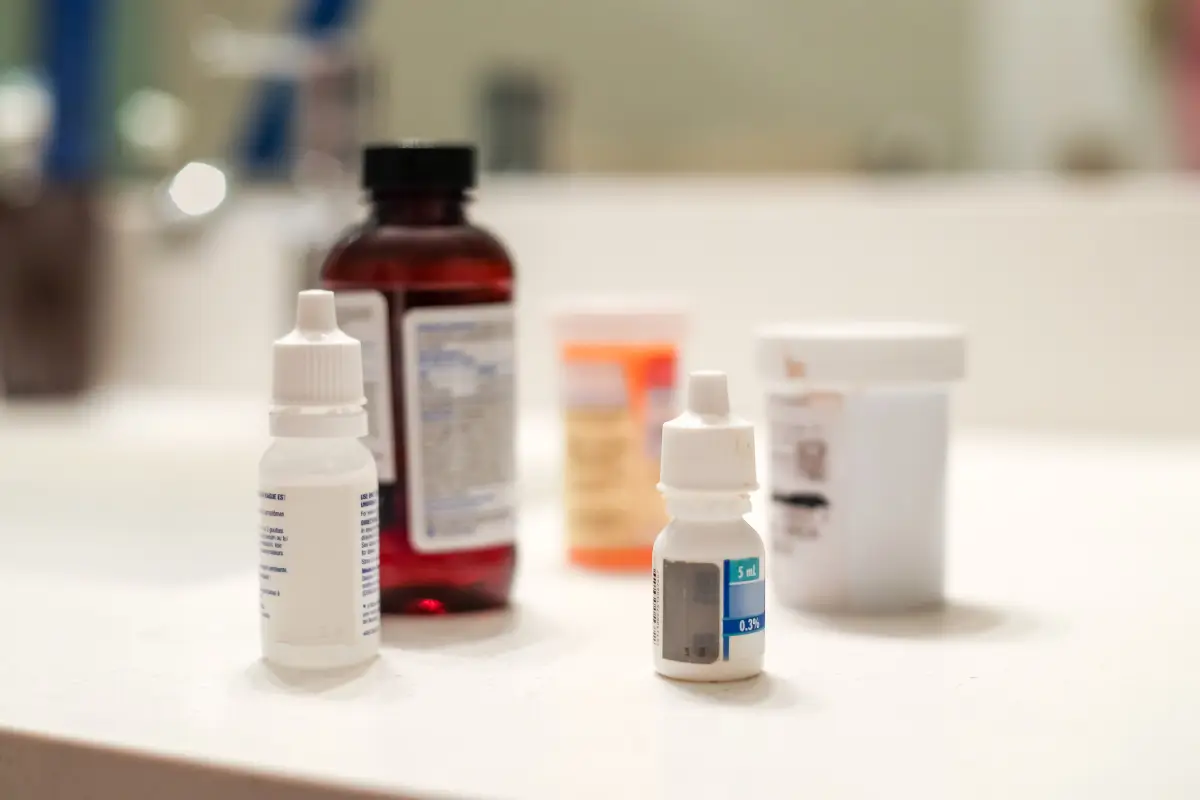
If you are concerned about possible skin contact, wear disposable nitrile gloves while medicating the eye(s):
Thoroughly clean the fur and skin around the eyes after applying eye medications. Blotting with facial tissue can still leave some lingering drug on the fur and skin, which is especially a concern if your dog is good at grooming its face, or if you have other pets who like to lick your dog’s face.
And remember to only apply one drop to the surface of the eye. If applying ointment, it helps to refrigerate the ointment to make it stiffer, and then only apply ¼” strip onto the surface of the eye. More is not better.
Advertisement
The Rest of the Story (from Part 1)
The next day, as Ian and Chester waited in the reception area of a multispecialty veterinary practice, Ian was very grateful that a neurologist could see Chester so quickly, but he was also worried: he had looked at his budget and while he could afford this examination by cutting back on other things, he was worried about how much a CT, an MRI scan, or a spinal tap would cost.
After performing a thorough neurologic exam on Chester, the neurologist was puzzled by the dilated pupil and lack of other neurologic signs, because brain cancer typically causes multiple issues in the body. He wondered about exposure to toxins including plants– Ian said no.
The doctor then asked Ian if Chester was on any new medications besides the medications for the corneal ulcer. Ian said no. Being a good pet owner, Ian had brought all of Chester’s medications with him. The specialist looked through the bottles and vials, and picked out an eye medication with a bright red cap. Ian told him that this was the medication he had found in his medicine cabinet and treated Chester with twice.
The neurologist smiled. He said “Ian, there is nothing neurologically wrong with Chester. He has well-controlled epilepsy, a corneal erosion, and a temporary side effect from this eyedrop.” He explained that the medication was atropine, and one drop can dilate a pupil for several days.
It also is very bitter-tasting and can cause drooling and/or pawing at the mouth if the drop drains out the tear duct into the nose and is tasted. He advised Ian to dispose of the bottle, as atropine was a potential poison if a person or animal ingested it. And to keep the E collar on Chester at all times and follow all of the medication instructions by Chester’s GP veterinarian.
Ian asked the staff to dispose of the atropine bottle. He then left the hospital very relieved, determined now to be an even BETTER pet parent for Chester.

Conclusion
Every veterinary ophthalmologist has a collection of tragic stories about patients that became blinded or seriously ill as a result of HEM being applied by pet parents without veterinary guidance. Adverse reactions can be serious in the “right” dog with the “right” medication: a perfect storm can happen and has happened.
Dogs are particularly susceptible to the harmful effects of many human eye medications (HEM) due to several inherent physiologic, anatomic, and metabolic differences from humans. These differences influence how dogs metabolize drugs, leading to variations in how medications are distributed in their bodies.
The unique structure of a dog’s eye may increase the concentration of medication absorbed, heightening the potential for toxicity. Additionally, dogs’ relatively smaller size, increased sensitivity to certain medications, and grooming behaviors (i.e., licking their fur and also the faces of other dogs) can inadvertently lead to the ingestion of these medications, posing further health risks.
If a dog has an underlying health issue such as certain types of heart disease, the risk of toxicity increases with some HEM, especially glaucoma medications. It is important to respect all eye medications. Only treat your dog with eye medications prescribed by your veterinarian and always verify the dosage instructions if you have any questions. Remember– it is almost always the case that only one drop needs to be applied to a dog’s eye.


By Terri L. McCalla BSc, DVM, MS, Diplomate ACVO
Dr. Terri McCalla Dr. McCalla received a BS in Animal Health Science from the University of Arizona, followed by her DVM degrees from both Oregon and Washington State Universities in 1984. She completed a 3 year residency in Comparative Ophthalmology from the University of Missouri and became board-certified in the American College of Veterinary Ophthalmologists (ACVO) in 1989.