
 Pet News


Summary
Demodectic mange in cats is a skin condition caused by an infestation of Demodex mites. This condition is more common in dogs but can affect cats too, leading to serious skin issues if not treated. There are two types of Demodex mites found in cats: Demodex gatoi, which causes itchy skin, hair loss, and can spread between cats; and Demodex cati, often linked to cats with weakened immune systems, and causes hair loss without much itching.
Diagnosing demodectic mange involves ruling out other skin conditions by skin scrapings or other tests. Treatments vary depending on the type of mite and can include oral medications, special dips, or topical treatments aimed at reducing mite numbers and healing the skin. This article covers the cause of demodectic mange in cats, how to recognize it, and the steps for treatment, offering a straightforward guide to understanding and managing this condition.
Case Study
When Leo, a cat struggling with itchy skin, arrived at our clinic, it was clear he needed help. He was battling demodectic mange, a condition where tiny mites burrow into a cat’s skin, causing profound itching and hair loss. These mites, invisible to the naked eye, had taken a toll on Leo’s well-being, making him uncomfortable and restless.
Examining Leo, we could see the evidence of his discomfort: patches of thinning fur and skin irritation. We were lucky–a skin scraping yielded Demodex gatoi–the cause of feline demodectic mange. The challenge was not just spotting the mites but also managing the itchiness and preventing any additional infections that could occur because of the skin damage. Our goal was to get rid of the mites and help Leo feel better.
The main treatments we used were oral milbemycin oxime, and lime sulfur dips. While the dips smell quite strong and aren’t anyone’s favorite, they are really effective at helping fight off the mites. Alongside this, we focused on keeping Leo comfortable and making sure his skin could heal properly, watching out for any signs of infection.
Handling Leo’s case reminded us why veterinary work is so important. It’s all about using our knowledge to solve tricky problems and make a real difference in the lives of pets like Leo. Helping him go from itchy and uncomfortable to happy and healthy was our main aim, showcasing the practical side of veterinary medicine where care, science, and a bit of patience come together.
Introduction
Demodectic mange in cats is an inflammatory disease caused by one of two types of Demodex mites, which are parasitic mites living in the hair follicles and on the skin of cats. Small numbers of these mites, which do not appear to affect either dogs or humans, can be normal flora in cats, but increased numbers, especially when complicated by secondary bacterial infections, can cause severe itching and dermatitis.
Although demodectic mange is much more common in dogs than cats, it should still be considered in cases of feline dermatitis.
Causes
There are two species of Demodex mites that affect cats.
-
Demodex gatoi–this species most often leads to pruritic dermatitis, alopecia, and barbering
-
Demodex cati–this species is associated with metabolic and immunosuppressive diseases, and these mites cause alopecia and folliculitis but are rarely pruritic
Advertisement
Clinical Signs
Because of the differences in itchiness of the two species of Demodex, affected cats show different signs of mite infestation.
-
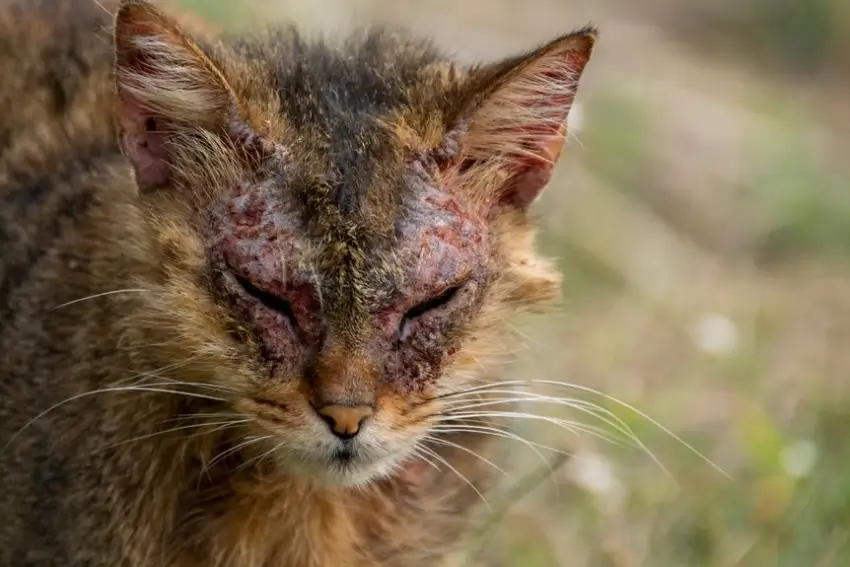
Demodex gatoi–cats with this mite can have severe itching, dandruff, erythema, and/or scabbing due to self-trauma and inflammation
-
Considered contagious to other cats
-
-
Demodex cati–cats with this mite show mild to severe alopecia of the eyelids, periocular area, head, neck, flanks, and ventral area of the body
-
Often associated with diseases that cause immunosuppression such as feline immunodeficiency virus (FIV) and diabetes mellitus
-
Possibly more common in middle-aged or older cats
-
Can also cause ceruminous otitis externa
-
Sometimes seen with indolent lip ulcers
-
Can occasionally have severe infestation in asymptomatic cats
-

Fig 2. This cat has a Demodex cati infestation, causing alopecia of the dorsum of the nose.
Diagnosis
Differential Diagnoses
It is important to rule out other causes of feline pruritic and nonpruritic dermatitis, alopecia, barbering, and folliculitis, such as allergic and atopic dermatitis.
Demodicosis can easily be mistaken for ringworm (dermatophytosis). Many other causes of inflammatory hair loss can look like demodicosis as well, so they must be ruled out, especially if the patient does not respond to appropriate treatment.
Diagnostic Tests
-
Skin scrapings are diagnostic in most cases (the veterinarian gently scrapes a scalpel blade across the skin in several places, to attempt to scrape up Demodex mites from the hair follicles, places the scrapings on a glass slide, then examines the slide under the microscope)
-
Always sample multiple sites
-
Use a dulled scalpel
-
Squeeze the skin for a deep follicular scraping
-
Any mites or particles of mites or eggs is a positive finding
-
May have false negatives
-
-
Hair plucking can be used in the eyelid area (hair is plucked, then examined on a slide under the microscope, looking for mites at the hair roots)
-
Acetate tape preparation cytologies are most useful for Demodex gatoi, which can be more superficial (the veterinarian presses a piece of acetate tape to skin and fur several times, then sticks the tape on a glass slide, and looks at the slide under the microscope)
-
Ear cytology can be diagnostic with otic demodicosis, in which mites can be seen upon microscopic examination of cerumen in mineral oil
-
Skin biopsies may be needed in chronically affected areas if the skin has thickened or changed significantly
-
Fecal samples will usually be negative, although mites can be a rare finding
-
Blood tests will usually be normal unless there is underlying disease causing immunosuppression
-
Response to treatment: when demodicosis is suspected but no mites are found, a trial of 3 weekly lime sulfur dips or another treatment choice can be tried. If the cat does not show improvement, demodicosis is unlikely

Fig 3. The typical debris in this skin scraping (as viewed under a microscope) also includes several Demodex mites.
Chronic patients should be thoroughly evaluated for their overall health and husbandry. Immunosuppression can be an underlying factor in the spread of Demodex, so diagnostic testing for diseases such as feline immunodeficiency virus (FIV), feline leukemia virus (FeLV), hyperthyroidism, diabetes, hyperadrenocorticism (elevated blood cortisol production), other systemic diseases, and cancer, should be done. Cats with a history of chemotherapy, other immunosuppressive medications such as ketoconazole, and steroid administration are at increased risk for generalized demodicosis.
Advertisement
Treatment
Skin scrapings are the standard to evaluate treatment efficacy. Usually two negative skin scrapings 1 month apart are sufficient to diagnose remission.
Effective medications include:
- Milbemycin oxime is a macrocyclic lactone most frequently recommended for use, and is effective when given orally for localized and systemic demodicosis.
- Possible side effects include vomiting, diarrhea, and neurologic signs
- However, the drug is usually well-tolerated in cats, and neurologic signs are uncommon
- Milbemycin oxime can be administered topically into the ear canal for localized otic demodicosis
- Ivermectin is an avermectin-type macrocyclic lactone that is considered effective for D. cati.
- It may be helpful to mix the medication into canned cat food
- Possible side effects include vomiting, diarrhea, and neurologic signs
- Ivermectin is administered topically into the ear canal for otic demodicosis
- Treatment failures are possible when using ivermectin for D. gatoi
-
Doramectin is an avermectin-type macrocyclic lactone that may be effective for D. cati.
- It is administered subcutaneously daily for 7 days
- Moxidectin 1%/imidacloprid 10% (Advantage Multi for Cats®) is a topical therapeutic option.
- Although it has been used for D. gatoi, efficacy for D. cati is unknown
- Anecdotally, moxidectin/imidacloprid is applied for 7 to14 days
- Its efficacy is unproven and treatment failures have been reported
- Isoxazoline parasiticides are used at the label doses for flea control. In dogs, they have excellent efficacy against demodicosis. These include:
- Fluralaner (Bravecto®)
- Sarolaner/selamectin (Revolution Plus®)
- Both have recently been used with some success in cats
- Lime sulfur 2% solution “dip” is applied once or twice weekly.
- Efficacy is variable
- Dip is more effective if applied to dry skin
- Allow dip to dry on the cat without rinsing
- Possible side effects include skin irritation, dry skin, and pruritus
- Typically give 6 treatments
- This dip is safe for kittens
- It smells like rotten eggs and can stain surfaces
Lime sulfur dipping
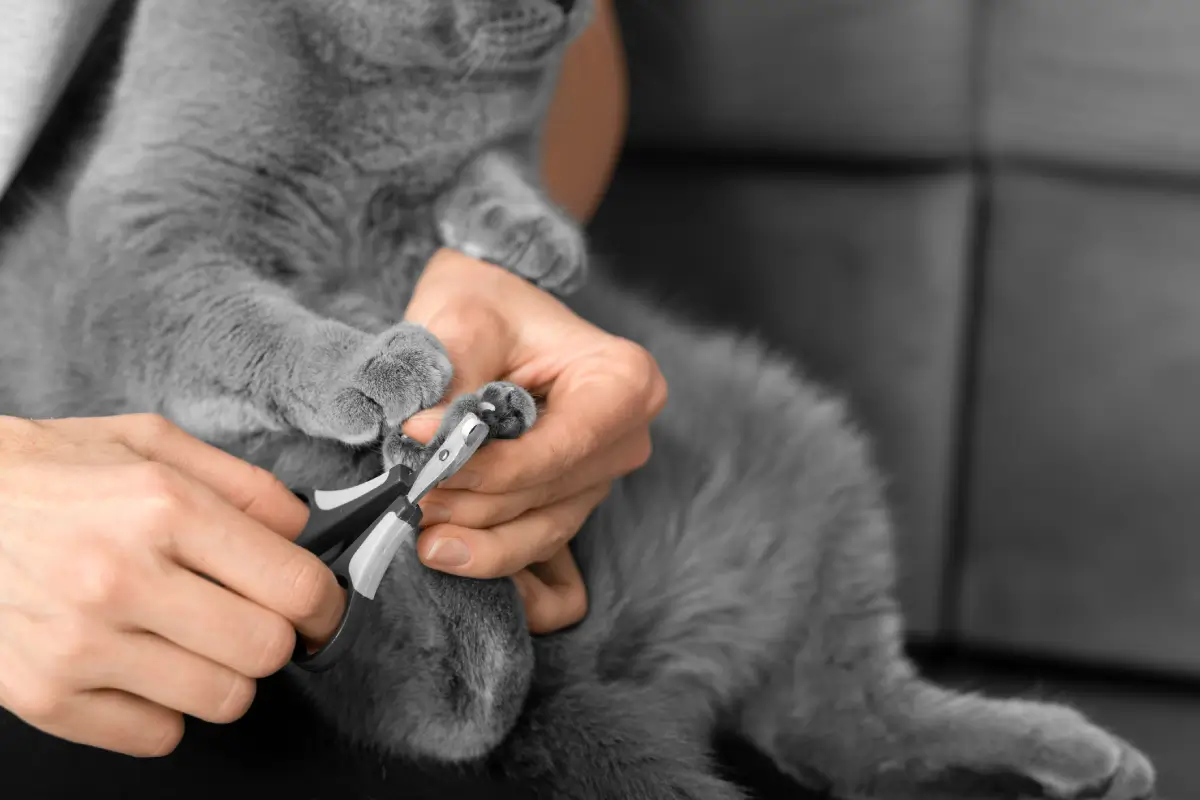
First, trim your cat’s nails. If you don’t already know how, have your veterinarian or groomer do it the first time. See our PHH article about How to Trim Your Cat’s Nails for more information.
Spray Feliway® ahead of time, in the area where you will dip your cat. This will help them be calmer, and make the dipping experience a little less stressful for you both.
Apply a ¼ inch strip of artificial tear ointment to both eyes before dipping your cat. This will help protect their eyes from the dip. If you think any dip has gotten into your cat’s eyes, rinse well with an eye rinse solution or water for 15 minutes, and contact your veterinarian or emergency clinic immediately.
Starting with your cat’s dry hair coat, use a small sponge to gently spread the dip over your cat. If the sponge is too big for your hand or your cat, cut it smaller as needed. Use the smallest amount of lime sulfur dip as possible in a tub or plugged sink.
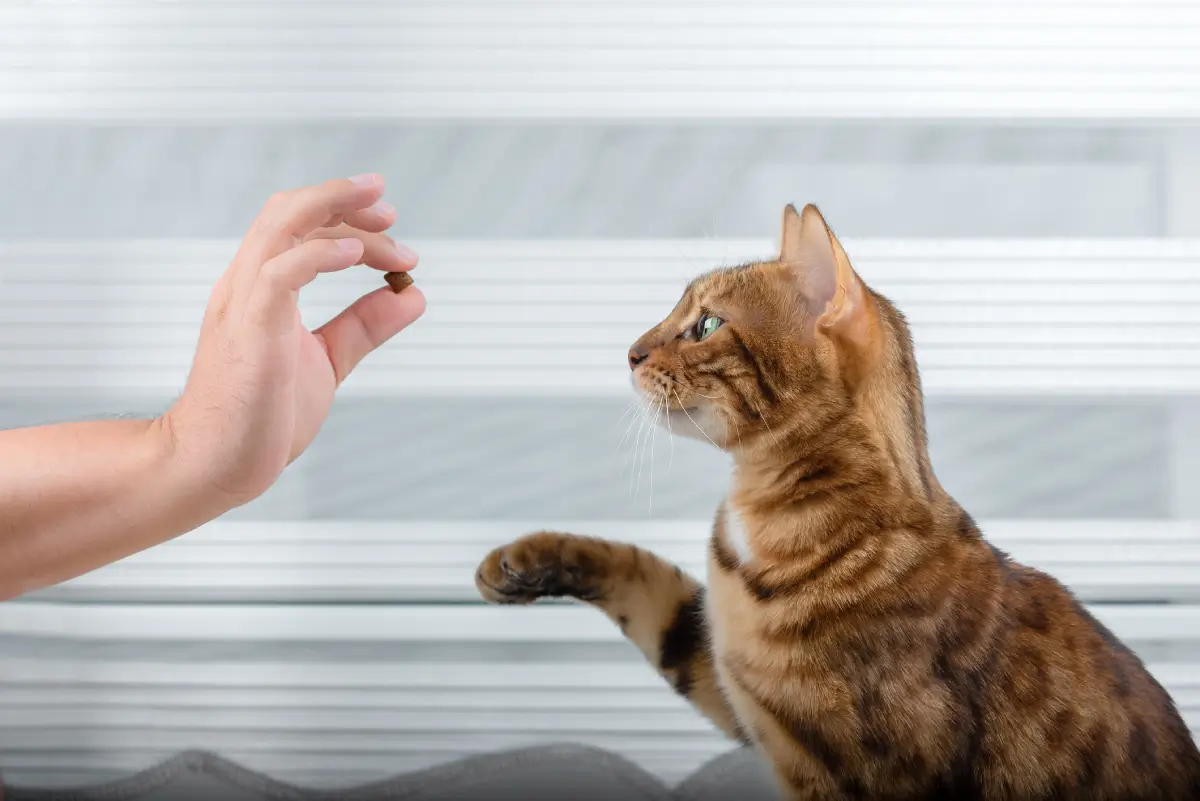
Gently re-sponge the dip over your cat until they are fully wetted, avoiding splashing. Be sure to wear protective gear for your eyes, skin, and clothes. Comfort your cat with soothing words and give them treats when you are finished.
Let your cat’s coat dry naturally without blow-drying or toweling off. After you dip your cat, wrap them in an old towel or dress them in cat pajamas. This will help prevent your cat from getting chilled and will protect your furniture and home from stains.
It’s also a good idea to keep them in a small, easy-to-clean area like a small bathroom, taking up rugs that might stain from the dip, until they are dry. You can also put them in a cat carrier for more restricted movement and easier clean-up after the dip.

Use Feliway spray and training treats such as Bonito flakes to get your cat accustomed to the bathtub or utility sink, and the dipping experience. Be sure to reward them with treats after the dip, and try to make the whole experience as minimally stressful and fun as possible.
Potential Outcomes
The prognosis for your cat depends on a few things–your compliance being the most important! You can greatly increase the odds of your cat having a cure by following the course of treatment as recommended by your veterinarian. Don’t miss medication doses and don’t miss dips as scheduled. (Mites will be reproducing in your cat’s hair follicles if you do!)
If your cat has immunological or other underlying disease issues that are contributing to their demodicosis, they may need further diagnostic testing and treatment to achieve a good outcome.
It is important to follow up to be sure your cat is cured. Skin scrapings are usually done every 3-4 weeks until resolution, then continue to treat your cat as directed by your veterinarian, (usually about 2 treatments) beyond when skin scrapings are negative.
By diligently following your veterinarian’s treatment plan, the vast majority of cases of feline demodicosis will resolve. So be patient, be calm, smile and breathe, do the homework discussed in this article, and your cat will become healthy and happy again.


By Karen E. Mueller DVM, AVCA Certified
Dr. Mueller has over 30 years of experience in general small animal veterinary practice, feline medicine, and shelter medicine. Dedicated to preventing pain in pets and improving their quality of life, she currently has an animal chiropractic practice in Bellingham, WA. Dr. Mueller is also passionate about reducing pet overpopulation and works with high-volume, low-cost spay and neuter nonprofit programs throughout the Pacific Northwest.