
 Pet News

Summary
Bad breath in cats, also known as halitosis, is more than just an off-putting smell—it’s usually a red flag for underlying health issues. While short-term odor after a tasty meal of cat food is normal, a consistent sour milk smell can indicate periodontal disease, the main culprit behind the bad odor. This condition starts with harmless bacteria but quickly escalates as plaque and tartar build up, leading to inflamed gums and a vicious cycle of oral health woes.
It’s especially tricky in purebreds, who often need extra dental TLC. Beyond the gums, halitosis could also be a sign of other health concerns ranging from metabolic disorders to respiratory conditions. Getting to the bottom of bad cat breath usually means a trip to the veterinarian for a thorough check-up, followed by some serious dental care and a solid oral hygiene routine at home to keep those kitty kisses fresh.
My first patient of the morning was a cat named Simba, whose breath could sour milk from across the room. He was a stout fellow, with fur as black as the night and eyes that glimmered with the kind of wisdom you’d think would keep him from such troubles. A fine cat; a good companion. But there he was, sitting on my table, with a malady as old as time: halitosis.
I’ve seen many cases in my years, battles fought against the unseen enemies that lurk in the mouths of those we vow to protect. Simba was no different. His was a tale of neglect, not from malice, but from the simple oversight of out of sight, out of mind.
Periodontal disease, the most common villain in these stories, had taken hold. It’s a silent affliction that creeps up, initially unnoticed, but unmistakably present by the time it demands attention. The battle plan was clear: blood work to check his overall health, a thorough examination under anesthesia, a strategic cleaning, extraction of offending teeth as needed, and a regimen of home care to fortify his defenses.
This was not just a fight for Simba’ oral health, but a campaign for his overall well-being. For in the end, it’s the victories over these small, unseen battles that ensure our companions lead lives not just to survive, but to thrive.
Introduction
Halitosis, or bad breath, is a common problem in cats. Normal cat breath should be fairly neutral, and not have an offensive smell. Just as in people, if pets have recently eaten, their breath will smell like their last meal, which would have been cat food—a smell which most people don’t find particularly pleasant. Therefore, while much of the time a normal pet’s breath is not going to smell appealing to the human nose, it should not smell bad, or like something rotten.
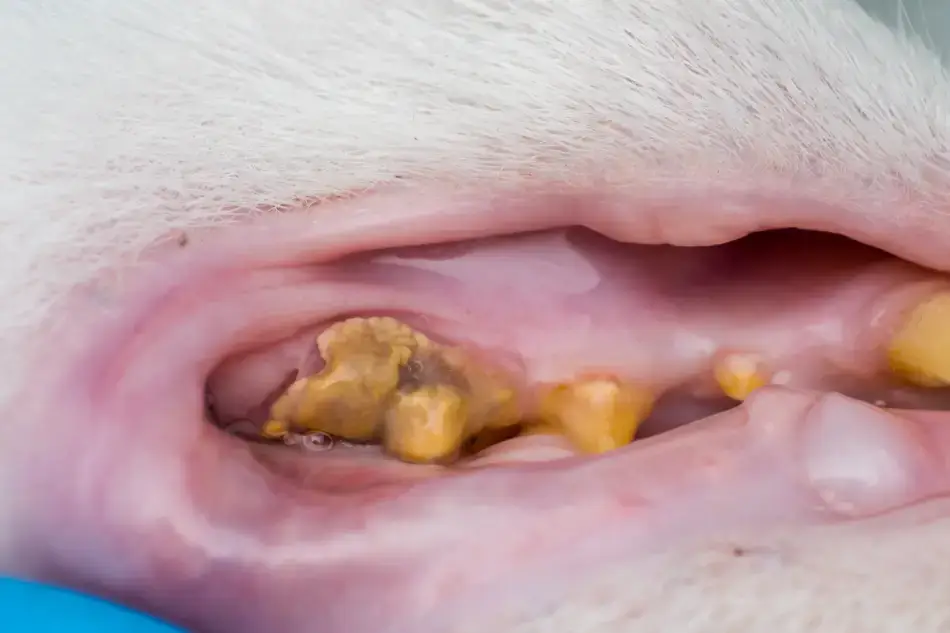
When a pet has halitosis, the smell is often described as a sour milk smell. This odor often accompanies periodontal disease, and may result from bacteria that is associated with plaque, calculus, retained food particles, and unhealthy gum tissue in the mouth.
Periodontal disease is one of the most common diseases seen in veterinary medicine. First, bacteria forms an invisible film on the teeth (plaque), which then mineralizes into tartar, or calculus. This is irritating to the gums, causing gingivitis, which then develop pockets alongside the teeth, which trap more bacteria, and a vicious cycle begins.
By far, the most common cause of halitosis in pets is periodontal disease. Once it becomes established, the odor becomes stronger and more noticeable. Bad breath in pets is not caused by lung air odor or stomach smells, unless the pet has recently vomited.
How halitosis develops
- A bacterial film (pellicle) starts forming on your pet’s teeth within hours after cleaning.
- Bacteria attach to this pellicle within 6-8 hours, and plaque starts to form.
- In a few days, the plaque turns into calculus (mineralized plaque).
- As calculus develops, gingival inflammation may occur (gingivitis) and progress into periodontitis (tooth support loss).
- Eventually the bacteria change from mostly non-motile (lacking the ability to “swim” through fluid), gram-positive aerobic bacteria (requiring oxygen), to motile (having hairlike cilia and flagella, which allow them to “swim” through fluid), gram-negative anaerobic bacteria (require a no-oxygen environment). In other words, over time, the bacteria type changes to ones that can move around and don’t need oxygen.
- To summarize, as periodontal disease progresses, the type of bacteria living on your pet’s teeth and gums change. They go from being the sort that can’t move around (non-motile) and need oxygen to survive (gram-positive, aerobic), to ones that can move around (motile) and don’t need oxygen (gram-negative, anaerobic). The bacteria populations change to survive in this new environment.
- These Gram-negative bacteria include Porphyromonas, Bacteroides, Fusobacterium, and Actinomyces spp.
- The cycle of pellicle and calculus-building continues, with the gingiva becoming more inflamed over time.
- The gingival sulcus (the space between a tooth and surrounding gingival tissue) widens and deepens, and becomes a periodontal pocket which traps food and bacteria and their breakdown products, generating halitosis.
- The primary cause of halitosis is volatile sulfur compounds (VSCs) that are made by gram-negative anaerobic bacteria, which include hydrogen sulfide, methyl mercaptan, dimethyl sulfide, and volatile fatty acids.
- The powerful smell of rotten eggs is caused by hydrogen sulfide, and the stink of feedlots is from methyl mercaptan. These smelly compounds might also contribute to gum disease.
Purebred cats are also prone to gingivitis and feline tooth resorption (odontoclastic resorption), so often need special oral care. In this very serious condition, in which the teeth resorb, or “dissolve”. Affected cats suffer silently from dental pain, and often require the extraction of many teeth. Daily brushing or oral rinsing is often required to help keep their mouths healthy.
Other causes of bad breath, or of foul odor around the face or head of your pet, could include:
- Lip fold pyoderma—a painful skin infection of the lips.
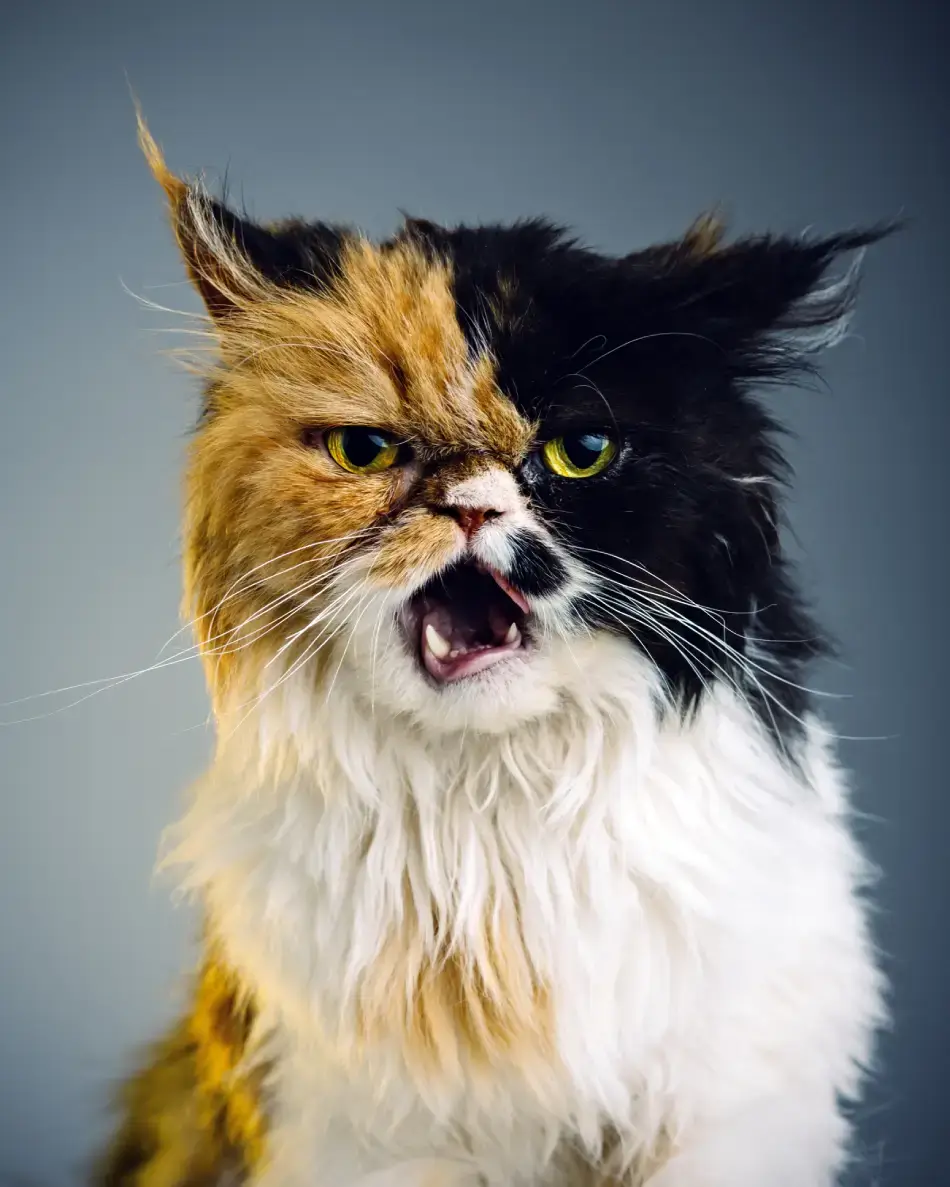
- Nasal fold pyoderma—moist, inflamed nasal folds, occurring in brachycephalic (flat-faced) cats (such as Persians).
- Foreign bodies—such as sticks or chews stuck between teeth or across the palate.
- Oral disease—periodontal disease, oral ulcers, inflammation of the tonsils or pharynx, or cancer of the oral cavity.
- Eating smelly food, rotten food, or coprophagy (eating feces).
- Metabolic diseases such as diabetes or kidney disease.
- Respiratory disease including inflammation or cancer of the sinuses and nose.
- Gastrointestinal disease including megaesophagus (enlarged, or distended esophagus with reduced ability to pass food to the stomach) and cancer.
- Trauma—fractures (usually in cats), injury from chewing electrical cords (more common in puppies), caustic agents (more common in dogs running loose).
- Infections of the mouth.
- Autoimmune disease of the oral cavity.
- Eosinophilic granuloma complex in cats—(a form of allergic response, or hypersensitivity reaction, commonly found on the lips, and often referred to as ‘rodent ulcers’.)
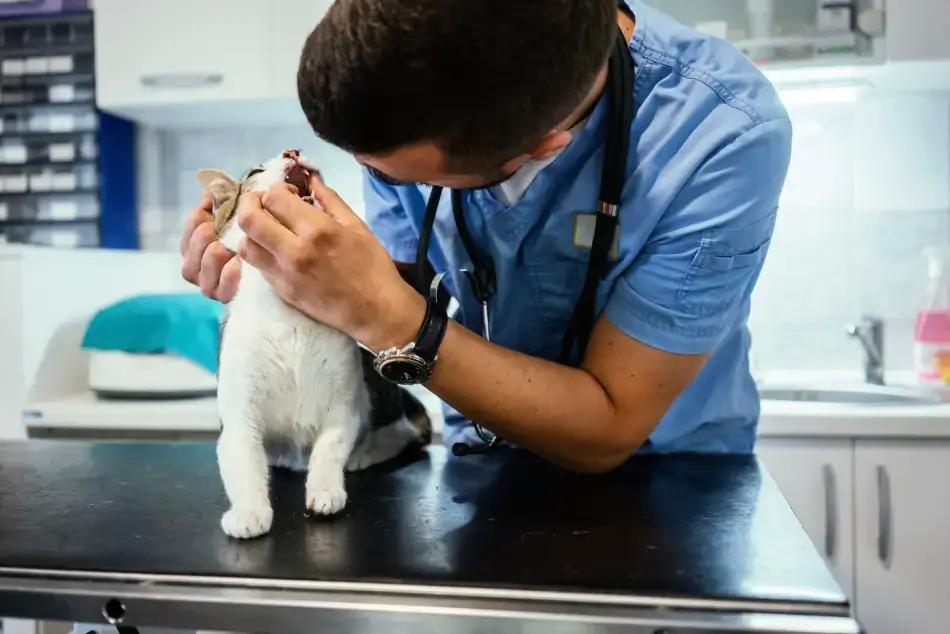
If your pet has halitosis, please see your veterinarian for a complete physical and oral examination. However, some sedation will be needed if your pet won’t allow a thorough oral exam while awake. You can always ask your veterinarian about combining procedures if there is time in their schedule, especially if your pet needs another procedure and needs to have sedation for their oral examination.
Please remember that your veterinarian will be doing their best to help your pet who may be very nervous about having someone examining their mouth. Try to be as reassuring as possible for your pet’s sake, just like you would be for a child.
As previously mentioned, the most common cause of halitosis is periodontal disease. Once your veterinarian has ruled out other causes of halitosis in their examination, they will proceed toward a firm diagnosis. They will probably do blood work on your pet, and if your pet’s health allows, the doctor will recommend a thorough examination of the teeth and oral cavity under anesthesia, in addition to dental radiographs (X-rays).
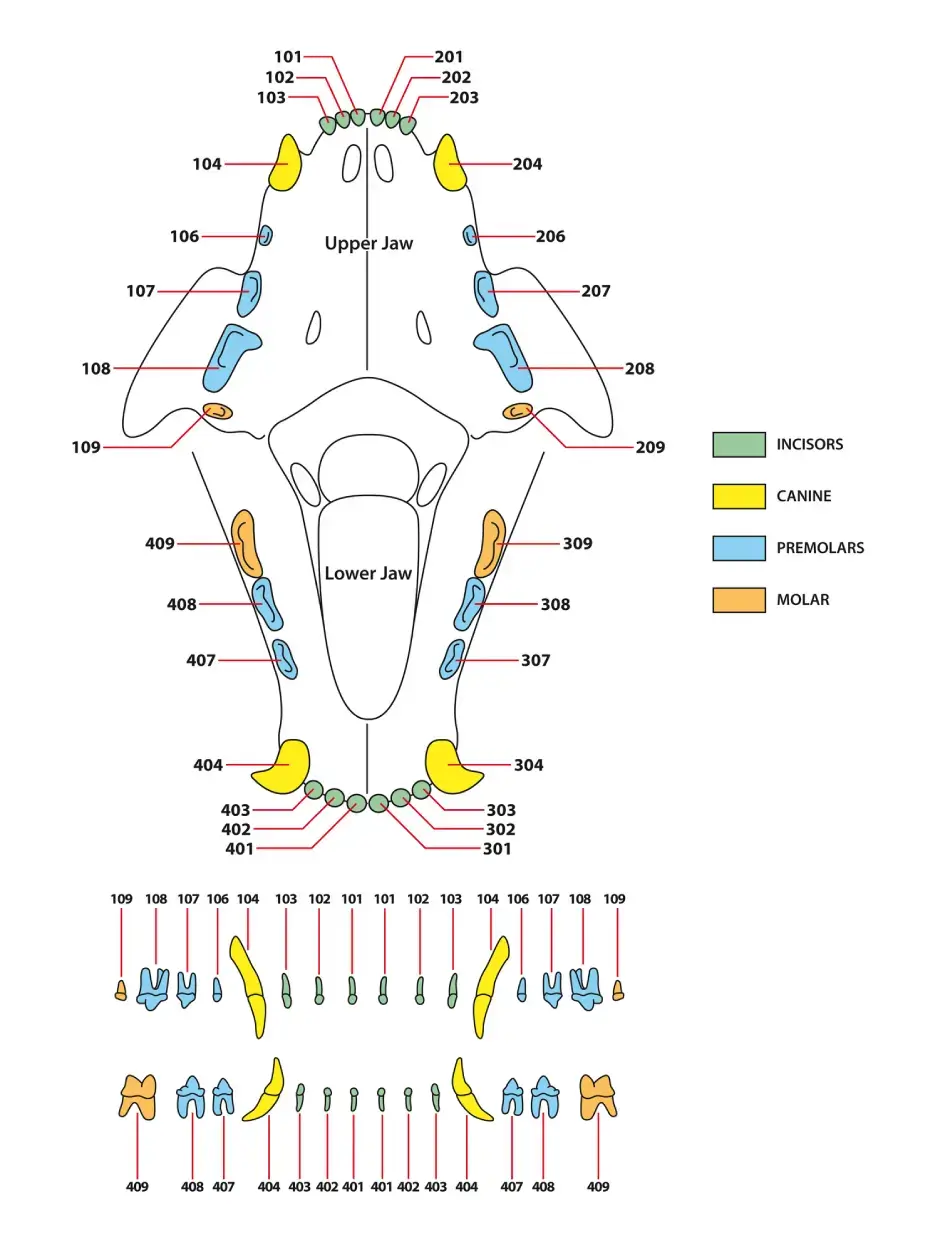
While they are under anesthesia, the veterinary technician or veterinarian will perform intraoral radiography, measure pocket depths, assess tooth mobility, and chart your pet’s teeth.
Advertisement
Halitosis Treatment
After your veterinarian has reached a diagnosis for your pet’s bad breath, they can establish the treatment plan. Usually this consists of periodontal treatment, often requiring tooth extractions, and ongoing home care, with a schedule for repeat dental cleanings.
Your veterinary team will clean and polish your pet’s teeth, including subgingival scaling (cleaning below the gum line). Your veterinarian will use intraoral radiographs, oral assessment, and probing to determine which teeth, if any, are recommended to be extracted. Teeth with advanced periodontal disease (with greater than 50% loss of support), or loose teeth, will likely be extracted, with your permission (be sure to give it in advance).
Absorbable sutures will be placed in most extraction sites. Appropriate pain control medication will be administered and dispensed for home use after the procedure.
After your pet’s dental procedure, start oral home care immediately. If your pet had extractions, ask your veterinarian for an oral rinse you can use twice daily at home, starting the day after the dental cleaning. This can really help with healing.
Start brushing with a soft toothbrush in two weeks, with a pet-approved toothpaste your pet likes. Most pets love poultry flavored toothpaste, so try that flavor if your pet doesn’t have food sensitivities.
Most pets would do better after extractions if they had an oral rinse twice daily, yet veterinarians rarely send one home. This one has dilute chlorhexidine which is great. It also works well to help treat periodontal disease.
It can be intimidating to start a home care program for the first time, and we have some PHH articles to help you, but here are some brief notes. Starting with wipes is usually easier than going straight to a toothbrush for most pets.
These finger wipes are textured so if you rub the tooth surfaces, you should get some effective cleaning done. They have some efficacy on their own, but will work better with a little enzymatic toothpaste such as Virbac CET enzymatic toothpaste.
Cats usually love the taste of this poultry-flavored toothpaste.
This toothbrush kit has smaller brushes that can fit in a variety of cat mouths. See the PHH article on How To Brush Your Cat’s Teeth. You may want to start with the finger brush to teach your cat to open his mouth and touch their teeth, one at a time, using lots of treats. (Or try starting with wipes, as mentioned above.) You may find the long-handled brushes available in pet stores and online are helpful and worth a try; I prefer shorter-handled brushes when available.
Advertisement
Many cats love Greenies Cat Treats, which can help keep their teeth a lot cleaner when used several times a week. These treats clean your cat’s teeth and freshen their breath.
Prescription medications are not usually used for halitosis as a stand-alone condition. When halitosis is secondary to periodontal disease, however, antibiotics may be part of the initial stages of treatment, especially with multiple tooth extractions.
Good home care will help decrease gingival pocket depth, decreasing the environment for bacteria and physically removing them by cleaning. Controlling bacteria will help control odor, through decreasing the generation of VSCs.
Gels are available to apply weekly, and have been shown to delay the development of plaque in cats. You can apply these with your finger, a cotton swab, or a rolled-up piece of gauze.
Oral care products with zinc can help inhibit halitosis. Zinc binds to the sulfur, inhibiting the odor. Note—this is only masking the odor, not treating the cause! (However, the VetOne ChloraZinc Rinse mentioned above also contains chlorhexidine, which is antibacterial, so it actually treats the cause of halitosis as well as inhibits the odor.)
Note—The Veterinary Oral Health Council (VOHC.org) authorizes the use of the VOHC Registered Seal on products intended to help retard plaque and tartar on the teeth of animals. If you purchase a product with their seal, it has been shown to be effective at removing plaque and tartar, but is not necessarily safe in other ways.
For example, for you cat lovers who also have dogs, treated rawhide may be effective at helping prevent plaque and tartar, but it may also be a choking hazard, so be sure to use it under supervision.
So if you notice that your pet has developed smelly breath, pay attention! Sometimes halitosis comes on so slowly that we don’t even realize that our pet’s breath would make a skunk faint, until dental disease is advanced. Check things out! Take your pet to the veterinarian and get them examined.
Get periodontal disease treated if present. Start a great home care protocol. Change that smelly breath to nice, normal, clean, neutral cat breath. Your friends and family will thank you for it, and when your four-legged friend gives you a sandpapery kiss, you will be the MOST thankful for their clean kitty breath!

By Karen E. Mueller DVM, AVCA Certified
Dr. Mueller has over 30 years of experience in general small animal veterinary practice, feline medicine, and shelter medicine. Dedicated to preventing pain in pets and improving their quality of life, she currently has an animal chiropractic practice in Bellingham, WA. Dr. Mueller is also passionate about reducing pet overpopulation and works with high-volume, low-cost spay and neuter nonprofit programs throughout the Pacific Northwest.