 Pet News


Summary
This article provides HOPE for your dog with Progressive Retinal Atrophy (PRA). Treatment, management, and potential outcomes for dogs with PRA are discussed in Part 3 of this three-part series. In addition to daily antioxidant nutraceutical supplementation to best protect any remaining functional cone photoreceptors, your dog needs your support to help them best live with their vision loss and be safe, especially in their senior years. There are many things you can do to help your dog thrive while living with PRA.
(Please read PRA in Dogs Parts 1 and 2 before reading this article!)
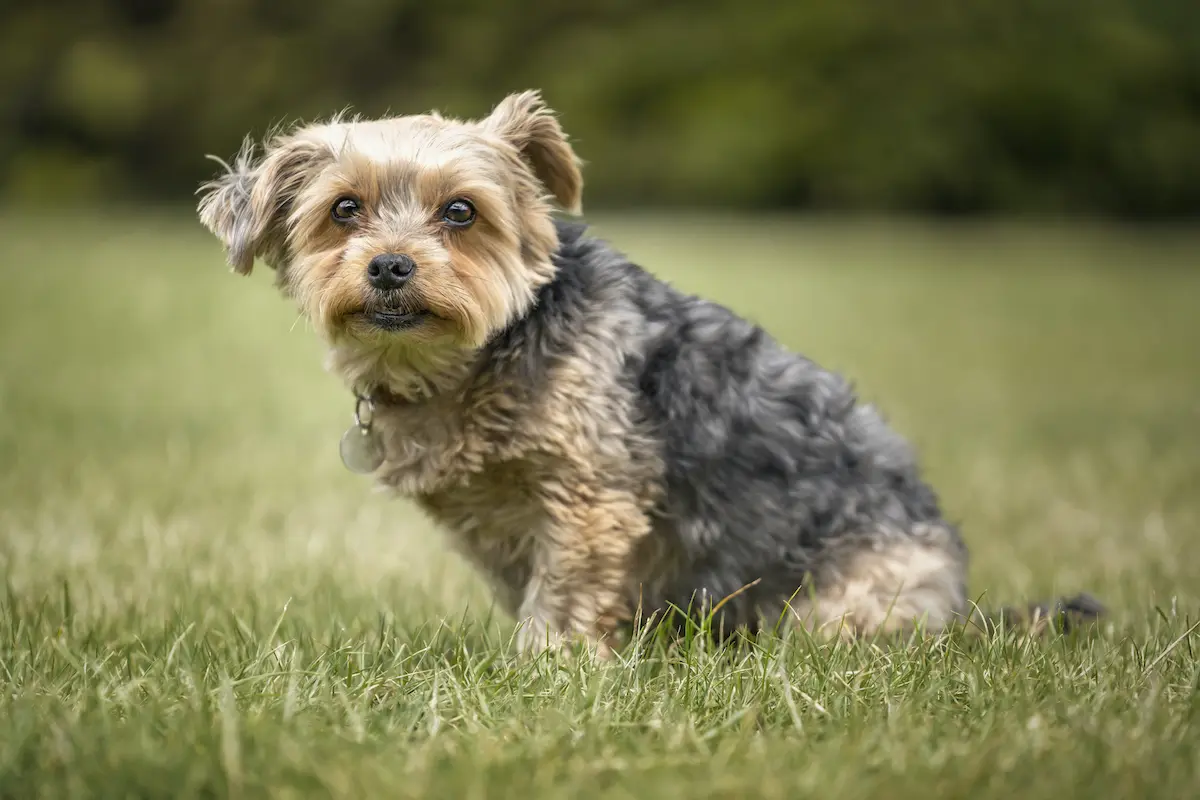
After Dave and Jill recovered from the shock of Robbie’s diagnoses of PRA and the formation of progressive secondary toxic cataracts, they got busy. In addition to lifetime daily antioxidant supplementation, there were plenty of things they could do to help their little doggo live his best life. With their new awareness of Robbie’s poor vision, Jill and Dave realized that while Robbie had already adapted pretty well, he needed some help.
Robbie “froze” when moving from light into dark, and was hesitant in dim hallways and stairways. Plug-in sensory lights that automatically turned on when lighting was dim were placed throughout the house. Outdoor sensory and motion lights were also installed, so that Robbie would be more confident while outside at night for potty breaks.
More adjustments were made after Robbie fell down the stairs; the doorbell had rung, and he barked and bolted down the stairs for the front door. Robbie was not hurt, but lesson learned: all smooth steps were covered with textured stair treads.
Baby gates and non-slip textured mats were placed at the bottom and top of indoor stairways to help orient Robbie and keep him safe. Non-slip textured mats were also placed at the top and bottom of outside steps.
Jill and Dave were cautioned by the veterinary ophthalmic technician to not carry Robbie from room to room because this would disorient him. But if he had to be carried, it was important to place him down in the same spot facing the same way each time, so Robbie would orient quickly to where he was.
Robbie was taught to stay on a mat while Dave and Jill were in the kitchen, so that the tiny dog was not underfoot and stepped on or tripped over. Two pet ramps were installed– one for Robbie’s favorite couch, and one for Dave and Jill’s bed.
Robbie’s treats were switched to a healthy dark brown treat that was easier for him to see against the light-colored floors when they were tossed to him.

Introduction
The two greatest health fears that humans have are the fear of blindness and the fear of cancer, and we extend these fears to our pets. If a dog is blind, we are as distraught as if it was happening to us. But from a dog’s perspective, their life doesn’t change if they have low vision or are blind.
They don’t think and grieve about their loss of vision– instead they use what they have and go on with their day. Dogs live in the moment, and not in the future. As long as they are with their family, their routine and environment are stable, and they are safe and protected, your dog has a great quality of life.
While dogs with PRA are gradually losing their vision, they also are simultaneously adapting to the vision loss. In fact, if a dog were destined to become blind and veterinary ophthalmologists (see “veterinary ophthalmologist”) could pick the blinding disease, the winner would be PRA.
It is not painful, only the eyes are affected, and the vision loss is gradual so as vision is slowly lost, they have time to adapt. PRA is almost always advanced by the time it is diagnosed. At this stage, most dogs are night-blind and their daytime vision is poor, but they have been adjusting well because of their “super-power” senses of hearing and smell to navigate their world.
But this does not mean that your dog with PRA does not need some help. They do! Especially as they age and their other senses weaken.
Advertisement
Treatment
Unfortunately, there is no treatment or cure for PRA. Genetic diseases that lead to the death of specialized cells in the nervous system, such as photoreceptors, are generally challenging to treat and cure because cells of the nervous system are highly specialized and often cannot regenerate. Treatments focus on management of clinical signs, improving quality of life, and delaying progression of cell impairment and death.
Research in various breeds with PRA (such as Miniature Schnauzers and Labrador Retrievers) has helped create gene therapies (see “gene therapy”) and retinal implants for humans with retinal diseases similar to PRA, which someday might be available for dogs.
Strictly speaking, because daily administration of an antioxidant vision supplement is not curative or disease-modifying, it is not a treatment (therapy) for PRA, but is rather considered a supportive strategy to help reduce damaging oxidative stress in the retina, which offers some protection to remaining living retinal cells.
Management
Take your dog out of the gene pool and notify the breeder of the diagnosis. If your dog is not spayed or neutered (see “spay and neuter”), schedule this procedure with your veterinary clinic. If your dog has had offspring, notify the owners of those dogs; the offspring might not be affected with PRA (which depends on whether the other parent is an unaffected carrier or affected with PRA), but they are all at the very least carriers of the gene and should not be bred.
Dogs generally adapt very well to losing most or all of their vision and have a good quality of life as long as their hearing, sense of smell and their cognitive abilities are intact and their environment stable. Dogs are not humans. Dogs did not evolve to read, drive a car, or see a tiny bug crawling on the wall. They are not fearful that they will fall down if they bump into something, as they are planted on all fours and not just two. What is considered useful vision for a human is not necessarily useful for dogs– and vice versa.
Two of the last visual functions to be lost in dogs with PRA are movement detection and light/dark perception, which are very useful in dogs. Even if a dog has lost all vision except for light and dark perception, this ability is still quite valuable and worth fighting to keep, because dogs can do a lot with just light and dark perception.
If dogs can detect where light is coming from and they can rely on that light being where it always is, it helps them orient to where they are. This is especially helpful in geriatric dogs. Vision, hearing, smell, sensing pain, and cognition all occur in the brain.
Consider an elderly dog with PRA and vision limited to light and dark perception: if other health issues are added such as aches, pains, anxiety, and cognitive decline, then the dog’s ability to use their limited vision can be further impaired. For example, if a dog with vision limited to light and dark perception is in pain, then the pain can be a distractor and prevent the dog from best using their limited vision. They must be able to “trust the light” to appear where they expect it. Also keep in mind that cognitive deficits are enhanced in the presence of other deficits such as vision, hearing, smell, etc. In fact, people with hearing loss are 5x more likely to develop dementia.
It is important not to try putting your sad thoughts about vision loss inside your dog’s brain, because these thoughts do not exist for them. Optimists see the doughnut and pessimists see the hole. Dogs always see the doughnut. There are many things, however, that you CAN do to help your vision-impaired dog. Several management strategies can improve the quality of life for dogs with PRA:
Keep Facial and Ear Hair Closely Trimmed: Dog with hairy faces must have the hair kept very short, so that hair does not interfere with remaining vision in any way, and so that pet parents can easily monitor the eyes for any changes. This also includes keeping the leading edges of both ears (nearest the eyes) short, because with hairy ears cocked forwards, or when the dog looks downwards, a curtain of ear hair blocks peripheral vision. Hair should be trimmed every 3 weeks (no topknots!). One suggestion is to have facial trimming done every 3 weeks, and full-body grooming done every 6 weeks.
When possible, try not to trim the long tactile whiskers (vibrissae) on the muzzle, above the eyes, and on the cheeks, as these specialized sensory hairs help dogs navigate and sense their surroundings. A skilled groomer is best able to preserve these hairs.
Specific Vision Antioxidant Supplementation: Antioxidants and nutrients including lutein, zeaxanthin, and omega-3 fatty acids may help slow the degeneration and death of rods and cones (see “cone”), and the formation of secondary toxic cataracts.
It is VERY important that dogs with PRA are given the daily recommended dose of antioxidant supplement. In the author’s experience, PRA is a disease that does not forgive underdosing. Dogs with PRA that are underdosed tend to lose their remaining sight more rapidly than dogs given the correct daily dose– both from cone cell loss and also progression of secondary toxic cataract formation.
If an owner runs out of the vision supplement, it is typically the case that the dog’s remaining vision quickly and noticeably declines. However, if the supplement is reinstated as soon as possible, most dogs will recover the degree of remaining vision they had lost due to the supplement running out.
A note about human vision supplements: these are designed for human eyes. For example, age-related macular degeneration is a common cause of vision loss in humans, and specific vision supplement products are available to support the retina in affected people. However, dogs do not have macula, and their retinas benefit best from species-specific antioxidant vision supplementation.
Some human vision supplements might even be toxic to dogs. For example, human vision supplements that contain crocin (the active ingredient in saffron) are potentially toxic to dogs.
Environmental Adaptations: Making adjustments to the dog’s living environment can help a low-vision or blind dog safely navigate their home. This is especially important if your dog is brachycephalic and has prominent eyes that can be easily bumped. To help your low-vision dog safely navigate, create areas that are always well-lit, especially around stairways, steps, and outdoor spaces on dark cloudy days and spaces used for nighttime pottying.
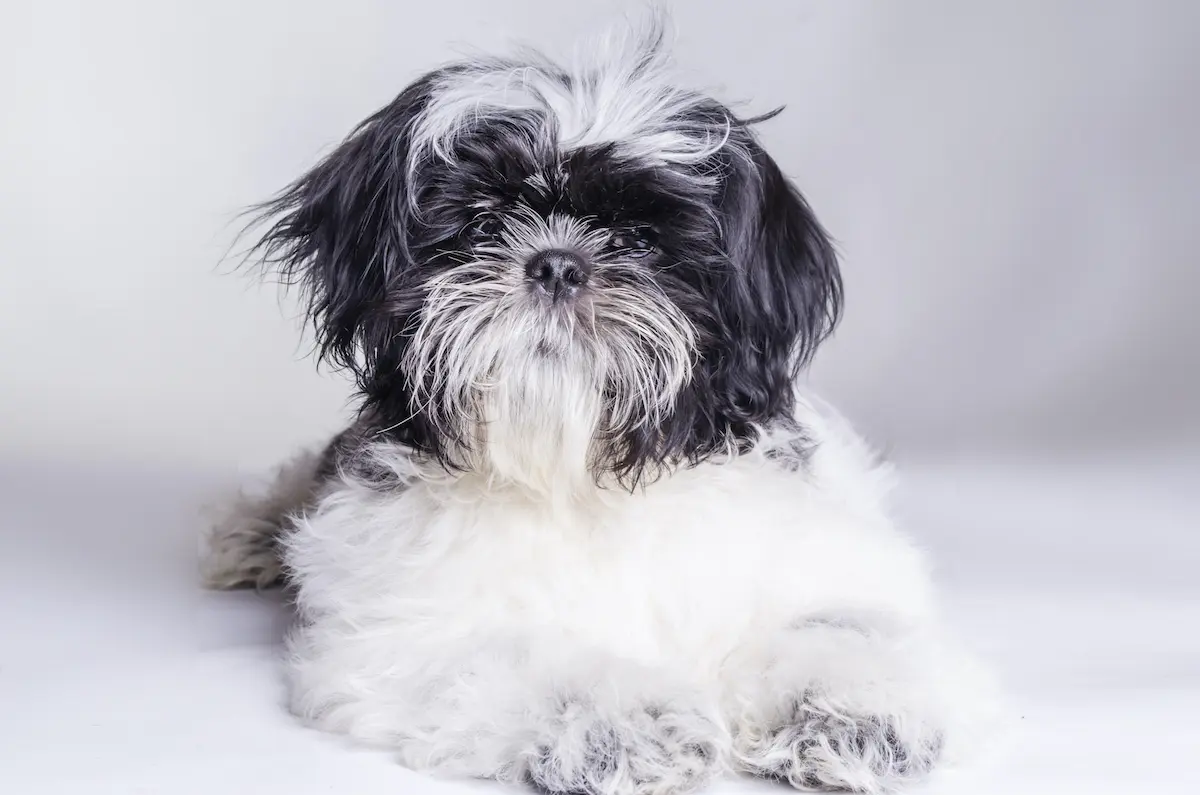
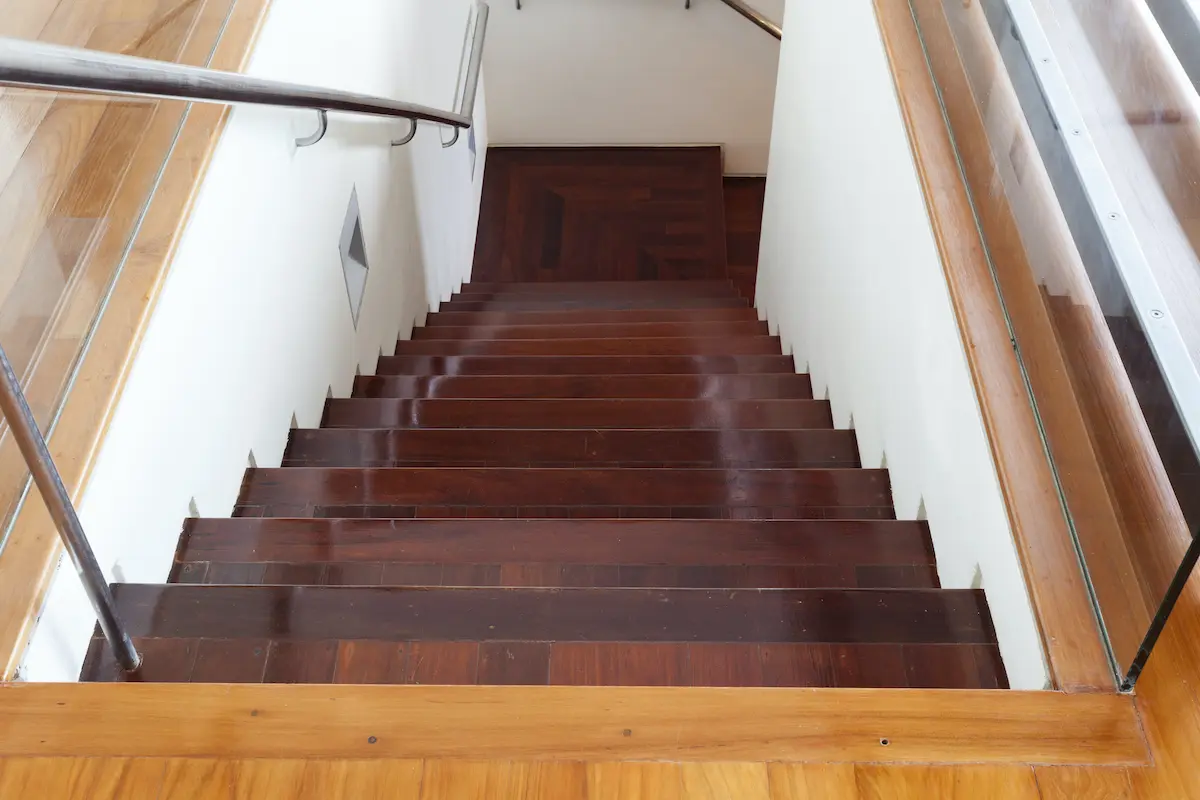
Maintaining consistency in lighting patterns, floor textures, and furniture arrangements will help your dog feel more secure. Strategically placed outdoor and indoor sensory lights that activate in dim lighting are very helpful. For example, if your dog struggles to get on and off the bed or sofa at night, increase the light level and provide textured steps for easier access.
Rug runners in dim hallways and kitchens can serve as “runways” that guide your dog from place to place. Additionally, consider the safety of everyone in the household. Low-vision dogs can sometimes be tripping hazards, particularly in high-traffic areas like kitchens.
There’s also a risk that they might unintentionally bump into other pets who are napping or eating, which could trigger conflicts. For example, one of my patients with PRA repeatedly stumbled over a cat sleeping in a dim hallway, which created instant conflicts. If you usually walk multiple dogs, keep in mind that your dog with PRA may bump into the other dogs, or trip you up with their body or leash.
Safeguard stairways and steps by using baby gates and, when possible, allowing only one pet at a time on the stairs. Racing for the door when the doorbell rings can be risky, as a dog with PRA might get injured. One of my patients with PRA and poor vision was a little dog that lost a race down the stairs to a larger dog and suffered serious injuries when it fell down the stairs.
To help your dog understand where stairs begin and end, place textured mats or rugs at the top and bottom. Essential oils can be used to help orient and signal dogs to the top and bottom steps. Compared with perfumes, essential oils have a simpler, more recognizable scent profile that dogs can easily identify. One scent (such as lavender) can be used for horizontal surfaces (stairs, deck edges etc) and a different scent (such as cedarwood) can be used for vertical objects (edge of table, edge of door, vase, etc).
If the stairs are smooth, consider adding a gripping surface for better traction. Cushion sharp corners on low tables or fireplaces, and use essential oils and large high-contrast window cling stickers on glass French doors to prevent accidents. One of my patients with PRA and low vision once tried to run through a closed French door, breaking the glass and injuring its leg.
If you carry a small dog with poor vision from room to room, it can be disorienting. Be consistent about where you set the dog down and the direction it faces, to reduce confusion.
A good “down” spot would be the dog’s food and water bowls. Training with verbal cues like “stop,” “wait,” “come,” “step up,” “step down,” “watch,” or “careful” can help guide your dog through its environment.
A harness with a handle provides extra control for safely guiding your dog, and devices like the halo harness (which has a hoop protecting the eyes and face) can help your dog detect obstacles before bumping into them. A “catch 22” is that the halo does not allow the dog to smell an object before they bump into it, so they don’t make the association with the object to learn to avoid it.
However, the priority is protection of the eyes and face. Many dogs don’t do well with a halo, but some dogs are much more confident in their surrounding. Halos should not be your first choice when providing adaptive gear for your dog.
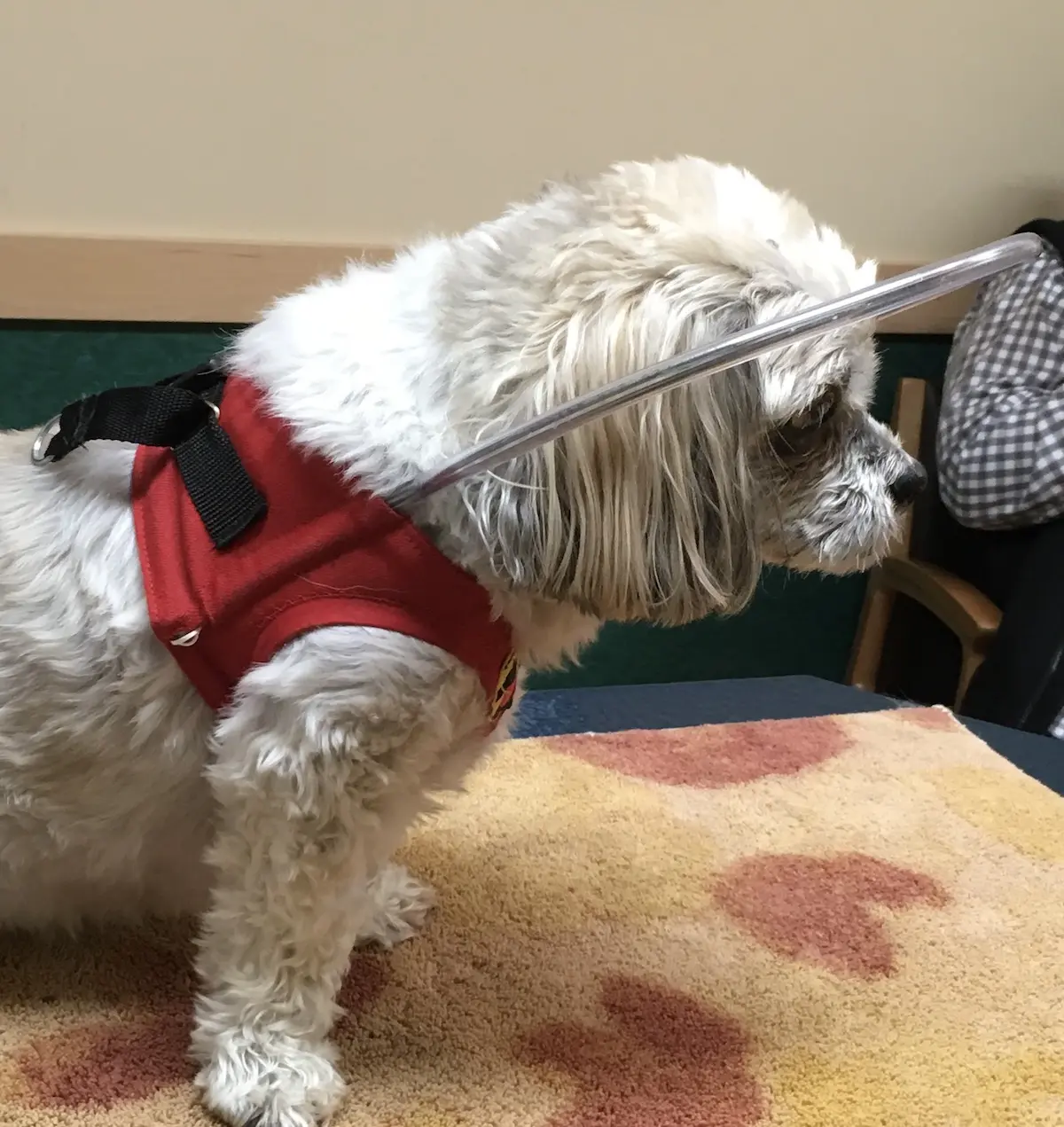
Dr. Terri McCalla Photo
Sticking to a regular walking route can also build confidence, as familiarity with the path makes the dog feel more secure.
Toys and Treats: When choosing toys, keep in mind that dogs see colors differently, mostly perceiving shades of blue and yellow. A toy should ideally be blue, have a distinct scent, glow, make a sound, or move to help the dog locate it more easily, especially since low-light vision is reduced.
Your dog will have the best chance of identifying large, moving treats with high contrast and a strong scent, such as a dark brown treat against a light background. It can be helpful if the treat lands with a noticeable sound, making it easier for the dog to detect where it falls; treats that land on smooth flooring are more audible than those that land on carpet.
To keep your dog mentally engaged, try activities that stimulate their other senses. Puzzle toys, scent games, and gentle massage can all provide valuable mental stimulation. If you have other pets, they will often adapt naturally to your dog with PRA. However, in some cases, behavioral training may help other pets adjust to living with a vision-impaired dog.
Support Groups: Consider joining online support groups for owners of low-vision and blind dogs. These communities offer valuable advice, support, and resources to help you and your dog navigate life with PRA.
Your Other Dogs: If you have other dogs, they might serve as “seeing eye” guides for your low-vision dog. By the time you receive the diagnosis of PRA, your other dogs have likely already figured out that their buddy is not seeing very well and adapted their playtimes. But the opposite is true; for example, at feeding time separate your dog with PRA from the other dogs, in case your low-vision dog blunders into the food dishes of the other dogs.
Alert Leash Wraps and Vests: When in public, have your dog wear a vest that alerts people that your dog is low-vision or blind and not to pet it. People will then understand if your dog runs into them on the sidewalk, etc.
Veterinary Support: In addition to these strategies, regular veterinary checkups, including visits to a veterinary ophthalmologist, are essential for monitoring PRA progression and managing any secondary issues, such as cataracts. It’s also wise to have your general veterinarian measure your dog’s blood pressure annually, as high blood pressure (systemic hypertension) can cause additional retinal damage, potentially worsening PRA-related vision loss. If systemic hypertension is diagnosed, treatment is important not only for retinal health but also for support of heart and kidney function.
Advertisement
Potential Outcomes
The progression of PRA varies among affected dogs. While blindness is the ultimate outcome, the rate of progression can differ. Some dogs may retain partial vision for several years, while others may experience rapid deterioration. The author has observed many affected dogs retaining some functional vision for much longer than predicted, if they were placed on daily antioxidant vision supplementation.
Dogs are highly adaptable animals, and most adjust remarkably well to vision loss and live happy, fulfilling lives. They rely more on their senses of hearing and smell to navigate their environment. Consistency in their surroundings and routines significantly helps blind dogs feel secure and confident.
Secondary toxic cataracts are a potential complication associated with PRA (see Part 2 of this 3-part series), along with other possible issues arising from cataract development. Dogs with PRA are also at an increased risk of eye injury, as they are more likely to bump into objects. This risk is especially high for brachycephalic dogs, whose short noses and prominent eyes make them more vulnerable to injury.
In severe cases where painful conditions arise as a complication from PRA, such as uncontrolled glaucoma due to cataracts, or ruptured eyes due to corneal ulcers, surgical removal of the affected eye may be necessary to alleviate suffering. In the worst-case scenario, euthanasia may be considered for dogs facing multiple health issues, with poor vision being the “final straw” that impacts their quality of life.
When Robbie was a little old man of 14 years, his hearing was diminished and his joints were arthritic, so he was no longer allowed to go up and down stairs. Robbie was completely night blind, but still had some useful light and dark perception in his right eye that helped cue him to where he was (at the age of 10, his left eye had developed an anterior lens luxation and the eye was removed). He always knew where he was in the house, and waited for Jill or Dave to turn the lights on before he entered a room. Dave and Jill kept up the daily vision supplement, as they believed that it helped Robbie keep his ability to perceive light, plus the ingredients helped support his brain function.They were grateful for the lesson that Robbie taught them everyday—vision loss from PRA is an adjustment, it’s not an end. Robbie adapted to his vision loss with remarkable resilience, leaning on his other senses and his trust in Jill and Dave.
Advertisement
Conclusion
You can provide your dog with PRA a safe and enriched life! There are several ways of creating a stable and supportive environment that leverages their remaining senses:
(1) Maintain consistency and provide clear cues.
(2) Enhancing lighting.
(3) Use scent markers.
(4) Create safe spaces.
(5) Offer mental stimulation.
(6) Provide appropriate toys and walking aids.
In these ways, pet parents can significantly improve the quality of life for their dog with PRA.
Affected animals should not be bred, and can be supported with specific antioxidant supplementation to help prolong cone and lens cell survival, utilizing antioxidants known to support retinal and lens cells both in health and in disease.
PRA is not a hopeless disease! It is a condition that can be managed with informed care and proactive strategies to help your dog live a full and happy life.

By Terri L. McCalla BSc, DVM, MS, Diplomate ACVO
Dr. Terri McCalla Dr. McCalla received a BS in Animal Health Science from the University of Arizona, followed by her DVM degrees from both Oregon and Washington State Universities in 1984. She completed a 3 year residency in Comparative Ophthalmology from the University of Missouri and became board-certified in the American College of Veterinary Ophthalmologists (ACVO) in 1989.