
 Pet News

Summary
Conjunctivitis, a prevalent eye condition in cats, involves inflammation of the conjunctiva—the moist, pink tissue surrounding the eye. This condition can manifest with symptoms like squinting and red, swollen conjunctival tissue, often accompanied by small follicles. The inflammation is typically triggered by bacterial, viral, or parasitic infections, or even immune-mediated factors.
Moreover, the disease can extend beyond the conjunctiva to affect the cornea, complicating the condition further. Among the notable pathogens is the feline herpes virus-1 (FHV-1), which not only affects the conjunctiva but also the cornea, potentially leading to severe complications such as corneal inflammation (keratitis) and ulcer formation.
Another significant condition related to conjunctivitis is eosinophilic keratoconjunctivitis (EK), an immune-mediated disease impacting the cornea and conjunctiva of cats, often leading to progressive damage and possible blindness.
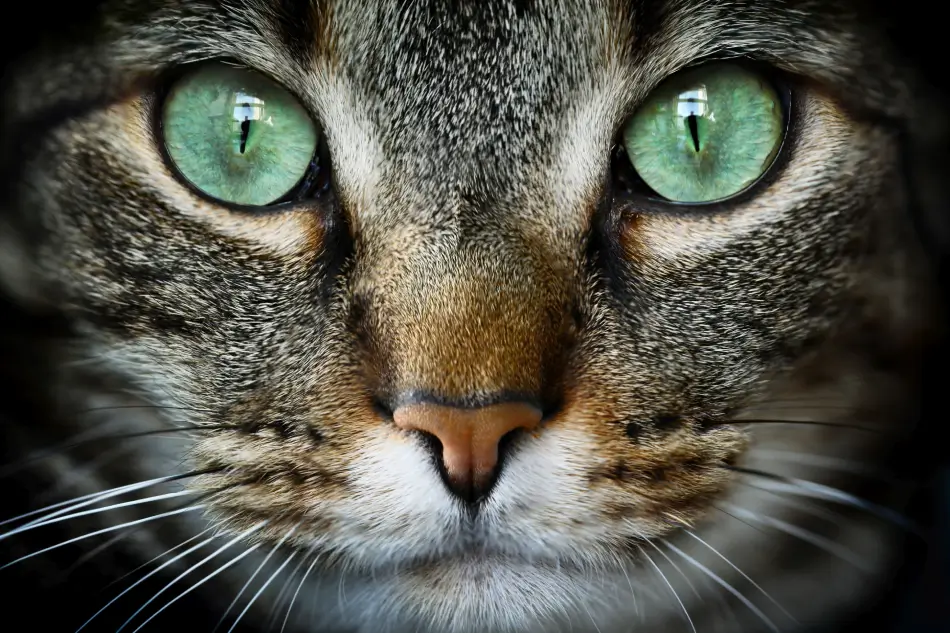
Dr. Philbert of Vancouver, British Columbia, is renowned for her compassionate and dedicated care for feline patients like Dot, a sweet kitty with mesmerizing green eyes. Dot’s journey with eye issues began with symptoms typical of conjunctivitis – squinting, redness, and swelling of the delicate tissues around her eyes. As Dr. Philbert examined Dot, she suspected a deeper issue, possibly involving the cornea, a common complication in cases like Dot’s.
With meticulous care, Dr. Philbert diagnosed Dot with Feline Herpes Virus-1 (FHV-1), a tricky condition notorious for its ability to cause conjunctivitis and corneal inflammation. Understanding Dot’s discomfort, Dr. Philbert crafted a tailored treatment plan, combining antiviral medications, immune-modulators, and soothing eye lubricants to alleviate Dot’s symptoms and minimize the risk of recurrences.
But Dot’s journey didn’t end there. As her treatment progressed, Dr. Philbert noticed subtle changes indicating a potential case of Eosinophilic Keratoconjunctivitis (EK), an immune-mediated condition affecting the cornea and conjunctiva. Undeterred, Dr. Philbert adjusted Dot’s treatment regimen, introducing topical steroidal anti-inflammatory drops to manage EK’s progression.
Introduction

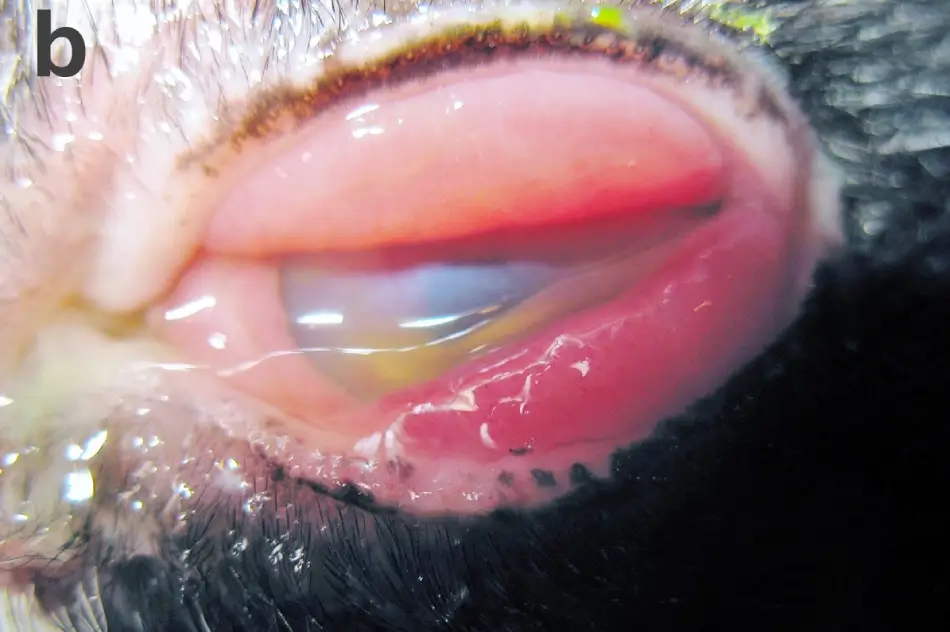
Conjunctivitis is the most common eye problem seen in cats. The conjunctiva is the slippery pink tissue that surrounds the eye in all animals. When inflamed, it is called conjunctivitis. Apart from squinting (blepharospasm), the conjunctival tissue may appear bright pink to red , swollen (chemosis), and sometimes small follicles are present.
Conjunctivitis is often a result of a bacterial, viral, or parasitic infection, or immune-mediated. Sometimes the cause of inflammation in the conjunctival tissue can also cause changes to the cornea.
Unlike the conjunctival tissue, which contains many blood vessels that can harbor infectious agents, the normal cornea lacks blood vessels, making it a hostile environment for most infectious organisms.
Two conditions have evolved to exploit both the conjunctiva and intact cornea at the same time. These are feline herpes virus (FHV-1) and eosinophilic keratitis, an immune-mediated condition.
Advertisement
FELINE HERPES VIRUS-1 (FHV-1)
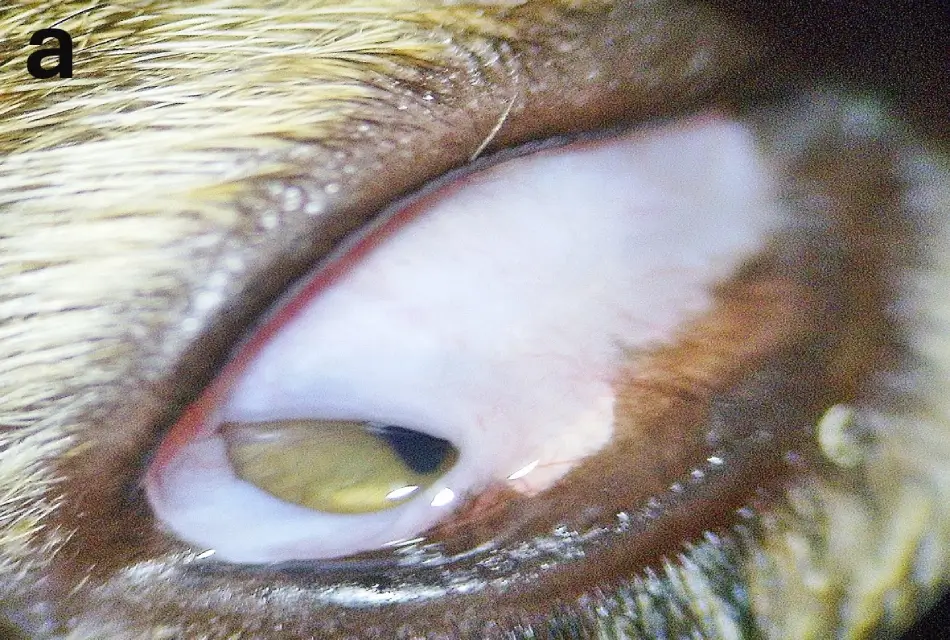

It has been suggested that 95 percent of all cats have FHV-1 secondary to exposure to vaccine or infection between cats. FHV-1 is a feline specific herpes virus and as such, you do not have to worry about this feline virus affecting you. The FHV-1 virus, which is unique to cats, lives in nerves in conjunctival and corneal tissue resulting in conjunctivitis but sometimes also corneal inflammation (keratitis) and corneal ulcer formation. When severe, especially in young cats, scarring can result in symblepharon, and chronic epiphora.
Herpes, referred to as the glitter of craft supplies by talented comedian Demetri Martin, is a permanent infection that may be dormant in the cat’s body for life, or flare up (recrudesce) at any time. Stress is the biggest factor in triggering recrudescence. Direct damage by the active virus can cause ulceration of outer conjunctival and corneal cells. Indirect damage occurs when the body tries to fight the virus resulting in inflammation of the cornea and conjunctiva.
Clinical signs vary between active and inactive states of the virus. In the active phase, fever, inappetence, and sneezing are followed by serous to mucopurulent nasal discharge, bright pink to red conjunctiva, ocular discharge, conjunctival swelling, sneezing, and sometimes corneal ulceration. Bacterial infection can cause an ulcer to become deeper or even rupture the cornea. FHV-1 infection is suspected in any young cat with conjunctivitis and corneal involvement. Several tests are available to test for the FHV-1 virus however, inconsistent accuracy has been noted.
Treatment for FHV-1 is directed at controlling the infection rather than curing it. Unfortunately, no medications are yet available to kill viral infections. However, with early detection and treatment to mitigate the changes, scarring associated with this virus can be reduced. Your veterinarian will be able to help your cat by prescribing adjunct therapies to help minimize viral recrudescence. These therapies include minimizing stress, and prescribing antivirals, immune-modulators, vitamins, antioxidants, and/or eye lubrications. Some cats are quite painful and may also require medication for pain control.
EOSINOPHILIC KERATOCONJUNCTIVITIS (EK)
EK is an immune-mediated inflammatory disease of the cornea and/or conjunctiva of young adult mixed breed cats. It is characterized by progressive blood vessel and cellular infiltration onto the cornea. The cause of EK is not clear but is suspected to be related to underlying FHV-1 infection and/or an autoimmune reaction. This disease is progressive and can grow to involve the entire surface of the eye causing blindness and discomfort. Often, it is initially detected in one eye; however, the disease may progress to involve both eyes.

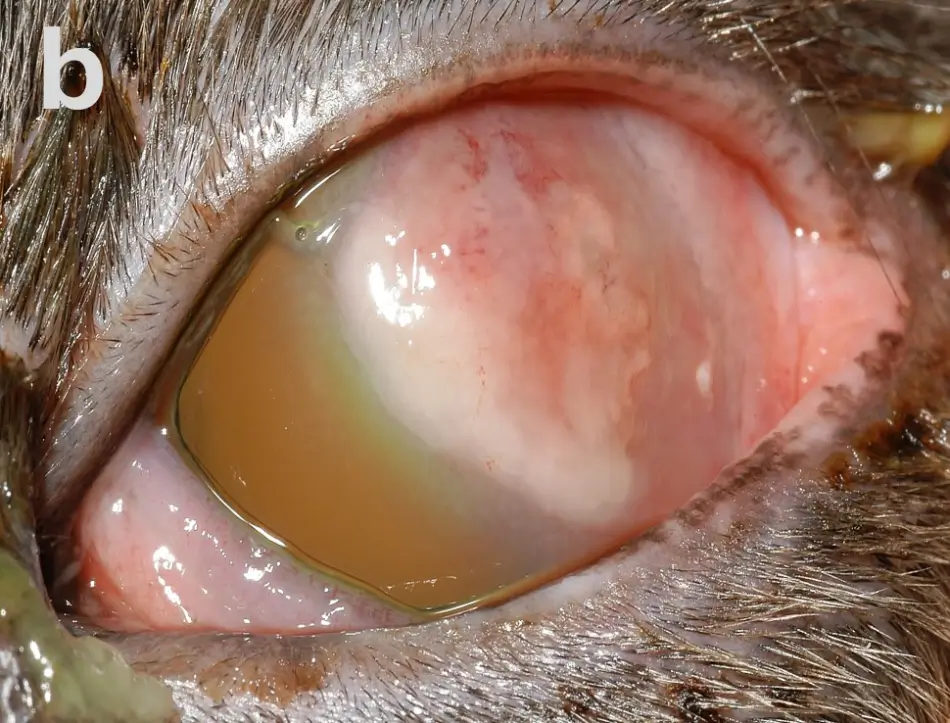
EK often starts on the outer side of the cornea. Along with fine blood vessels, a gritty, white corneal plaque or focal raised knobs of tissue composed of inflammatory cells is often noted. In addition, thickening and redness of the adjacent conjunctival tissue along with ocular discharge is often seen. EK should be suspected in any cat with a relatively pain-free, slowly progressive corneal infiltration of blood vessels and small white plaques. This disease can manifest with a wide variety of clinical signs and a referral to a veterinary ophthalmologist is often needed. The diagnosis of EK can be confirmed by microscopic examination of corneal cells (cytology).


Treatment of EK consists of topical steroidal anti-inflammatory drops or ointment. As response is noted, the medication is tapered slowly until the lowest frequency of application that will control the corneal changes is achieved. FHV-1 infection has been shown to be present in many cats with EK. Its exact role in the pathogenesis of the disease is still unknown since the prevalence of FHV-1 in cats is almost ubiquitous. Treatment of both conditions is a balancing act whereby treatment of one condition may worsen/reactivate the other condition. Control of both conditions however is possible but requires patience and the flexibility to accept that treatment strategies may need to be changed.
Advertisement
Conclusion
Feline herpes virus-1 (FHV-1) and eosinophilic keratoconjunctivitis (EK) represent two critical, non-cancerous conditions that can severely impact both the conjunctiva and cornea in cats. While neither condition is curable, effective management is possible through careful and patient treatment approaches. These strategies may require adjustments over time to balance the treatment of one condition without exacerbating the other. Understanding the interplay between these conditions and their treatments helps in managing the diseases effectively, aiming to control symptoms and prevent further complications. Both FHV-1 and EK require a long-term commitment to treatment and monitoring by both cat owners and veterinarians to maintain the quality of life of affected felines.
Through Dr. Philbert’s expertise and Dot’s resilience, their partnership blossomed into a story of hope and healing. Despite the challenges posed by FHV-1 and EK, Dot’s green eyes sparkled with newfound brightness, a testament to Dr. Philbert’s unwavering dedication and Dot’s unwavering spirit. Together, they navigated the complexities of feline eye health, forging a bond rooted in compassion and care.
By Marnie Ford PhD, DVM, Diplomate ACVO
Dr. Ford graduated from the Ontario Veterinary College in 2000 after completing a Bachelors in Zoology at the University of British Columbia and a PhD in Physiology at Monash University in Australia. Following a rotating small animal internship at the University of Minnesota in 2001, Dr. Ford achieved Diplomate status from the American College of Veterinary Ophthalmologists in 2006 after completing a 3-year residency in Comparative Ophthalmology at the University of Missouri. After co-founding a private referral hospital, West Coast Veterinary Eye Specialists, in New Westminster (2004-2013) she opened Pacific Animal Eye Specialty services, providing mobile medical and surgical ophthalmologic care to patients in the Lower Mainland, Vancouver Island, and the Interior of BC (2013-2019). In 2019, she returned to Australia where she worked full-time in both medical and surgical ophthalmology as well as resident training at Animal Eye Care in Melbourne Australia. In 2023, Dr. Ford returned to Vancouver to provide locum services to ophthalmologists across Canada.