 Pet News

Summary
Just because eye drops and ointments come in tiny packages does not mean that they are safe. Applying human eye medications (HEMs) to cats without veterinary guidance can not only delay proper treatment, but can be risky for general health and possibly even fatal. Although some HEMs are safe, others can cause severe reactions due to physiologic and anatomic differences between cats and humans.
It is crucial to consult a veterinarian before using HEMs on cats. Additionally, safe storage of HEMs is vital to prevent accidental exposure or ingestion by children or pets. While the market for cat-specific eye medications is quite limited due to economic and regulatory factors, professional veterinary guidance (often by a veterinary ophthalmologist) helps ensure the safe treatment of feline eye conditions with HEMs.
The Story of Sheri, PD, and Toast
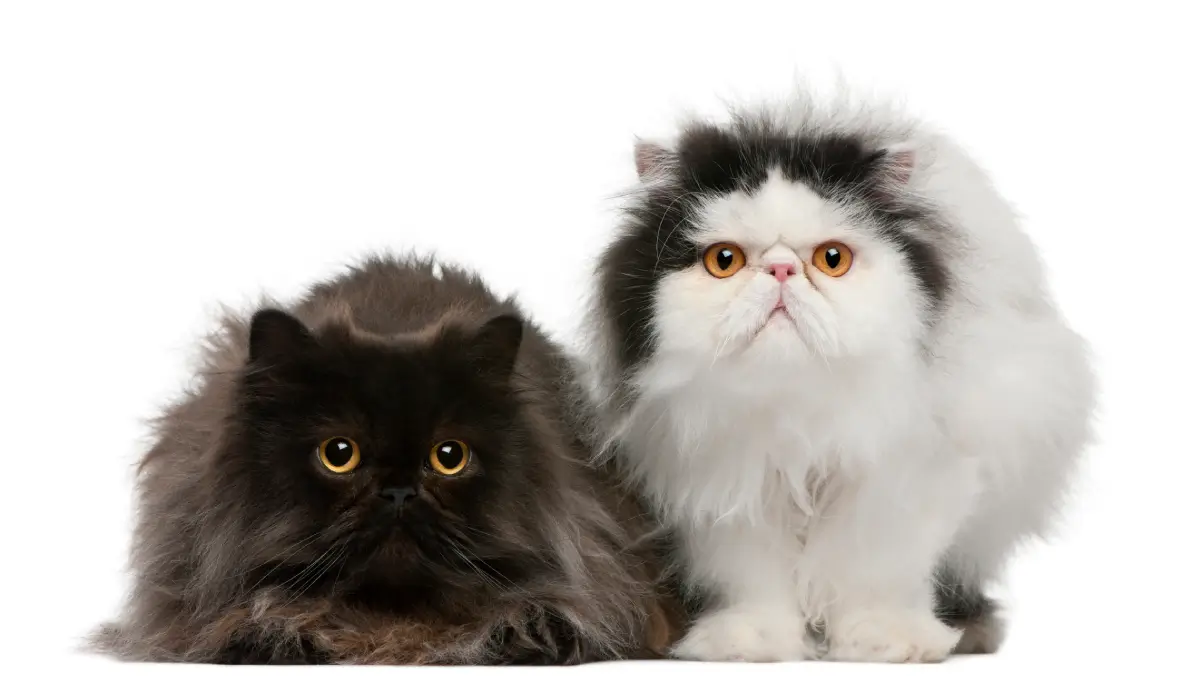
Sheri is retired and lives alone, with the exception of her two wonderful cats, PD (short for ‘permanent dependent’) and Toast. Toast is a picture-perfect 10 year old white and black Persian, and PD is a 14 year old black Persian. PD has had a tear-stained face since kittenhood, but since it does not bother him and is not that noticeable, it does not bother Sheri either. But it bothers Toast!– so Toast grooms PD’s face every day.
Sheri loves her kitties, and takes the best care of them she can on her limited budget. Sheri had successful cataract surgery 5 years ago. She also has dry eye in both eyes and early glaucoma in one eye– all controlled well with medications she can afford with her health insurance.
One year ago PD was diagnosed with chronic mild kidney disease and was placed on a special diet. He was doing well until Sheri noticed that his left eye was a little blurry-looking and that the pupils in both eyes did not match, with the left pupil being larger than the right pupil. Her veterinarian diagnosed glaucoma in the left eye and recommended referral to a veterinary ophthalmologist.
Sheri could not afford to take PD to see a specialist and asked the doctor to please do their best. The doctor prescribed a topical medication called dorzolamide for Sheri to pick up at a pharmacy and apply twice daily to the left eye, with a recommendation to recheck the intraocular pressure (IOP) in 1 week. The staff phoned the prescription in to Sheri’s pharmacy for her to pick up, but it would not be ready for a few hours and would cost $62.
Sheri went home to drop off PD before going to the pharmacy, and discovered her 20 year old washing machine had malfunctioned and overflowed, soaking the laundry room floor and adjacent hallway.
She cleaned up the mess but knew that she needed to buy a new washer. Money was now tighter than ever. Then a lightbulb went off in her head— she had glaucoma and so did PD! She could buy some time before purchasing the new drug for PD.
So Sheri got her own glaucoma medication (Iopidine® = apraclonidine) and applied one drop to PD’s left eye. He immediately squinted. One minute later, he started drooling, and 5 minutes later he vomited—then kept vomiting. PD’s left pupil also constricted to a narrow slit.
Panicked, Sheri called her veterinarian’s office. They were closed, and the voice recording directed her to call the local after-hours veterinary emergency clinic. While she was on the phone, she heard the unmistakable sound of a cat vomiting, and turned to see where PD was. He was laying quietly nearby, looking miserable; it was Toast that was vomiting! In a horrified flash, Sheri figured it all out—while she was on the phone, Toast had licked PD’s face and ingested some of the eyedrop.
(For the rest of this story, see Part 2 of Can I Give Human Eye Medications to My Cat?)
Introduction
Self-diagnosing and treating your cat’s eyes with human eye medications (HEMs) can be dangerous, and even fatal. Eye issues can be indicative of various underlying conditions. Using human eye drops without a proper veterinary diagnosis can mask the symptoms, leading to delays in accurate diagnosis and potentially worsening your pet’s condition.
When our furry family members suffer from eye problems, it’s natural for pet owners to seek quick remedies. Often, we might consider using HEMs to alleviate their discomfort. However, this should never be done without first checking with your veterinarian. Some HEM are perfectly OK to apply to cat eyes. Others are not.
Not all eye drops are created equal. Just because eye drops come in very small bottles does not make them safe for our furry friends (or for us!). One type of eye drop should not be assumed to be the same as another. While this is common sense, it is unfortunately common for pet owners referred to a veterinary ophthalmologist to tell the doctor that they don’t recall what eye medications have been given. Instead, they will say “It was some kind of eye drop”, as if that clarifies to the doctor what medication was given. This does not help at all!
Human eye medications are designed for the human eye. Cat eyes have both similarities and differences from human eyes, including their responses to medications. Cats are not small dogs or tiny humans. Cats in particular have some very significant differences from humans and dogs in how their bodies process certain drugs.
For example, a small fragment of one 500 mg acetaminophen tablet can kill a cat by causing loss of oxygen delivery to tissues. This is because their livers lack the ability to properly metabolize the drug, resulting in methemoglobinemia (hemoglobin molecules in red blood cells that cannot carry oxygen very well). It is crucial to understand the potential risks for treating eye issues in cats with HEMs.
When Is It Safe to Use Human Eye Drops for Pets?
In some instances, veterinarians may prescribe specific HEMs for pets. These are usually plain saline solutions, antibiotics, or specific medications for conditions like glaucoma. However, it’s imperative to only use these products under the guidance of a veterinary professional.
While the safest option is to use eye drops specifically formulated for cats, this is impractical because most eye medications are HEMs.
Two very important points:
-
Sometimes a pet parent and their cat end up being prescribed the same eye medication by their respective doctors! Besides not treating your cat with HEMs that were not prescribed for your cat, do not be tempted to apply your medication to your cat’s eyes and vice versa. A break in sterility of the drug could occur, leading to bacterial contamination. Think about the damage that could be done, if you were treating your cat’s corneal ulcer with a topical medication that became contaminated with bacteria.
-
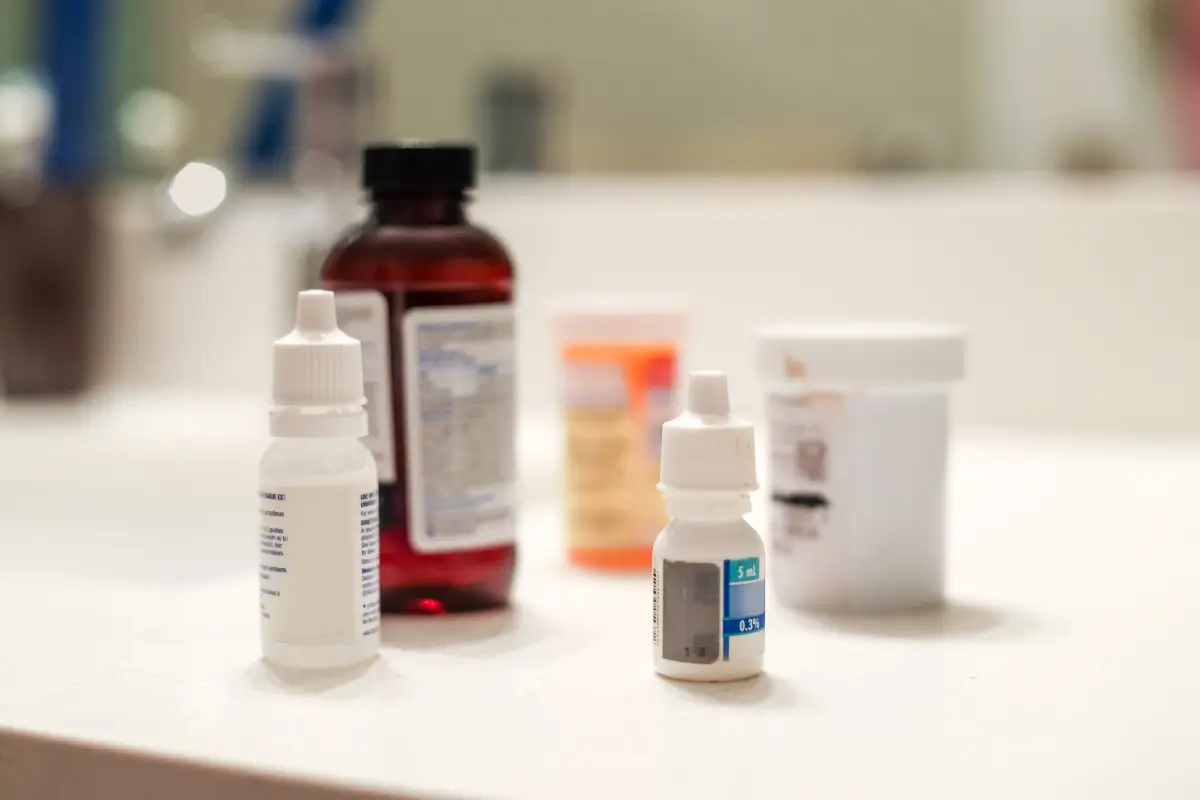
ALWAYS keep prescription eye medications in child-proof containers! Some eye medications are toxic and even fatal if the contents of the bottle or ointment tube are ingested. Skin contact can also result in adverse side effects. Cats like to bat eye dropper bottles or ointment tubes off of a countertop onto the floor, and dogs and small children can then gain access to the medication. Children like to mimic adults, including treating a pet’s eye. Every veterinary ophthalmologist has stories of panicked owners calling their clinic to ask if an eye medication is poisonous.
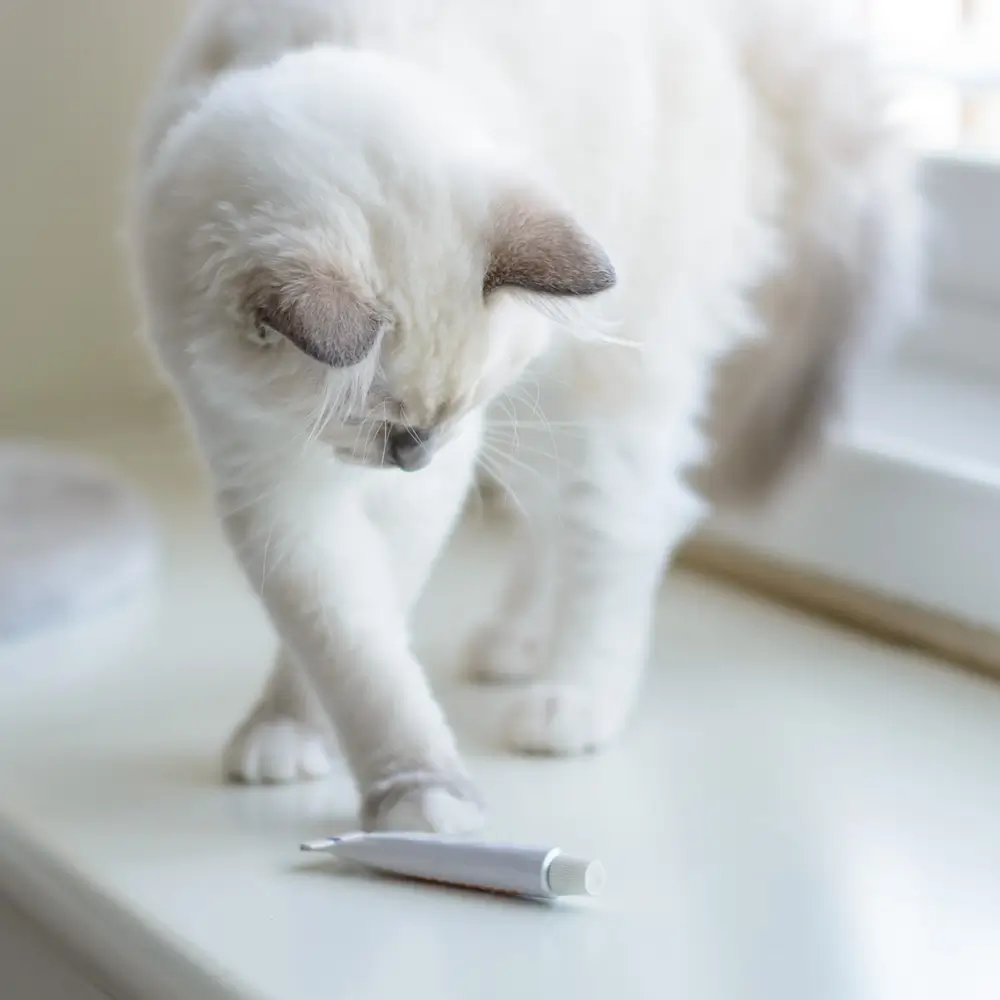
For safe storage of your medications, and for your cat’s eye medications, consider a lockable medicine cabinet for you, and lockable containers for your pet’s medications, including refrigerated medications.
These two lockable bags can be used to store pet drugs that require refrigeration:
Why don’t pharmaceutical companies create eye medications specifically for cats?
There are many reasons for this, the primary one being profit:
-
Market Size and Economic Considerations: The market for pet-specific drugs is much smaller compared to human drugs, so there is less financial incentive for companies to invest in the extensive research and development needed to bring new veterinary drugs to market. Developing a new medication, including research, drug trials, and obtaining regulatory approval, is a costly and time-consuming process.
-
Cost: Pharmaceutical companies are well aware that the retail price of a veterinary eye drug cannot be set at the high retail price level that humans pay for some of their eye medications. In fact, most of us do not see the cost of our medications, as we don’t typically pay out of pocket the MSRP (Manufacturer’s Suggested Retail Price) because our health insurance policies cover all or some of the cost. This is not the case for pet parents. In fact, only 1% to 2% of the 95+ million cats in the U.S. are covered by pet health insurance. So 98% to 99% of pet parents pay full price for prescription medications for their pets—including HEMs that their veterinarians may have prescribed.
-
Regulatory Hurdles: The process of getting veterinary drugs approved by regulatory bodies like the FDA (U.S. Food and Drug Administration) in the United States or the EMA (European Medicines Agency) in Europe is stringent. These regulations ensure the safety and efficacy of the drugs. However, the complexity and cost of meeting these requirements can be a deterrent for companies considering developing new veterinary drugs.
-
Complexity of Feline Pharmacology: Animals have different physiologic and metabolic processes compared to humans, and there can be significant variation among different species. This makes it challenging to develop drugs that are safe and effective across different types of animals. The variation in size, breed, and species means a medication that works for one might not work for another, increasing the difficulty of developing universally safe and effective treatments.
-
Off-Label Use of Human Medications: Veterinarians very commonly use human medications off-label for animals. This practice is legal when no suitable animal-specific alternative is available. In fact, most ophthalmic medications for cats are HEMs because there are no or very few veterinary alternatives. This allows veterinarians to prescribe existing human drugs and thus reduces the demand for the development of new veterinary-specific medications.
-
Research Challenges: Conducting clinical trials in cats presents unique challenges, including ethical considerations, recruitment of cats with specific eye conditions, and ensuring the trials are conducted in a way that yields reliable data. These challenges can slow down the process of developing new veterinary drugs. Many eye diseases in cats are poorly understood, and difficult or impossible to reproduce in a research setting in order to study the condition.
-
Limited Demand: While there is a clear need for animal-specific eye medications, the demand might not be as high or as urgent as in human medicine. This is partly because some conditions, while treatable, might not be seen as critical to the cat’s overall well-being by pet owners or veterinarians, influencing the demand for specific treatments.
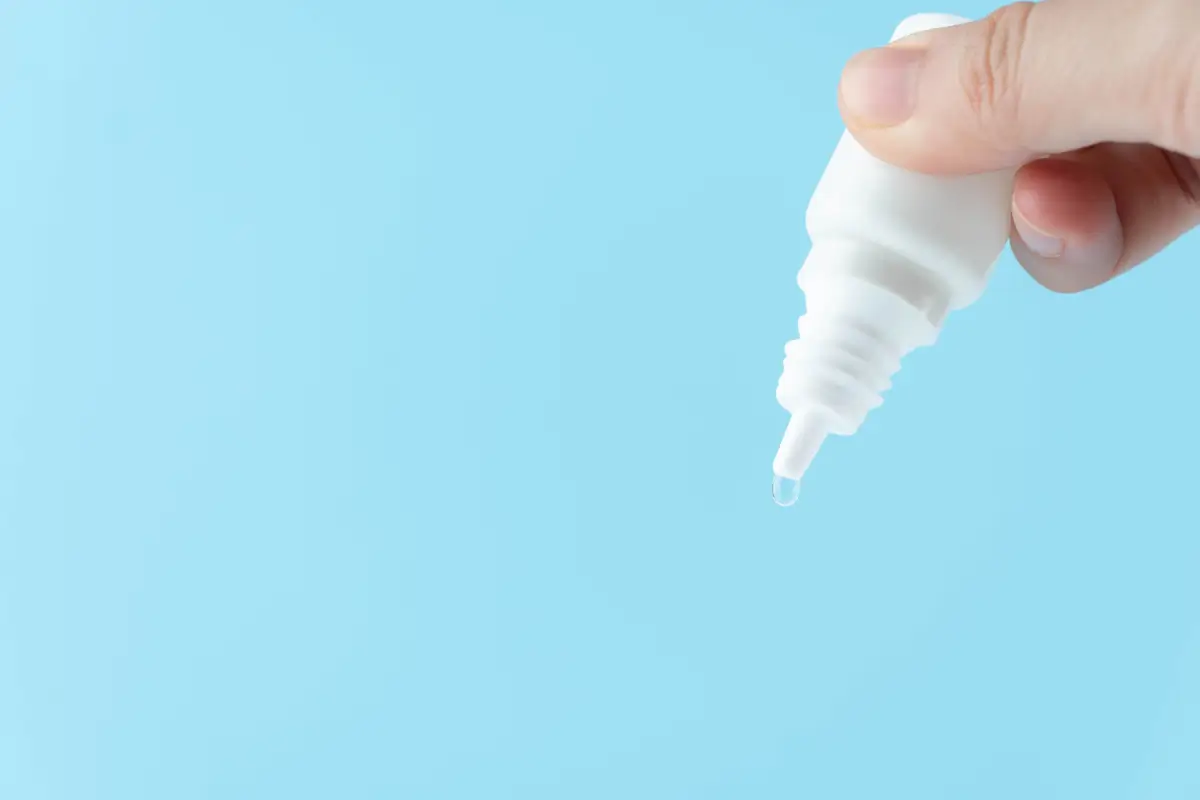
Before diving into HEMs, let’s cover what happens to an eye drop after it is applied to an eye:
-
The average size of an eye drop is 50-70 ul. (A ul is a microliter, which is one-millionth of a liter. 1000 ul = one ml. Five mls = one teaspoon).
-
The average volume of tears that the surface of a human eye can hold is 7.5 ul. That means that the average eye drop is 7x larger than what the surface of a human eye can hold!
-
The average volume of tears that the surface of a cat eye can hold is 32 ul. That means that the average eye drop is about 2x larger than what the surface of the cat eye can hold.
Therefore, when a drop is applied to a human eye, most of the drop ends up overflowing onto the face because the surface of the eye cannot hold that volume of drop, which is why we need to blot our eyes with tissue after applying drops.
When a drop is applied to a cat’s eye, about half of the drop ends up overflowing because the surface of the eye cannot hold that volume of drop. This means that ½ of the eye drop ends up staying on the surface of a cat’s eye, as compared with 1/7th of the drop for a human eye.
This also means that only one drop is needed—not two or three! Applying two or more drops to the surface of a cat’s eye just wastes the second and third drops, as they will overflow onto the face. And those extra drops on the face could increase the risk of toxicity, because cats groom and clean their faces, ingesting more of the drug.
One of the things that many cats really hate is the sensation of an eye drop rolling down their face. They will react! This is why many cats do better with eye ointments than with eye drops.
Advertisement
What happens to the portion of eye medication that stays on the surface of the eye?
Some of it is absorbed into the cornea and some into the conjunctiva, and some drains out the tear duct. As the drug passes through the tear duct (slower passage in ointment form), some of it is absorbed into the body through the wall of the tear duct. Once the remaining portion reaches the end of the tear duct and out into the nasal cavity, some of it is absorbed by the nasal mucosa (lining of the nasal cavity), some is sneezed out, and some is licked off the nose to be swallowed. Cats are extremely sensitive to taste and smell, and can react with violent disgust to a bad-tasting eye medication!
Therefore, when a medicated eye drop is applied, some of the drug will be absorbed by the body. Many factors determine how much drug is absorbed, and whether or not that amount will be toxic to that animal.
Please click here to read Can I Give Human Eye Medications to My Cat?: Part 2 which covers the following:
- How the differences between cats and humans increase the risk of toxicity from HEMs in cats
- The risks of using HEMs in cats
- The most toxic HEMs for cats
- And the rest of Sheri, PD, and Toast’s story!
Advertisement
Conclusion
If your cat has something wrong with its eye and you have HEMs in your home that were not prescribed for your cat, do NOT be tempted to treat your cat with them! It is fraught with risks and potential complications and would be like giving any random pills you find in your medicine cabinet to your sick pet. While it may be tempting to use HEMs on cats without veterinary guidance, it is unsafe and can lead to serious complications.
Cats have specific needs when it comes to eye care, and what works for humans may not be suitable for cats.
The anatomic and physiologic differences between humans and cats necessitate always consulting with a veterinarian for the correct diagnosis and treatment of an eye condition, which often requires referral to a veterinary ophthalmologist.
Regular check-ups can preemptively address potential eye issues, ensuring early intervention and reducing the likelihood of emergency situations where you might be tempted to search through your medicine cabinet for a suitable eye medication for your cat.
By understanding the unique requirements for maintaining your cat’s eye health, you can help them have their best quality of life by ensuring they receive the best eye care. And always remember to keep eye medications out of reach of children and pets, in child-proof containers.

By Terri L. McCalla BSc, DVM, MS, Diplomate ACVO
Dr. Terri McCalla Dr. McCalla received a BS in Animal Health Science from the University of Arizona, followed by her DVM degrees from both Oregon and Washington State Universities in 1984. She completed a 3 year residency in Comparative Ophthalmology from the University of Missouri and became board-certified in the American College of Veterinary Ophthalmologists (ACVO) in 1989.