
 Pet News

Summary
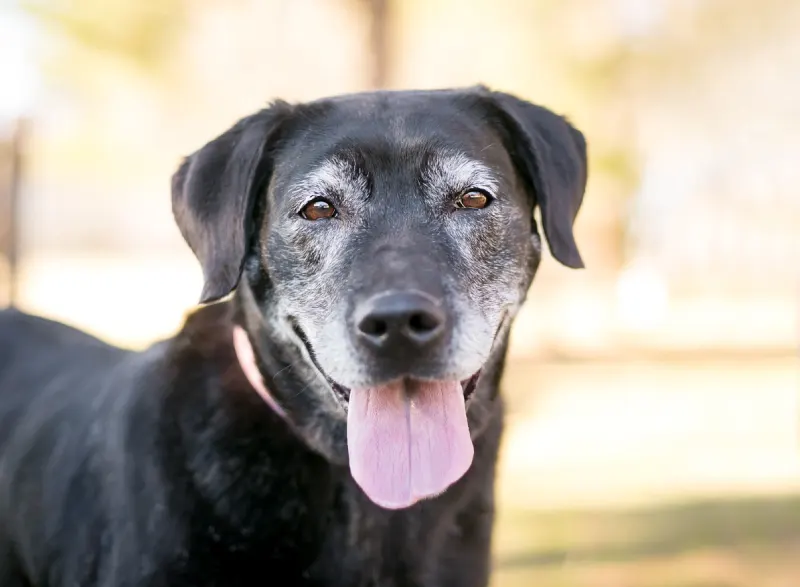
As dogs age, identifying and managing their pain becomes paramount. From limping and whining to changed behavior, signs of discomfort can vary. While radiographs aid in diagnosis, treatment options like NSAIDs, steroids, and newer solutions like Librela offer relief. Meanwhile, supplements boost joint health, and simple home adjustments like ramps and non-slip surfaces enhance their comfort. This article will help you discover how to ensure your senior dog’s well-being in collaboration with your veterinarian.
Amidst the sprawling realm of local veterinary care, I embarked upon a mission of compassion. Mr. Wellington, a venerable Basset Hound whose spirit waned with age, sought solace within my care.
With wearied eyes and cautious steps, Mr. Wellington yearned for respite from the whispers of pain. With a gentle touch, I prescribed analgesics to quell the ache that shadowed his every move.
To surmount the obstacles that time had strewn upon his path, I crafted steps and ramps, beckoning him to reclaim his heights. With newfound liberation, he ascended once more, shedding the burdens of age.
Yet, my quest for solace knew no bounds. The realms of chiropractic arts beckoned, and with tender hands, I sought to unravel the knots that age had woven. Through gentle manipulations, balance and respite were restored.
Soon, I emerged victorious as a harbinger of comfort. With love’s touch and healing hands, I adorned the twilight years of this loyal companion with warmth and grace.
If you haven’t already read the article on the PHH Website “Is My Senior Dog in Pain?”, please do so. You will find it very helpful before reading this article.
As our dogs age, one of our biggest concerns as veterinarians and pet owners is to help them do so comfortably, and hopefully free from pain. This article will provide ideas and options for helping your dog live a longer, healthier, happier life as free from pain as possible.
Advertisement
How Dogs Show Pain
Most people recognize that a limping dog is a painful dog. When you see your dog limp, take them to the veterinarian for an examination as soon as possible. Your veterinarian will want to do a full-body exam, with a special focus on the affected area of the body that appears to be the most painful.
However, as discussed in the article “Is My Senior Dog in Pain,” there are many other ways that dogs demonstrate their pain. They may cry or whine, hesitate to do certain behaviors, pant more than normal, be restless, lick themselves, change positions frequently, have a different body posture, slow down in what they are doing, or stop moving entirely.
Radiographs, or x-rays, can be very useful to help diagnose the cause of lameness and other sources of pain. Often, however, an exact cause may remain elusive.
With or without x-rays, treatment ultimately rests with choosing some type of pain control, often non-steroidal anti-inflammatory drugs (NSAIDs) or steroids, and sometimes adding other medications if more intense therapy is needed.
Pain Medications and Treatment Options
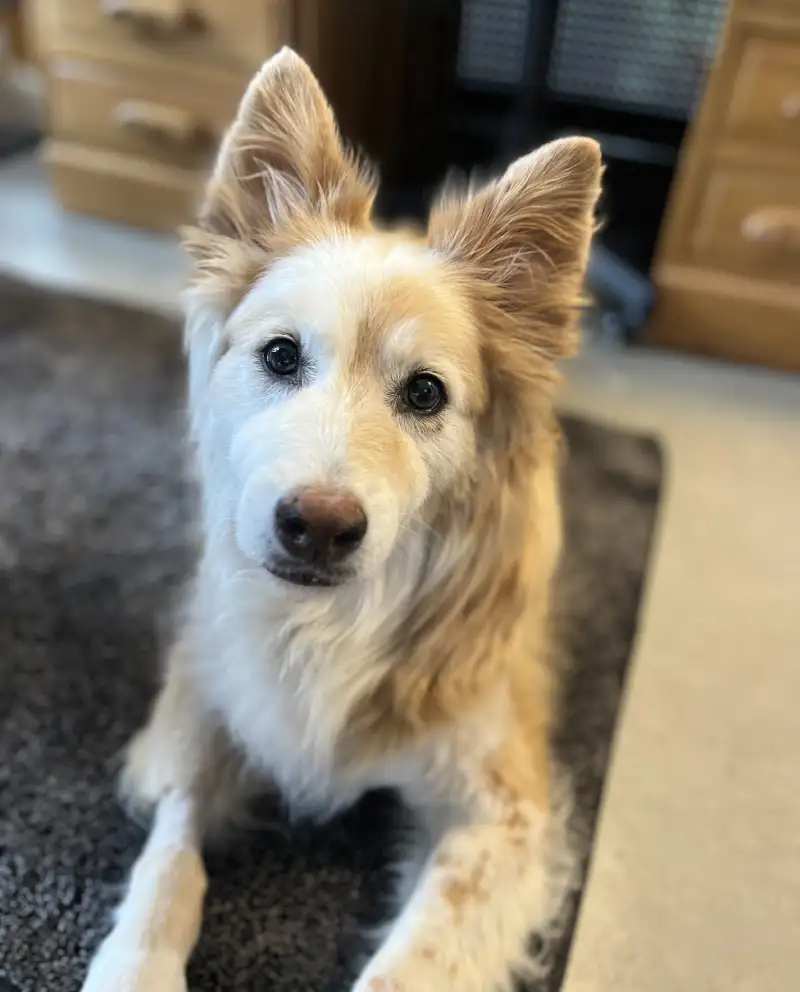
Your veterinarian is likely to prescribe some pain control if your dog is showing pain at the time of their examination. Before a medication is started, your doctor will usually draw a blood sample and run blood tests, to check your dog’s kidney and liver values in particular, (ideally both before and a few weeks after starting meds, to be sure they are tolerating the medication adequately.)
-
If blood work is run and it looks good, an NSAID such as Rimadyl ®(carprofen) is likely to be prescribed. This is in the same category as ibuprofen for people and works similarly (caution–never give ibuprofen to pets). The other examples of NSAIDS include Metacam® (meloxicam), Deramaxx™ (deracoxib), Previcox® (firocoxib), and Galliprant ®(grapiprant).
Your dog may have a trial of an NSAID for a week or two, or your veterinarian may suggest that they be put on a maintenance plan of NSAIDs. A short term NSAID may be enough to get through the lameness if it is acute, such as mild arthritis that was exacerbated by a fall or vigorous exercise.
-
If your dog shows profound pain, and there is severe inflammation without evidence of infection, your veterinarian might prescribe a steroid such as prednisolone for a few days.
Steroids are the most potent anti-inflammatories available, so although they are often avoided due to side effects, they are sometimes used due to their potency.
- Gabapentin is generally considered a mild form of analgesic and is often given with other forms of pain control. If your veterinarian prescribes gabapentin alone, be sure to observe your dog closely, as this medication may not provide adequate pain control for your dog.
- Tramadol is an analgesic with modest effects, often given with NSAIDs. It works better in some cases than others, may work best given 3-4 times daily, and may take up to two weeks to be maximally effective. If your veterinarian prescribes this medication alone, be sure to observe your dog closely, as tramadol may not provide adequate pain control for your dog.
-
Depending on the apparent cause of the limping, another treatment possibility is Librela® (bedinvetmab), an anti-nerve growth factor monoclonal antibody subcutaneous injection given once a month for osteoarthritis pain in dogs.
Over 4.6 million doses have been given in Europe so far, it is available in Canada, and it should be marketed any month now in the US. This is a very exciting prospect, as it brings about a new treatment option that promises to be safe and effective for our older dogs.
Once you have decided on a treatment option, be sure to follow through and reevaluate with your veterinarian. Your dog may need to continue on a longer-term pain management plan which may need to be tailored more specifically for maintenance, and to have some follow-up blood work.
Joint Supplements
In most senior dogs, musculoskeletal/joint pain, including back pain, is the most common source of pain. Your veterinarian might not have time to discuss supplements with you or might not have much experience with supplements.
Don’t worry–the supplements listed below are well-documented to help joint health in dogs. It usually takes a few weeks for your dog to show a visible improvement from high-quality supplements.
To support the whole body and all the joints, there are a few things you can do.
-
Third, consider giving Adequan.® Adequan is a brand of polysulfated glycosaminoglycan (PSGAG) and is an FDA-approved disease-modifying osteoarthritis drug (DMOAD) available by prescription for injection.
Adequan is given by intramuscular injection for the control of signs associated with non-infectious degenerative and/or traumatic arthritis of canine synovial joints.
In practice, Adequan has been shown to help dogs with nonspecific pain and stiffness associated with aging. In other words, many owners who try it have not pursued a definitive diagnosis for their dogs, but it has helped improve their dogs’ signs of pain.
Adequan is approved for use twice weekly for up to 4 weeks, which was how it received FDA approval. In clinical practice it is often used off-label, which means that the veterinarian determines how best to use it for the pet. More dogs receive Adequan and are living longer, and more clinicians face the decision of how to prescribe it for long term use. Some veterinarians prescribe it monthly, and some have the owners administer it at home if the owner is willing to give injections.
In general practice and in my chiropractic practice, I like to see all older dogs receive glucosamine and omega-3 supplements, and all dogs with significant arthritis or lameness receive all three supplements—glucosamine, omega-3, and Adequan.
I feel this gives their joints the best chance of being the healthiest possible, of having the best quality synovial fluid possible, and gives their cartilage the best chance of healing from micro-trauma and injuries that have occurred.
It usually takes a few weeks for your dog to show a visible improvement from high-quality supplements. If you are giving new medications at the same time, it can be difficult to see improvements from the supplements. Will probably see and feel a glossier, shinier, softer coat and you may notice a difference in their coat when grooming.
Or, if you watch their gait closely, you will probably notice that they are moving better, getting up easier, taking bigger steps, maybe wagging a little more. If you look carefully, you may see really important, subtle changes that tell you they are feeling better!
All these supplements given on a daily basis work together to help prevent joint pain all over your dog’s body. If you are already giving these supplements, keep up the good work. If you are just starting, good job! It takes perseverance on your part, but it is worth it.
Take care of your dog’s joints is a long-term commitment, but it pays off in the long run. These supplements are recommended to be given for the lifetime of the dog, to help keep them comfortable and happy.
Advertisement
Modifying Access to Furniture, Beds, Stairs, and Your Vehicle
When dogs hesitate to do things they used to do, they’re telling us it hurts. Just like when you stare at a heavy box before you bend down to pick it up, knowing it’s going to hurt your back, your dog is staring at your couch, considering if it’s worth the pain to climb up. However, the great news is that once we recognize it, we can do something about it.
-
There are so many ways we can help our dogs around our home, to do better and experience less pain. First, see your veterinarian for a physical examination and pain assessment and plan.
Dogs that hesitate to jump or climb are often experiencing back pain, and benefit not only from pain control, but also from chiropractic treatment. Your dog may also have other problems such as hip dysplasia, knee pain or osteoarthritis, and it’s good to find out as much as possible.
-
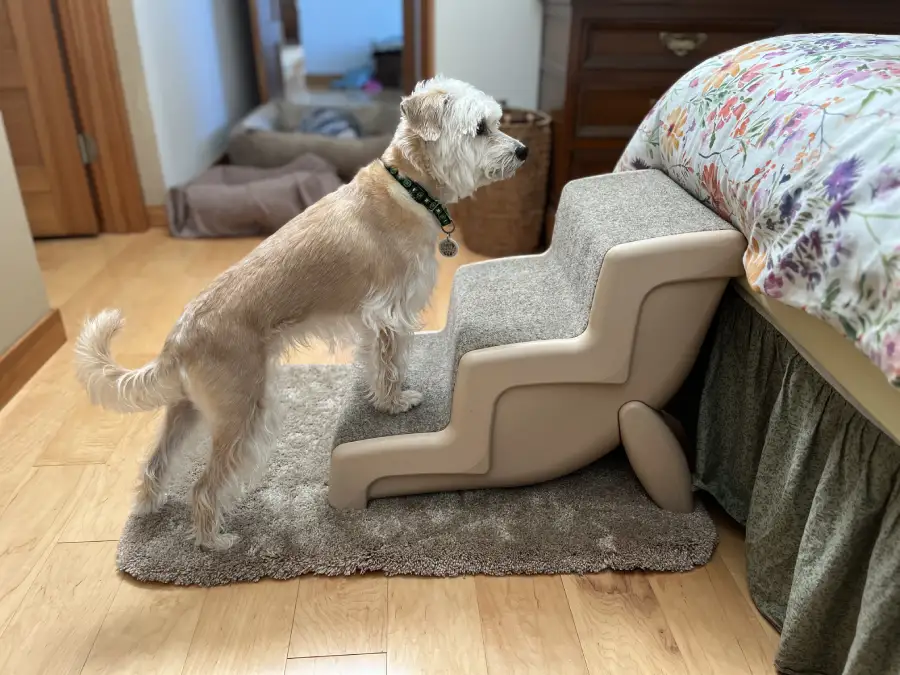
Next, bring some modifications into your home. Jumping hurts, so discourage your pet from jumping by using ramps and steps. There are so many types of steps available—different widths, heights, and materials, with curved edges, straight edges, and so on.
If you have tight spaces, measure carefully before you buy. Ramps may be easier for some dogs, but they can take up more space. Be patient with yourself and your dog. Take your time training them to use the steps or the ramps—use plenty of positive reinforcement training and keep it fun.
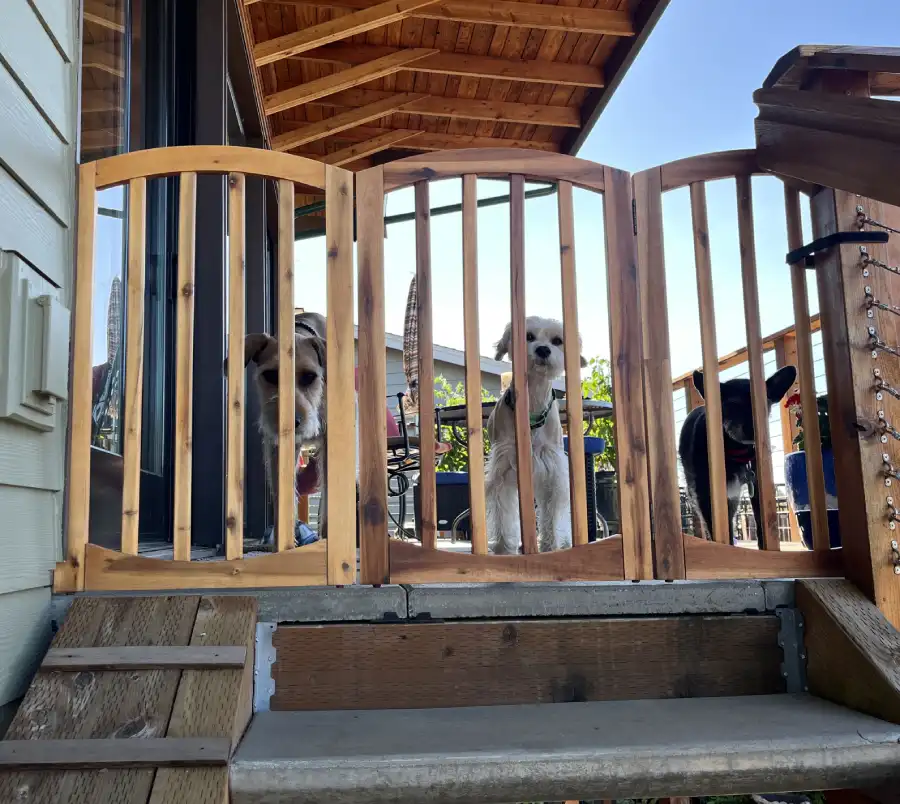
- Stairs exacerbate back pain. Stairs strain knees. It is advisable to prevent your pet from going up and down stairs unless there is an important reason to do so. Even then, it is better if you can arrange things, so your pet doesn’t have to climb stairs in their daily routine. Baby gates work great to keep your pet off of the stairs. There are many different types of gates—tall, short, wide, narrow, those with cat doors, pressure-mounted, and so on.
- To help your dog get into the car, there are folding ramps, telescoping ramps, and stairs. You may want to practice on the ground with the ramp first, with lots of treats. When using a ramp, especially if you use it for the back seat, be sure it is level and won’t slip.

By Karen E. Mueller DVM, AVCA Certified
Dr. Mueller has over 30 years of experience in general small animal veterinary practice, feline medicine, and shelter medicine. Dedicated to preventing pain in pets and improving their quality of life, she currently has an animal chiropractic practice in Bellingham, WA. Dr. Mueller is also passionate about reducing pet overpopulation and works with high-volume, low-cost spay and neuter nonprofit programs throughout the Pacific Northwest.