
 Pet News


Summary
Not all dogs belong in dog parks. It’s crucial to understand your dog’s temperament, play style, and the park environment, as dog parks and your dog may not be a good fit. Dog parks can be fun, but they also pose risks.
While well-supervised dogs may play positively, many owners get distracted, leading to problems. Some dogs may feel threatened and react aggressively during play. Fights can break out quickly, resulting in injuries for both dogs and humans.
With many dogs under-socialized due to pandemic adoptions, alternative play options such as meeting familiar dogs in smaller settings, may be safer for ensuring a positive experience.
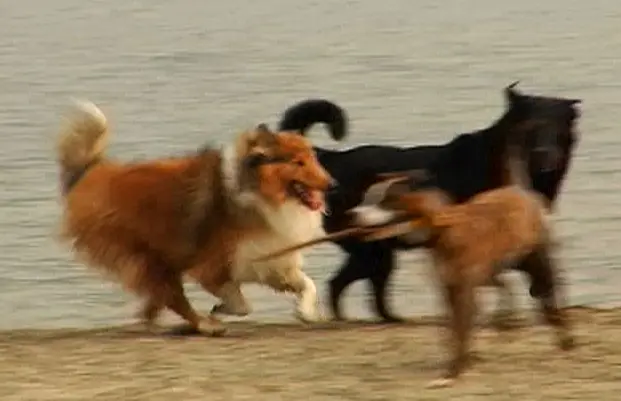
This is a story about a close call for my well-socialized Collie, Tessie, at a dog park. For years she’d helped me work with reactive dogs by being a calm, educational presence, teaching them how to greet in an appropriate manner, and demonstrating how to use canine body language effectively.
However, when this incident occurred she was 11 years old, had discomfort from arthritis, and was recovering from cancer surgery.
When we arrived at the dog park, we walked around the perimeter to a secluded beach where Tessie loved to retrieve her Frisbee from the lake.
I kept a close eye out for young, rambunctious dogs who might be too much for her, and on this particular afternoon, I watched a small group of dogs racing in and out of the water in a wild game of wrestle and chase, about 75 feet away.
Then a fourth dog arrived. His body was tense, his mouth tightly shut, hackles raised, tail high above his back, and he was clinging to his pet-parent. My antennae immediately went up, but we were far enough apart that I didn’t think I needed to be concerned.
Gradually, the other dogs started making overtures to him—play bowing, pawing, running away, and including him in their play—and a rowdy game of chase, ball, and romping ensued.
Fifteen minutes later, Tessie and I finished our game of Frisbee. The dogs had moved further onto the grass, their “parents” standing around and talking. Tessie and I wandered back toward the parking lot along the edge of the lake about thirty feet from them, Tess carrying her Frisbee.
Suddenly the tense dog broke away from the group and charged Tessie, grabbed her by the neck and took her down. Tess, being a feisty girl, screamed and fought back.
Introduction
In a perfect world, dog parks would be the most wonderful places in the world to pass time—well-socialized dogs cavorting with each other, the rough and tumble and chase of different sizes and breeds, peaceful pauses peppering play.
No one would fight over toys, no one would feel overwhelmed or get overstimulated, and pet parents would be alert to their dogs every moment, astutely watching and understanding the fluid body language of their own animal, ready to stop conflicts before they begin.
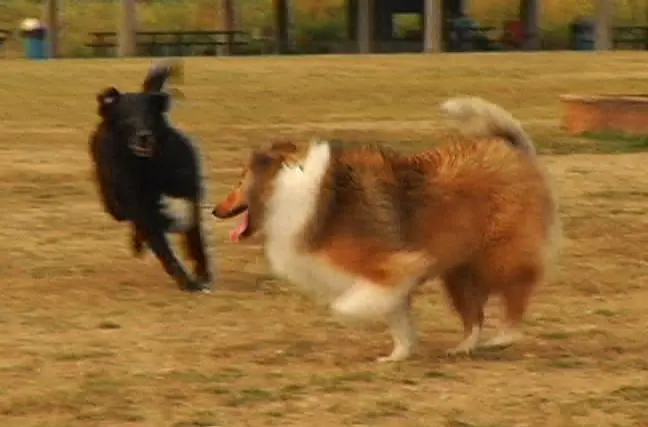
However, the reality can be much different. Although play is an important part of many dogs’ mental and emotional well-being, dog parks might not be the best place to fulfill that need.
Typically, dog parks are places where pet parents take their dogs to exercise and play, but often the dogs are not well supervised. Instead they are free to romp and play on their own with little regard for their safety, while their parents chat and socialize, or lose themselves in their smartphones.
“Yes,” you might say, “so what?”
Advertisement
Socialization
The problem is that dogs, like people, have different needs, different play styles, different degrees of socialization, and different levels of tolerance.
In order to be entirely comfortable and fully socialized, dogs need to have been exposed to other dogs (and children of all ages, men, women, cats, horses, and any other creature they’ll be likely to encounter during their lives) before the age of sixteen weeks.
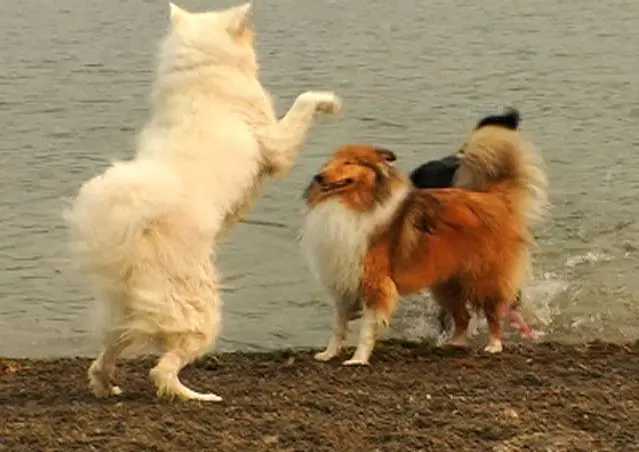
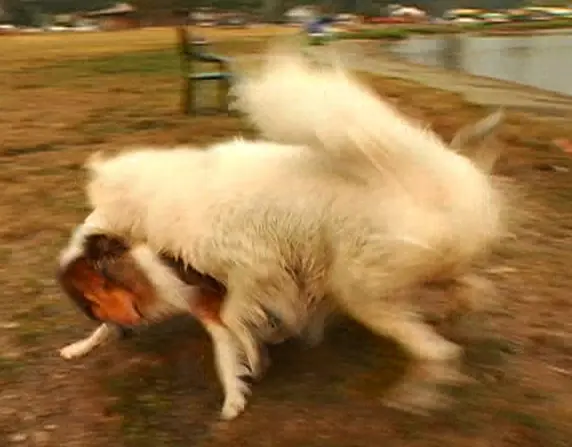
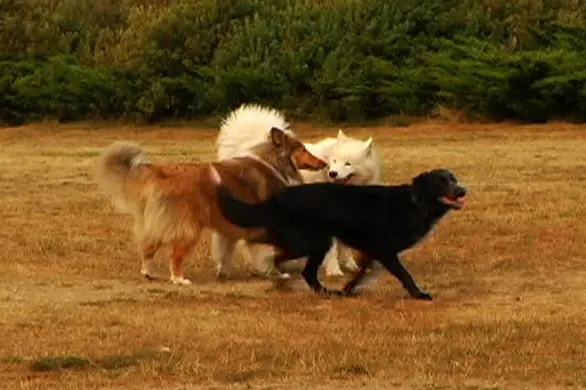
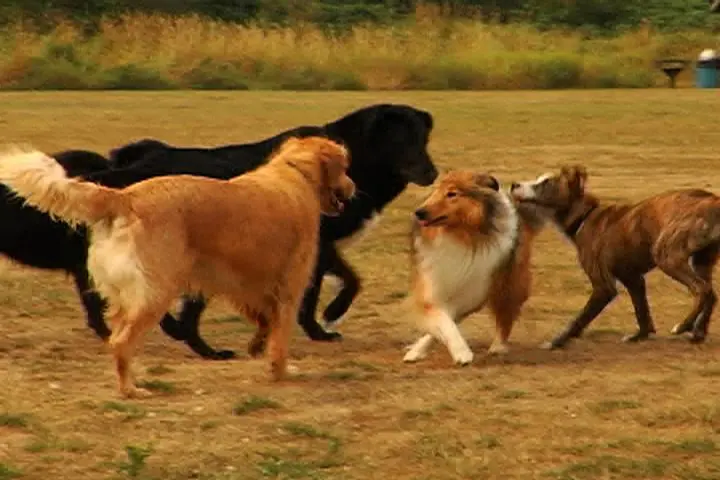
And when playing, dogs make hundreds, if not thousands, of split-second decisions on how to react to the behavior displayed by their playmates through reading body-language cues and interpreting vocalizations (although play is often silent).
Their decision-making process is complicated and depends on multiple factors—the current situation, the dog’s past experience in similar circumstances, his genetic makeup, what challenges he’s encountered in the past twenty-four hours, and his history of socialization.
Fearfulness
Dogs who are not socialized with other dogs as puppies are often fearful around others of their species and will do whatever they can to protect themselves if they feel threatened.
They also have teeth, and if they haven’t learned how to inhibit their bite as puppies, they can cause significant damage in seconds: not only bites and lacerations, but eyes can be injured and even blinded (especially in brachycephalic dogs with flat faces and protruding eyes).
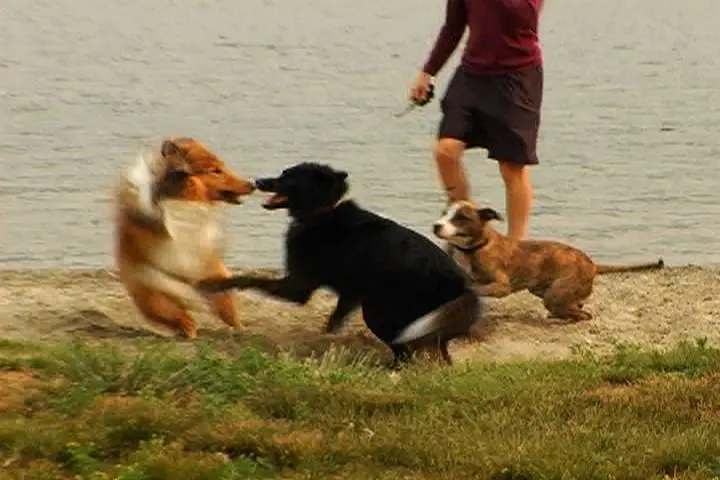
Dog fights can erupt in the blink of an eye, and unless we understand canine body language, we can miss the warning signs. Dogs are not the only ones who are badly injured in fights.
Humans can also sustain significant injuries from redirected bites (sometimes inflicted by their own dog) when attempting to break up a fight. Dogs who start fights are not bad dogs—they’re just dogs who find themselves in situations they can’t handle.
In a dog park environment, if the aggressing dog happens to be your own dog, you’ll have to deal with the risk of breaking up the fight, the guilt that your dog harmed another dog, potentially large vet bills for the injured dog, and a multitude of decisions about how to handle, train, and exercise your dog in the future. (You can read about how we managed Vera’s life in my novel, Finding Vera.)
Overwhelmed
Dogs can also have healthy “scuffles” where a dog who is feeling overwhelmed clearly states “I’ve had enough”. There will be lots of noise, saliva will fly, and the dogs might look like they’re killing each other, but at the end of the argument no harm is done.
The problem is, if one of the dogs is poorly socialized and truly feels threatened, he might respond with a full-fledged attack, and if he hasn’t learned bite-inhibition as a puppy, the well-socialized dog could get badly injured.
With so many dogs adopted during the pandemic, it’s even more important than in the past to be careful at dog parks, since a huge number of dogs living in our communities are under-socialized because of the lockdowns and social distancing at that time.
Advertisement
Play Styles
I’d like to say a word about play styles. I volunteer as a dog trainer at Whatcom Humane Society in Bellingham WA, and I am lucky enough to run a play group for the dogs one day a week. (If you’re interested in how we do this with stressed dogs, both socialized and under-socialized, read about it here.) Dogs Playing for Life, the non-profit organization that trained several of the staff and volunteers at Whatcom Humane Society in Bellingham WA, breaks play into four styles:
Gentle and Dainty
These are the chess players. They might like to play chase, but they would never engage in mouthing and wrestling, or games that require physical contact. There could be some play bowing and dancing around each other, but often they just want to hang out together.
Push and Pull
These dogs engage in chase games, sometimes alternating roles of pursuer and pursued. In the video, you can see these dogs enjoying a game of chase. There is little physical contact. Dogs who enjoy Gentle and Dainty play might also enjoy Push and Pull games.
Rough and Rowdy
There might be some chasing, but there’s always lots of mouthing and wrestling and physical contact. You can see in the video how the dogs take turns being on top. It was a hot day when this video was taken, so the dogs weren’t very energetic. On cooler days, the play might be much rougher and the dogs would still be having fun. Dogs who have a Gentle and Dainty play style would be offended if another dog tried to engage in this style of play with them, and the dynamic could end in a squabble. My feisty collie, Tessie, who had a gentle and dainty play style, never did figure out how to play with our shepherd, Vera, whose favorite play style was “seek and destroy.” These three play styles have video links already.
Seek and Destroy
This is the roughest play style and the most likely to escalate into a fight. One dog will chase the other and take the pursued dog down. Rough and rowdy play will often ensue. Sometimes the dogs will switch roles, sometimes not. It’s always important to be sure that both dogs are enjoying this style of play and that one isn’t being bullied. A good way to check is to separate the dogs and see if they want to re-engage.
Unfortunately, I don’t have a video of this play style because as handlers in the playgroups we were too focused to take our attention off the dogs. My golden retriever, Lola, had a rough and rowdy play style, and our shepherd, Vera, liked seek and destroy.
They played together initially, but soon Lola refused to engage with Vera, and on four occasions over the six years they lived together, a serious fight with injuries broke out when Vera pushed Lola beyond her comfort level before we had a chance to interrupt the interaction. I’ve learned a lot since then!
Some dogs are able to adapt to all four play styles and have fun with everybody. They read the other dogs and adapt to whatever style the other dogs are willing to engage in. These are the most successful dogs at dog parks.
Is Your Dog a Candidate for the Dog Park?
Your dog does not belong at the dog park if any of these four statements are true:
Your dog is “OK most of the time” with other dogs. Why? Because from experience you already know there are times when he feels overwhelmed and insecure around other dogs, forcing him to be more likely to protect himself. Don’t put him in situations where he could injure (or be injured by) another dog, physically or emotionally. There is no need to place him in a situation where he’s stressed and socially out of his depth.
Your dog is worried about the presence of other dogs. At some point, often sooner than later, he’ll encounter a situation that frightens him and he’ll be forced to protect himself. If he gets into a tussle, one bad experience could be enough to cause ongoing dog-directed reactivity or aggression. Once aggression has worked for him (in that it gets other dogs to back off), he will be more likely to depend on it as a way to protect himself in the future.
Your dog has been recently adopted. First of all, you have no idea how your dog will respond in new environments. Secondly, even if he has good social skills, he’ll be stressed from the recent changes in his life and be more likely to be defensive. Other dogs at the dog park are often poorly supervised and the decisions they make might not be appropriate. Having a bad experience early in this transition period when he’s feeling insecure and vulnerable could cause behavior problems that are difficult to resolve in the future.
Your dog guards his toys. This is because even if you leave his treasures at home, he will probably steal toys from other dogs (or find a stick) and aggress at any dog that tries to reclaim it—dogs or humans.
The owner of the tense dog froze, and I did what one should never do—I grabbed both collars and pulled the dogs apart, worried that Tess would be injured, if not by the dog’s teeth, by being crushed under his weight. Luckily, I didn’t get bitten.
Once the dogs were separated, I asked the woman (in a very stern voice) to take her dog’s leash and move away. It took several seconds, but finally she responded and did as I asked.
The woman blamed the attack on Tessie, and after unsuccessfully suggesting to her that the dog park might be too much for her dog at this time, we left. Tessie had no puncture wounds and was not otherwise physically injured. Nor was she emotionally damaged by the experience having had years of successful canine interaction.
The only provocation I could identify in this altercation was that the tense, scared dog had managed to handle the companionship of the other three dogs in the park, but the addition of a fourth (Tessie), even at a distance, was more than he could tolerate. He panicked, and did what he could to get rid of her.
Other Thoughts on Dog Parks
What if you muzzle your dog so he doesn’t hurt anyone? Muzzles have no place in a dog park. Muzzles will make your dog feel even more vulnerable, and if/when a dog approaches him to play with or greet him, he’ll be restricted in how he can respond.
This will both exacerbate his fear of dogs and increase the behaviors he displays as a result of his fear (lunging, barking, fighting). Also, muzzles do come off sometimes, especially if a squabble or fight occurs.
What if you keep him on a leash? Leashing is also not a good idea. A leash will prevent him from running away from situations that make him uncomfortable, and being tethered will inhibit his ability to express himself, thus making him more vulnerable and fearful and potentially aggressive.
Also, off-leash dogs will recognize his vulnerability and might take advantage of him, exacerbating the situation even more. If you have your well-socialized dog at the dog park, avoid any dog who is on leash.
What about your small dog? Bringing small dogs to the dog park is not a good idea unless there’s a designated small dog area. This is because some dogs have a strong prey drive, and larger dogs can switch into prey aggression when the smaller dog is twenty-five pounds (or more) lighter than they are, especially if the smaller dog is running away. The small dog could be attacked or trampled, even if prey aggression wasn’t an issue.
A word about collars: Use a well-fitted, quick-release collar. Make sure only two fingers can fit between the collar and your dog’s neck. Your other option is a harness with an easy access, quick-release clip such as the Wonder Walker Harness to minimize the risk of another dog getting a tooth or jaw caught in the harness if they wrestle
Do not use a buckle collar, prong collar, or chain-link collar. Dogs can break a tooth on metal collars, or get a paw or jaw caught in the choke collar of the other dog, especially if the dogs’ play style is rough and rowdy and they’re mouthing each other’s necks.
Years ago, one of our dogs died from a strangulation accident using a buckle collar before quick-release collars were available. Metal collars are even more risky.
What about toys in the dog park? Depending on which dog park you might visit and the dogs who frequent it, toys that inspire chase games can work well.
Balls thrown with a Chuck It, or a flying toy such as a soft Frisbee can be good choices since they encourage chase games. I would avoid bringing chew toys to the dog park since these can be perceived as high value toys by some dogs and will encourage resource guarding
Even if you know you have a well-socialized dog, think carefully about taking him to a dog park for the reasons I have discussed above, especially if the dog park is large and the culture of the park is that “anything goes.”
Advertisement
If you still think dog parks are an option, here are some safety tips to consider
- Check the park carefully before you unload your dog from the car. Avoid groups of aroused, very excited dogs, dogs who look stiff or uncomfortable, and dogs whose owners are uninvolved. Look for dogs who have loose, bouncy, easy body movement, dogs who play in a give-and-take fashion, and dogs who pause often in their play. Owners should be present, but relaxed. Avoid dogs whose owners hover and say things like, “Be nice, Fido.”
- Look for dogs that have a play style similar to your dog’s (see above).
- Be sure your dog has a very good recall and will come back to you reliably, even in play.
- Take some time to learn basic Canine Body Language: Dogs have a language that is fluid, complicated and ongoing. By learning to read dogs at the park and understanding what they are saying, you can often intervene by calling your dog back if play starts to escalate. There are several books available on Canine Body Language on Amazon.
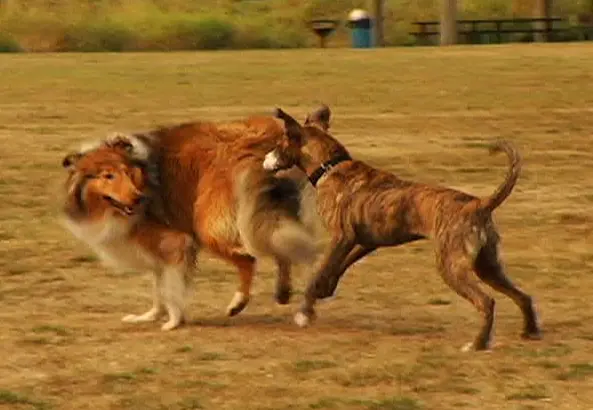
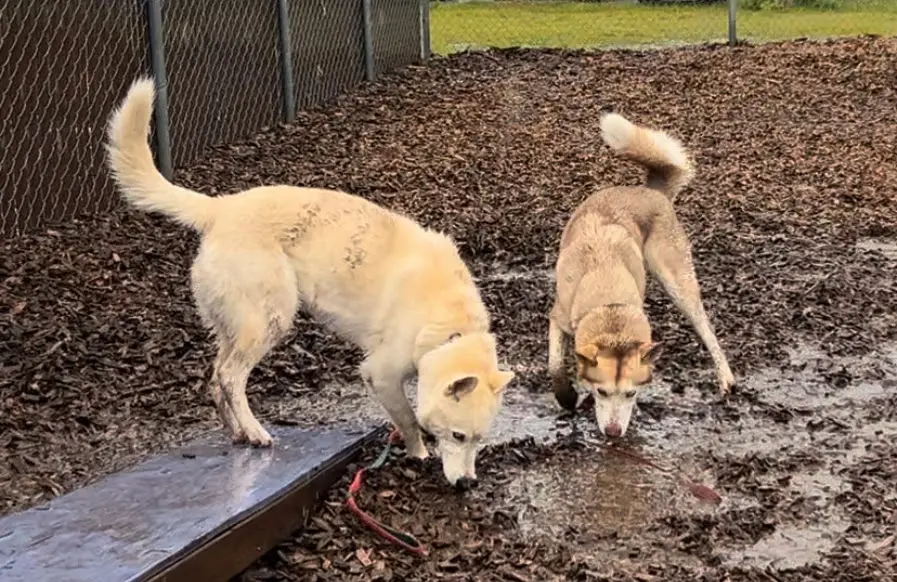
- Consider other options for dog play that are safer: Get together with friends and their dogs at a Sniff Spot. That way you know the dogs you are meeting have been well socialized as puppies, or have a solid history of positive, safe interactions with other dogs. Scuffles could still erupt, but if pet parents are paying attention and the dogs are well socialized, the chance of injury is extremely low. Also, dogs who know and trust each other will be much less likely to take offense, and if play escalates, well-socialized dogs will suggest taking a break to calm things down before resuming play by slowing down, sniffing the ground, and moving slightly away from the other dogs (see photo).
Conclusion
Play is a wonderful way for many dogs to pass time. It is socially fulfilling, mentally challenging, great exercise, and often just outright fun! However, we need to tailor each play session to meet the needs and comfort level of our individual dogs, whether it’s in a daycare situation, a date with one or two good friends, or a big romp with the pack down at the dog park. It’s up to us as our dogs’ guardians to find an arena that’s safe and enjoyable for everyone, especially our dogs.
By Kerry Mitchell Dog Trainer, Nurse Practitioner
Kerry Mitchell has been a dog trainer since 1984. A Nurse Practitioner by profession, her passion has always been dogs, canine behavior in particular. In 2006, she and her husband adopted Vera, a German Shepherd, and when Vera’s behavior escalated into aggression toward people and dogs, Kerry became a student of aggression, reactivity, and how dogs think. Her novel, Finding Vera (pen name Kerry Claire), explores issues many pet parents face, especially in the post Covid era.