
 Pet News


Summary
Corneal ulcers are disruptions in the cornea, the clear front layer of the eye, and are prevalent yet potentially serious conditions in all animals. They can vary in depth and cause, with some resulting from infections and others stemming from trauma or underlying conditions. Early detection, often manifested as persistent squinting, is crucial. Veterinary diagnostics, such as fluorescein staining, can pinpoint the ulcer’s size, depth, and cause, guiding targeted treatments that range from medications to surgical interventions. Preventive measures and awareness of risk factors, including breed predispositions and underlying diseases, are pivotal in safeguarding a pet’s ocular health.
Mabel always had an uncanny bond with Rosie, her spirited Golden Retriever. They had shared countless adventures since Rosie was a pup, exploring nearby woods, chasing after butterflies, and cuddling during cold winter nights. But one sunny afternoon, while playing fetch in the yard, Mabel noticed Rosie squinting her right eye.
It was a minor squint, easy to dismiss as the glare from the sun, but Mabel’s instincts told her otherwise. By evening, the squinting persisted. Rosie seemed less enthusiastic about their play, frequently rubbing her face against the couch. Mabel took a closer look and was alarmed to see Rosie’s eye looked slightly cloudy, unlike its usual gleaming brown.
First thing the next morning, Mabel took Rosie to their trusted vet, Dr. Jenkins. As Rosie lay calmly on the examination table, Dr. Jenkins carefully examined her eye. “Looks like she might have a corneal ulcer,” he mused, reaching for a small strip of paper that he explained was a fluorescein stain. He gently dabbed Rosie’s eye, and under a special light, a bright green glow revealed the extent of the ulcer.
“It’s a good thing you brought her in quickly,” Dr. Jenkins commended Mabel. “Corneal ulcers can be painful, and early detection helps in a faster recovery.” He prescribed some antibiotic eye drops and an anti-inflammatory medication. To Mabel’s surprise, he also handed her an E-collar—commonly called the ‘cone of shame’. “It’s to prevent Rosie from rubbing or scratching her eye,” he explained with a reassuring smile. Read more to find out what happened with Rosie’s eye.

Introduction
Corneal ulcers are defined as any disruption of, at minimum, the outermost layer of the cornea. The cornea is the clear, dome-shaped layer at the front of the eye, immediately behind the eyelids that acts similarly to the windshield of your car [FIG 2].
It functions to protect the inner structures of the eye while allowing light to pass through. Corneal ulcers are a common and potentially serious eye condition that can occur in both dogs and cats. All ulcers are painful and require immediate attention by your veterinarian.
Advertisement
What are the Different Kinds of Corneal Ulcers?

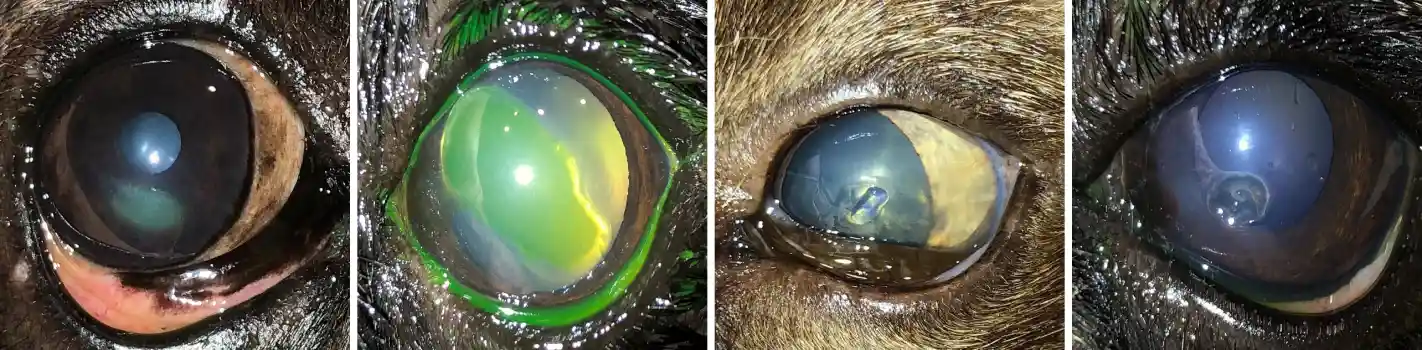
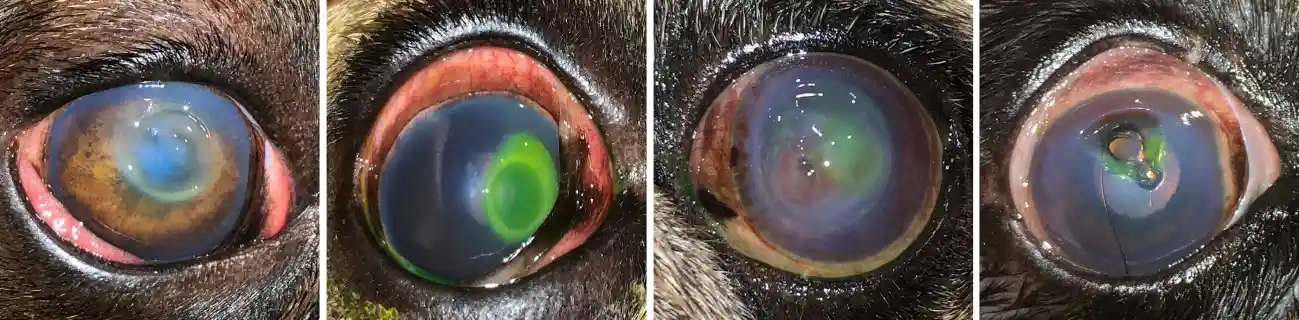
There are many kinds of corneal ulcers that are classified by depth [FIG3] – superficial, stromal, or deep – and by cause – simple or complicated. Simple ulcers [FIG 4] are those that are not infected. These ulcers can range in depth from superficial to stromal. Superficial simple ulcers typically heal quickly and with minimal scarring. Stromal ulcers often require more vigilant monitoring and may cause scarring. Complicated ulcers [FIG 5] are those that are infected by bacteria or fungus and can range in depth from superficial to very deep.
Infected ulcers often require frequent application of targeted antibiotic or antifungal medication and often result in some scarring. Ulcers that develop because of trauma, like a claw injury, if small can sometimes be healed without surgery however, if full thickness, long, or if iris tissue protrudes though the cornea [FIG 6], surgical repair is often required. Indolent ulcers [FIG 7] are a unique class of corneal ulcer. Indolent ulcers nearly always occur in older animals and may be initiated spontaneously or from trauma. These ulcers, while superficial and rarely infected, can be very slow to heal and require multiple rechecks by your veterinarian who will try to promote healing by stimulating blood vessels to grow into the cornea [FIG 8].


Causes of corneal ulcers in dogs and cats can include trauma to the eye, such as scratches or foreign objects or they can develop because of dry eye syndrome or underlying diseases such as corneal dystrophy or entropion. Some breeds, especially those with very short noses (brachycephalics) are at increased risk for ulcer formation due to the over-exposure of their eyes and reduced eyelid closure for corneal protection.
Advertisement
How Do I Know if My Dog Has a Corneal Ulcer?

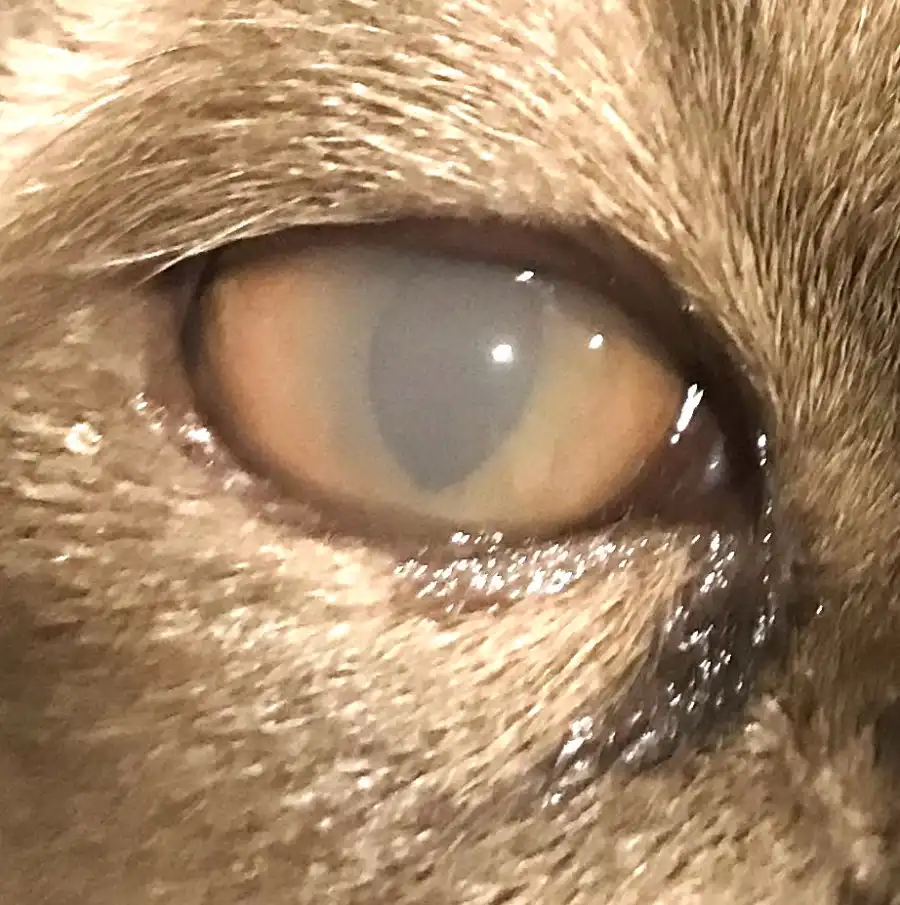


Signs of a corneal ulcer most commonly include sudden and persistent squinting [FIG 9], tearing [FIG 10], redness, and rubbing, but rarely, some pets don’t seem to show any signs of irritation. Persistent squinting is an obvious sign of irritation that should never be ignored. In more severe cases, the eye may appear cloudy or have divot present in the surface of the cornea. In addition, the pupil may be smaller on the affected side (anisocoria) and/or there may be clouding of the eye [FIG 11] depending on the severity or duration of the ulcer.
If a corneal ulcer has occurred traumatically such as from a penetrating object/claw, or if a very deep ulcer has progressed to rupture, fluid may leak from inside the eye. This fluid is not the same fluid as tears. In addition, there may be blood or pus in the eye [FIG 12] and/or the iris may protrude through the cornea [FIG 13]. In most cases, surgery will be needed to repair the cornea when fluid or iris tissue is seen to be escaping through the cornea.
Diagnosis

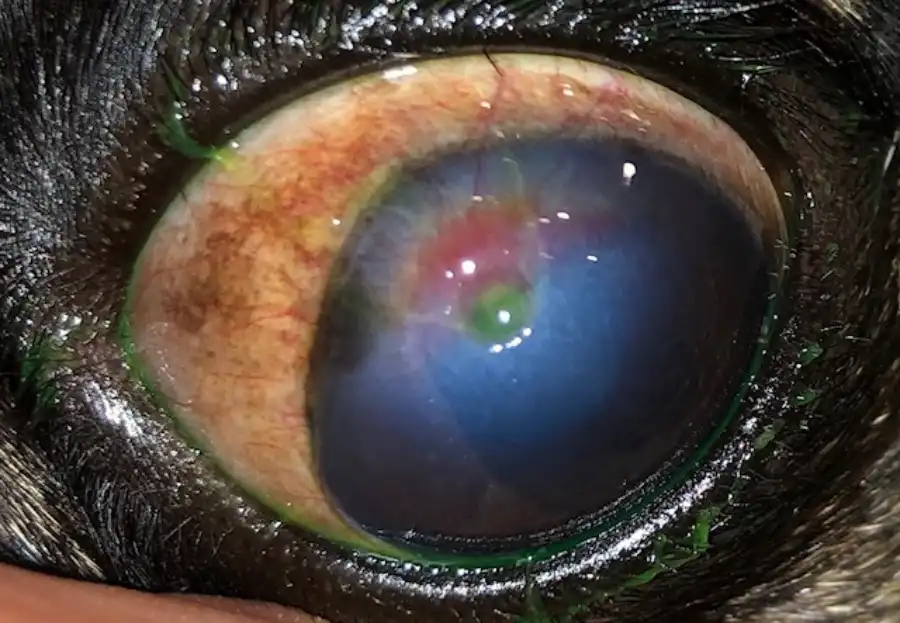
During a routine eye examination, corneas are stained with fluorescein to look for the presence of an ulcer quickly and painlessly [FIG 14]. Fluorescein stain is an orange-yellow water-soluble dye that temporarily fluoresces green when exposed to blue light.
As fluorescein stain can only stick to areas of the cornea not covered by epithelium, the protective outermost layer of the cornea [FIG 2], the ulcer is highlighted for easy identification. To identify very small ulcers or to determine the depth of the ulcer, magnification is required. When examining the stained cornea, your veterinarian will be able to determine the size, shape, and depth of the ulcer, the mostly likely duration and cause of the ulcer, and the likelihood of current infection.
Knowing as much as possible about the ulcer will allow your veterinarian to provide the best prognosis for healing, and to initiate appropriate therapy to prevent or control infection. Consultation with a veterinary ophthalmologist may be required if the ulcer is noted to be very deep, infected, or if the cornea has perforated.
Corneal perforation is confirmed if a clear rivulet of fluid, noted to originate and egress from the ulcerated site, is seen to pass through the sheet of fluorescein stain present on the surface of the cornea. This is called a positive Seidel’s test. When perforated and the corneal defect is large, surgery is often required to restore the integrity of the cornea.
Treatment of Corneal Ulcers
Most ulcers healed within 7 days after starting treatment however, when ulcers take longer to heal, three things need to be considered; is it Infected, is an Inciting cause still present, or is it Indolent? These are the three “I’s”.
The initial therapeutic plan is developed after determining the depth and underlying cause of the ulcer. Unless an obvious cause is identified, most treatment will involve antibiotic medication (usually a broad-spectrum antibiotic that is applied directly to the eye), oral anti-inflammatory medication, oral pain control, and sometimes an oral antibiotic. In addition, it is critical that the patient be prevented from harming their eye further by ensuring that they always wear an E-collar (cone).
With increased depth of the ulcer, the medications applied become thinner (ie liquid eye drops vs ointment) and the frequency of application is often greater. When an ulcer is identified to be deep and infected, the frequency of eye drops can be a high as every 30-to-60 minutes for several days at a time!
When an ulcer does not heal in the expected 5-to-7-day time frame, treatment is redirected. Redirection is based on suspicion for infection, presence of an inciting cause, or likelihood of indolence. A corneal ulcer that initially appeared simple, can change in colour to appear yellow-grey and soft.
This change occurs more commonly in the flat-faced (brachycephalic) breeds. These visual hallmarks of infection can be confirmed by collecting swabs for laboratory studies that include bacterial culture and sensitivity, as well as cytology. When confirmed, the therapy is changed to better target the infection.
This may be in the form of additional antibiotics, anti-fungal medication, drops that help to stop corneal melting, and additional pain control.
To look for an inciting cause, an ophthalmologist will use specialized equipment to examine the eye with magnification. In young dogs, common culprits for persistent ulcers include ectopic cilia [FIG 15], entropion [FIG 16], cat claw injuries, and plant-based foreign bodies.
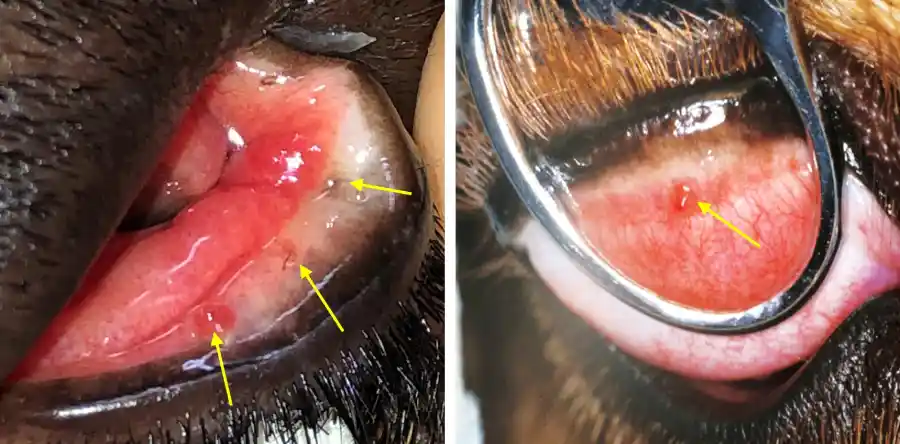
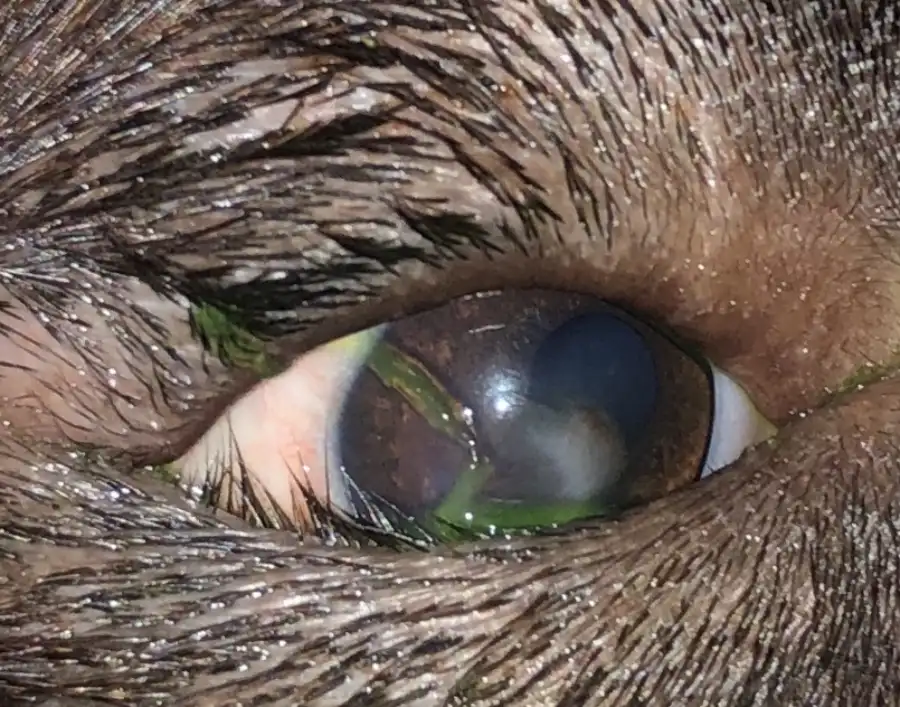
Persistent ulceration in older dogs may include any of the above causes listed above, but often occur secondary to indolence. Indolent ulcers, while superficial and rarely infected, can be very slow to heal and require multiple rechecks by your veterinarian who will try to promote healing by stimulating blood vessels to grow into the cornea.
With age, the ulcerated outermost layer of the cornea fails to attach to the underlying deeper layer of the cornea. Removal of the loose epithelial layer of the cornea and disruption of the underlying corneal tissue by your veterinarian will help new epithelial tissue grow, stick to, and seal the cornea. During the healing process, blood vessels are often noted to grow into the cornea. This is a positive sign and should not alarm you if noted.
In severe cases of corneal ulceration, surgery may be required to restore the integrity of the cornea. Typically, surgery will be recommended when the ulcer is more than 50% deep with no signs of healing, the depth of the ulcer is increasing and rupture is imminent, or the cornea has already perforated.
There are many surgical methods available to repair the cornea and nearly all will need to be performed by a veterinary ophthalmologist. While technically routine to perform, successful surgical procedures require sophisticated magnification and microsurgical instrumentation that is uncommonly available to general practice veterinarians. The method chosen by your veterinary ophthalmologist will be the one best suited to your pets needs.
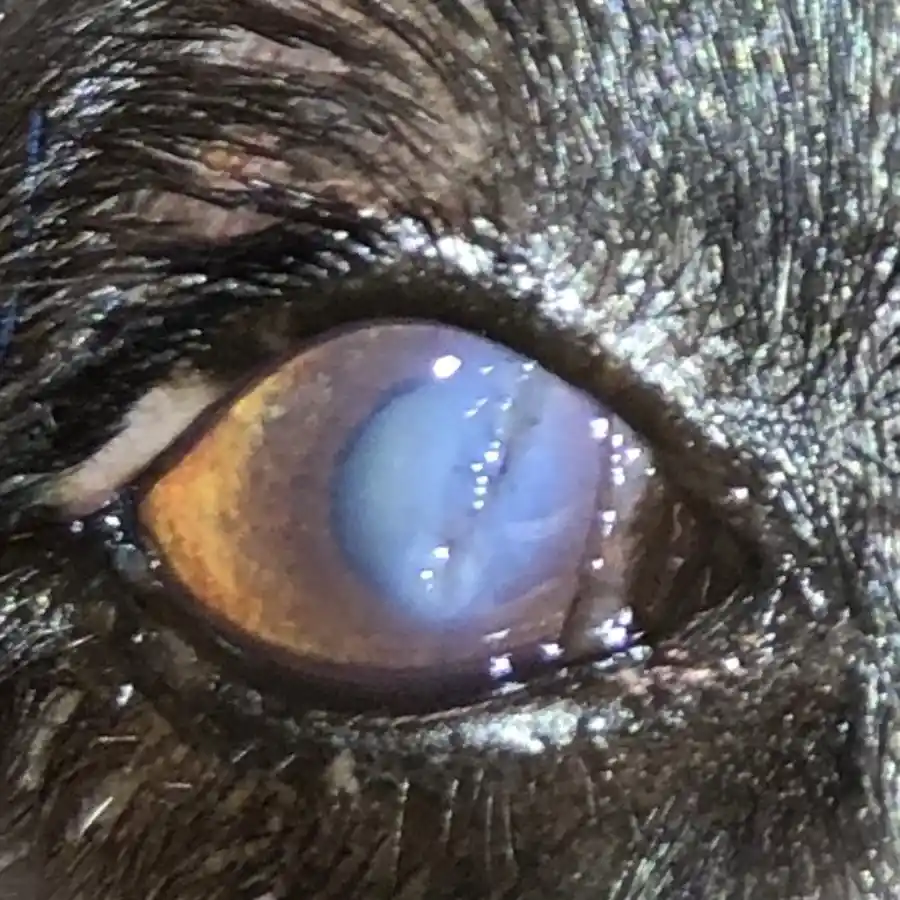
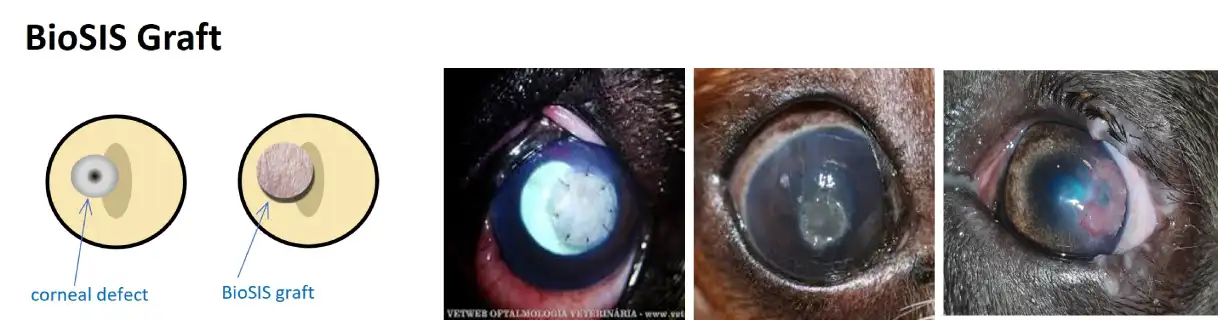
If more than one appropriate surgical option is available for your pet, your ophthalmologist will be able to discuss the differences – most of which differ by degree of scarring and cost. Surgical options can include primary corneal stitches [FIG 17], placement of a conjunctival graft [FIG 18], corneo-conjunctival transposition [FIG 19], placement of a biological scaffold [FIG 20], penetrating keratoplasty, or application of cyanoacrylate glue.


Prevention of Corneal Ulcers
Preventing corneal ulcers in dogs and cats involves protecting their eyes from potential external sources of trauma, such as sharp objects or chemicals, as well as from self harm associated with irritation by underlying disease or poor conformation.
When an underlying disease or condition known to increase the risk of ulcer formation is present (eg dry eye, entropion), control or resolution of that disease or condition is strongly recommended. Prompt attention to the clinical signs associated with corneal ulcers will help to mitigate the depth and duration of corneal ulcers.
Over the next week, Mabel diligently administered the medications. Rosie, initially annoyed by the cone, soon adapted, turning it into a fun game of trying to scoop up her toys with it. Day by day, the cloudiness in Rosie’s eye diminished, and the playful glint returned.
A week later, at their follow-up visit, Dr. Jenkins was pleased with Rosie’s recovery. “Looks like she’s healing nicely,” he remarked. “Keep up with the drops for a few more days, and she should be good as new.”
Mabel felt a weight lift off her shoulders. Grateful for Dr. Jenkins’ expertise and her intuition, she looked forward to resuming their playful adventures, with Rosie’s eyes clear and full of joy.
Advertisement
Review
Corneal ulcers, painful disruptions of the eye’s protective corneal layer, can affect all animals. They can be caused by trauma, underlying diseases, or breed-specific predispositions, especially in brachycephalic breeds. Recognizing symptoms like persistent squinting, redness, and tearing is vital for prompt veterinary intervention.
Diagnosis typically involves fluorescein staining and magnified examination, with treatments ranging from antibiotics to, in severe cases, specialized surgeries. Addressing potential underlying conditions and protecting pets form eye trauma, are instrumental in preventing corneal ulcers.
By Marnie Ford PhD, DVM, Diplomate ACVO
Dr. Ford graduated from the Ontario Veterinary College in 2000 after completing a Bachelors in Zoology at the University of British Columbia and a PhD in Physiology at Monash University in Australia. Following a rotating small animal internship at the University of Minnesota in 2001, Dr. Ford achieved Diplomate status from the American College of Veterinary Ophthalmologists in 2006 after completing a 3-year residency in Comparative Ophthalmology at the University of Missouri. After co-founding a private referral hospital, West Coast Veterinary Eye Specialists, in New Westminster (2004-2013) she opened Pacific Animal Eye Specialty services, providing mobile medical and surgical ophthalmologic care to patients in the Lower Mainland, Vancouver Island, and the Interior of BC (2013-2019). In 2019, she returned to Australia where she worked full-time in both medical and surgical ophthalmology as well as resident training at Animal Eye Care in Melbourne Australia. In 2023, Dr. Ford returned to Vancouver to provide locum services to ophthalmologists across Canada.