
 Pet News


Summary
It’s a good idea to wash your dog’s bedding regularly to keep it fresh and clean. It’s possible when doing so however, that you may sometimes experience the unpleasant discovery of tapeworm segments. But what exactly are tapeworms? How do pets get infected, and more importantly, how can they be treated and prevented? This article delves into the life cycle of tapeworms, their impact on dogs, and essential guidelines to ensure your pet remains tapeworm-free. Learn how to spot the signs of tapeworm infection, available treatments, and steps to prevent a recurrence. With this knowledge, you’ll be better equipped to protect your dogs from these pesky parasites.
In the wee hours of the morning, the quiet rustling of a dog shaking out his fur was the only sound interrupting the silence of my home. I was petsitting a friend’s dog, Paseo, while they were out of town. I noticed, as I squinted at Paseo’s fur, that something was amiss.
In the soft glow of morning light, I saw them – small, white segments, akin to grains of rice, embedded in Paseo’s fur. A sight unassuming to an untrained eye, yet troubling. They were tapeworm segments, a sign of infestation. These parasites, once established in our pets, make their abode in the intestines and live out their life cycle. They come into our homes uninvited, via fleas or mice, a pest to our beloved pets.
The tapeworm, although seldom harmful, is an unwelcome guest. Its presence can sometimes trigger perianal pruritus, an uncomfortable itch of the bottom. Some tapeworms, like Spirometra, can be more problematic, causing diarrhea, weight loss, and even vomiting. What would have been a quiet morning unraveled into a day of decisive action, sparked by the seemingly innocuous sight of what looked like rice grains in Paseo’s fur.
After consulting Paseo’s veterinarian, and calling his vacationing owner, I began the attack of the tapeworms, with flea control, medications for him, and a plan to clean his coat and bed. With proper planning and prevention, his owner could keep their guard up to keep him tapeworm-free in the future.

Introduction
Perhaps you’ve noticed small rice-like bits every now and then in your pet’s bedding. Or maybe you’ve seen them in the fur around your dog’s bottom. Sorry to say, those are tapeworm segments, infective to an intermediate host, on standby for a chance to infect the next animal. (If they’ve been shed very recently, they may still be moist and may actually be moving!)

Tapeworms are a parasitic segmented flatworm that live in the small intestine of dogs, cats, and other animals. Pets become infected by eating intermediate hosts, the most common being fleas and mice, which contain the infective larvae.

Are Tapeworms Harmful?
Most tapeworms do not cause apparent harm to our pets, except occasionally perianal pruritus. Exceptions include:
- Spirometra may cause diarrhea, weight loss, and vomiting.
- Mesocestoides larva may cause Peritoneal larval cestodiasis (PLC) –a potentially fatal peritoneal infection in dogs (which are accidental intermediate hosts).
What are the Signs of Tapeworms?
Signs of tapeworm infection include:
- White to off-white dried or moist individual tapeworm segments called proglottids may be seen in the feces, on bedding, on the ground, or on the pet. Taenia, common in dogs (and cats), makes rectangular proglottids, and Dipylidium, also common, has barrel-shaped proglottids. Mesocestoides are club shaped and Echinococcus proglottids are too small to see.
- Scooting, or rubbing the anus on the ground, due to pruritus. Read more with our PHH articles on Itchinus and Anal Sacs in dogs.
- Diarrhea, weight loss, and vomiting from Spirometra.
- PLC—abdominal distension from ascites, lethargy, and decreased to no appetite.

How do Dogs Get Infected with Tapeworms?
Dogs usually become infected with tapeworms by ingesting fleas and mice (also rarely lice). Although it seems strange at first that pets would eat fleas, dogs tend to lick themselves, which conveys fleas into their mouths. Since flea bites cause pruritus, and dogs scratch themselves largely by biting, licking, and chewing, it is difficult for a pet with any fleas at all to avoid becoming infected with tapeworms. It is an elegant and very successful life cycle for the tapeworm. (See the PHH article on Fleas and Ticks)
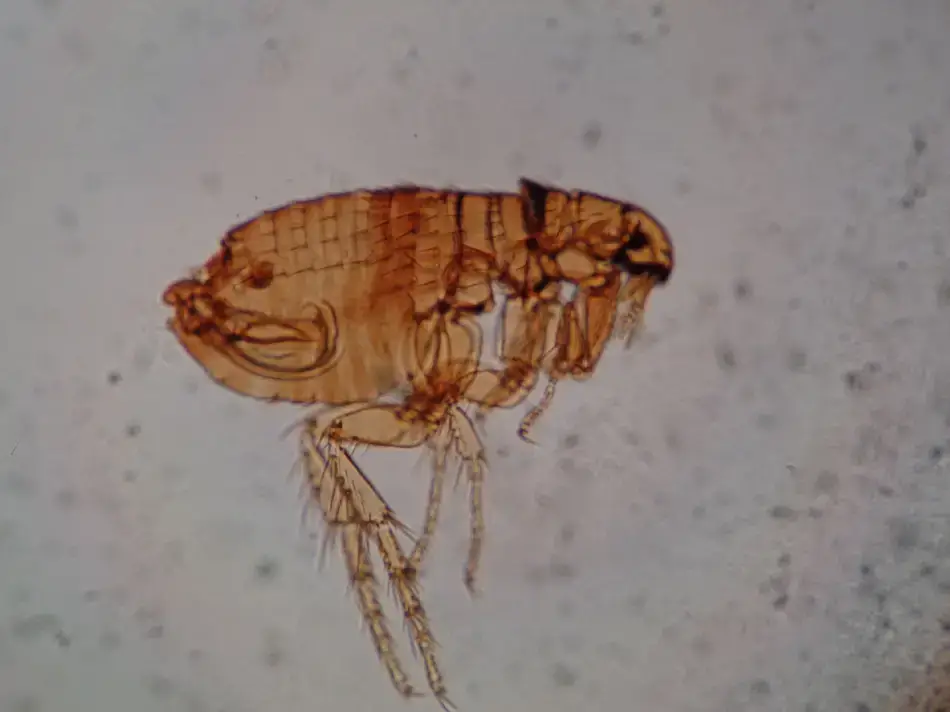
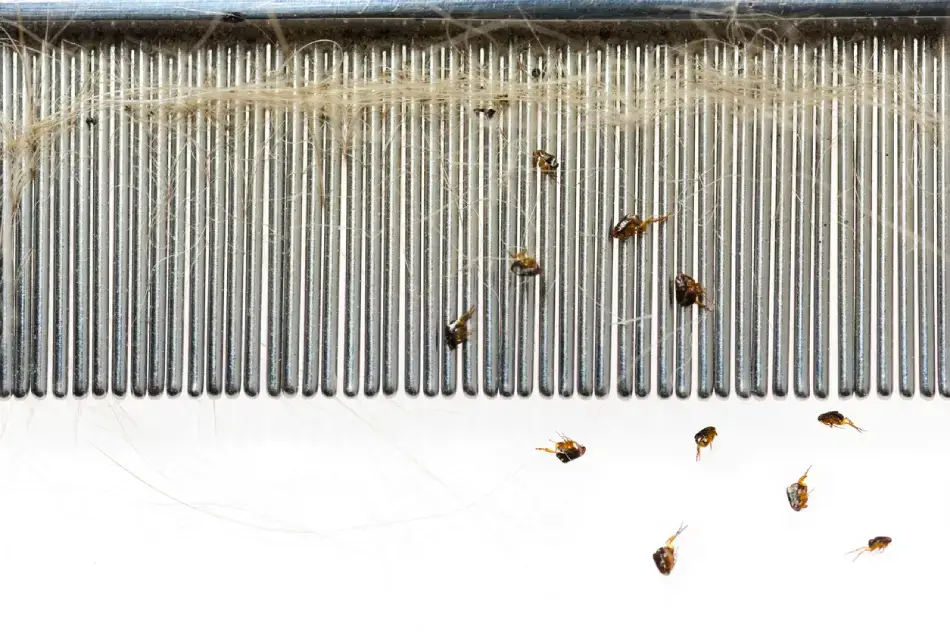
In addition to fleas and mice, pets can also become infected with tapeworms by eating a number of different intermediate hosts. These include birds, reptiles, rabbits, rodents, sheep, other mammals, amphibians, copepods, and uncooked fish.
Advertisement
What Can I Do to Prevent Tapeworms in My Dog?
It can be difficult to prevent tapeworm infection because fleas are everywhere and because pets are prone to eat mice, but there are some guidelines:
- The best thing to do is to keep your dog on a good veterinary recommended brand of monthly flea preventative. A high quality, effective product should kill fleas within hours of them jumping onto your pet, so your pet shouldn’t have much chance to ingest them, thus preventing tapeworm infection. A high quality veterinary recommended flea collar will also suffice.
This is an excellent topical product for fleas, ticks, and mosquitoes.
This flea and tick collar lasts 8 months.
- Make sure your dogs and neighboring dogs, barn cats, or feral cats don’t have lice. (If you have feral cats, look for a local Trap, Neuter and Return (TNR) program to help you). All good quality flea control products also kill lice.

- Prevent hunting and scavenging, and don’t let your dog eat any intermediate hosts, especially their viscera: birds, reptiles, rabbits, rodents, sheep, amphibians, copepods, and uncooked fish.
Advertisement
Are Tapeworms Hazardous to Humans?
Most tapeworms are not hazardous to humans, but some are. The following cautions should be noted:
- Children are at some risk for Dipylidium infection because of the possibility of ingesting fleas, and tapeworm segments are occasionally mistaken for pinworms.
- Echinococcus tapeworms can cause hydatid disease in humans which can be fatal.
- Taenia and Echinococcus eggs look alike, so strict sanitation must be practiced in the lab.
- Humans can become infected with Mesocestoides, Diphyllobothrium, and Spirometra by ingesting intermediate hosts, particularly in uncooked food.
How Are Tapeworms Diagnosed?
- You can bring a sample from your dog’s bedding, fur, or feces, to show your veterinarian, providing you use gloves, don’t touch the sample, and wash your hands. Once you are familiar with tapeworms, you can be fairly confident that your pet has them, especially if they are shedding large numbers of segments.
- It is usually recommended to run a fecal flotation to try to detect tapeworm eggs, although it is more common not to find them even if tapeworm segments are seen on the stool. This is because the segments contain egg packets that will only occasionally rupture and spill out their eggs, which can be seen microscopically. The purpose of the flotation is to find them if they are present, but also to screen for other intestinal parasites.
- Occasionally a cellophane tape test is done, where tape is pressed to the perianal skin, then applied to a microscope slide, to try to find tapeworm egg packets. This test can be used to differentiate the different types of tapeworms.
- For suspected cases of PLC—examine peritoneal fluid microscopically or by PCR-restriction fragment length polymorphism.
Advertisement
How Are Tapeworms Treated?
- If you are confident that your pet has tapeworms, it generally won’t cause harm to treat your pet with over the counter praziquantel according to label directions, but it may not be effective against all types of tapeworms. Also, because there is some emerging resistance to praziquantel in Dipylidium tapeworms, you may not accomplish a complete eradication, and one could argue that you may be contributing to resistance in the parasite. (Praziquantel was available only by prescription until the past few years, when it became available over the counter.)
Your veterinarian may prescribe one of the following treatment options:
- Fenbendazole for 3 days
- Praziquantel for 2 days
- Praziquantel with pyrantel pamoate and febantel
- Epsiprantel in varying doses
- For canine PLC: praziquantel repeated in 2 weeks, fenbendazole daily for 4-8 weeks until clinical remission, often not curative
- Do not use praziquantel or epsiprantel in animals under 4 weeks old.
- Repeat treatment may be needed if eradication is not achieved.
What Should I Do for Follow-up After Tapeworm Treatment?
- Monitor your dog’s stool, fur, and bedding for signs of tapeworm recurrence.
- Continue good flea prevention and control protocol.
- It is important to do a microscopic examination for tapeworm eggs after treatment to be sure Mesocestoides is completely eradicated, as they can replicate by asexual multiplication, resulting in recurrence without reinfection.
- For dogs with PLC—check for recurrence via abdominocentesis with ultrasound; larvae are difficult to eliminate since they also replicate by asexual multiplication.
Advertisement
What is the Prognosis for My Dog After Tapeworm Treatment?
Usually, the prognosis after treatment for tapeworms is excellent. Tapeworm medications are very effective and generally kill adult tapeworms in one treatment cycle. As mentioned, there is some new resistance to praziquantel which will make treatment with this common medication more challenging. Ask your veterinarian for help with the diagnosis and treatment for the most successful elimination of your dog’s tapeworm infection.
Much less common but serious problems include:
- If Mesocestoides is not completely eradicated, it can recur due to its asexual multiplication.
- PLC may recur because treatment may not be curative, but rather causes remission.
What is the Take-Home Message about Tapeworms?
Tapeworms look gross, but they generally aren’t going to harm your dog. Some types can cause zoonotic disease, however, so you should see your veterinarian for diagnosis and treatment.
Tapeworm treatments kill adult tapeworms. Intermediate hosts and infective eggs remain in the environment and can potentially reinfect your pet.
When your pet has tapeworms, they usually have fleas. Check them all over for fleas with a flea comb. Preventing your pet from getting fleas, the intermediate host for Dipylidium tapeworms, is the best way to prevent their infection. Use a high-quality, veterinary-approved flea control product to prevent fleas and tapeworms. Clean your home and your pet’s bedding of any flea dirt, eggs, and tapeworm segments.
Prevent reinfection of the other types of tapeworms by preventing your pets from ingesting the other intermediate hosts as best you can: birds, reptiles, rabbits, rodents, sheep, (particularly their viscera) and amphibians, other mammals, copepods, and uncooked fish. Use a long leash or a flexi-leash to prevent your dog’s access to eating intermediate hosts.
Monitor your pet’s stool, fur, and living quarters for signs of tapeworm segments so you detect an infection or reinfection right away if it occurs. Finally, be happy when you don’t see any rice-like bits in your pet’s bed.


By Karen E. Mueller DVM, AVCA Certified
Dr. Mueller has over 30 years of experience in general small animal veterinary practice, feline medicine, and shelter medicine. Dedicated to preventing pain in pets and improving their quality of life, she currently has an animal chiropractic practice in Bellingham, WA. Dr. Mueller is also passionate about reducing pet overpopulation and works with high-volume, low-cost spay and neuter nonprofit programs throughout the Pacific Northwest.