
 Pet News


Summary
Ear mites, though more commonly associated with cats, can also be a problem in dogs. The culprit, Otodectes cynotis, is a microscopic organism that can infest the ear canals of our canine friends. Transmission can occur through contact with infested animals or their environments. Key indicators of an infestation may include persistent scratching and buildup of dark debris in the ears. Diagnosis and treatment by a veterinarian can swiftly eradicate the infestation. Read on to discover how to ensure an ear mite-free life for your dog.
Diagnosis: Upon examination, the veterinarian observed the classic signs suggestive of ear mite infestation in Buster: dark, coffee-ground-like debris and inflammation in his ear canals. Cytology of slides made from swabs of his ears, examined under the microscope, confirmed the presence of ear mites. Buster’s veterinarian reassured his owners that prompt treatment could alleviate his symptoms and improve his quality of life.
Treatment: Buster’s treatment plan began with a thorough cleaning of his ears to remove debris and soothe inflammation. His veterinarian prescribed Revolution, a topical treatment containing selamectin, known for its efficacy against ear mites. This monthly application would not only target adult mites but also prevent reinfestation by eliminating eggs.
Progress and Recovery: Buster’s owners noticed a significant improvement in Buster’s behavior within days, as his itching subsided, and he became more comfortable. A follow-up visit allowed the veterinarian to monitor Buster’s progress and confirm that he was free from mites.
Additional Considerations: Following Buster’s successful recovery from ear mites, his owners remained vigilant about preventive care. They continued to administer Revolution monthly to safeguard against future infestations and maintained regular flea and mite prevention measures for all pets in their household. By prioritizing Buster’s health and well-being, they ensured that he could enjoy a comfortable, itch-free life as a beloved member of their family.
Conclusion: Buster’s journey to recovery from ear mites serves as a testament to the importance of prompt diagnosis, diligent treatment, and ongoing preventive care. Through the dedication of his loving owners and the expertise of veterinary professionals, Buster overcame the discomfort of ear mite infestation and embraced a parasite-free, healthier future.
Introduction
Ear mites, caused by Otodectes cynotis, can be a problem in both dogs and cats, but our focus here is on our canine companions. These parasites can find a hospitable environment in the ears of dogs, leading to discomfort and health issues if left untreated.
Advertisement
Signs
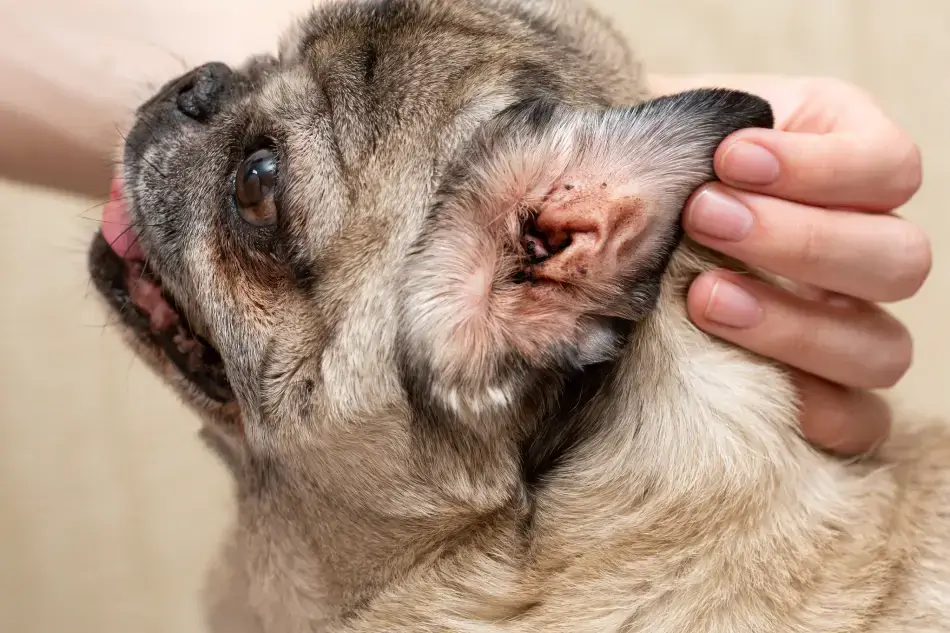
Dogs with ear mites exhibit unmistakable signs of discomfort. They may scratch their ears incessantly, shake their heads, or rub their ears against furniture or the floor. A telltale sign of infestation is the presence of dark, coffee-ground-like debris within the ear canal.
Dogs might also develop crusts or hair loss around the ears and neck from persistent scratching. Another concern with persistent head-shaking is the possibility of developing aural hematomas. These are hematomas that develop between the layers of the cartilage of the ear.
As the dog shakes repeatedly, the shaking damages the fine connective tissue that holds the cartilage layers together, and as they tear apart from each other, they bleed. This blood pools in between the layers, causing a hematoma, which requires surgery to treat.
Diagnosis
Ear mites are usually fairly readily diagnosed. Swabs are taken of the dog’s ear canals, and rolled into mineral oil drops on a glass slide. The slides are then examined under a microscope, and the presence of mites or their eggs confirms the diagnosis.

Treatment
The signs and presence of typical ear debris may lead the veterinarian to recommend treatment for ear mites, even if mites are not seen. Since there are such effective and relatively inexpensive treatments available, it is likely the best scenario for the pet.
Treating ear mites starts with a thorough cleaning of the dog’s ears to remove debris. This process might be slightly uncomfortable for the dog but is essential for effective treatment. Medications to eradicate the mites include topical treatments applied directly to the ear and systemic treatments like selamectin. Treatment may need to be repeated over several weeks to ensure all mites and their eggs are eradicated.
One good product is Revolution, which contains the active ingredient selamectin (a semisynthetic avermectin), which controls endoparasites and ectoparasites, including adult fleas, flea eggs, ticks, heartworms, ear mites, and sarcoptic mange in dogs, for 30 days.
Additional Considerations
After treatment, it’s crucial to monitor your dog for any signs of lingering or recurrent issues, as this could indicate other underlying ear problems. Maintaining regular flea and mite prevention measures and treating all pets in the household are essential steps to prevent reinfestation. With proper treatment and prevention, most dogs recover quickly from ear mite infestations and can enjoy a comfortable, itch-free life.

Buster’s journey to recovery from ear mites serves as a testament to the importance of prompt diagnosis, diligent treatment, and ongoing preventive care. Through the dedication of his loving owners and the expertise of veterinary professionals, Buster overcame the discomfort of ear mite infestation and embraced his brighter, healthier future.

By Karen E. Mueller DVM, AVCA Certified
Dr. Mueller has over 30 years of experience in general small animal veterinary practice, feline medicine, and shelter medicine. Dedicated to preventing pain in pets and improving their quality of life, she currently has an animal chiropractic practice in Bellingham, WA. Dr. Mueller is also passionate about reducing pet overpopulation and works with high-volume, low-cost spay and neuter nonprofit programs throughout the Pacific Northwest.