 Pet News


Summary
Progressive Retinal Atrophy (PRA) in dogs is an inherited degenerative condition of the retina that leads to vision loss. Secondary toxic cataracts can develop in dogs with PRA, and can further increase vision loss.
The cataracts typically worsen over time, but early detection while the cataracts are very small coupled with daily antioxidant vision supplementation may help slow cataract progression. For dogs with more advanced PRA, cataracts may rapidly increase, quickly causing increased vision loss.
Rarely, cataract surgery may be possible if the cataracts are advanced. This is only considered under very specific conditions, including but not limited to:
- Evidence of some useful retinal function prior to recent cataract progression;
- Lifetime daily antioxidant supplementation;
- Low anesthetic risk;
- And having the right pet parent.
If surgery is not pursued, regular patient monitoring by a veterinary ophthalmologist is still essential to monitor for and manage the common complications of more advanced toxic cataracts, such as lens-induced uveitis, glaucoma, and lens luxation.
(Please read PRA in Dogs Part 1 before reading Part 2 of this three-part series about PRA!)
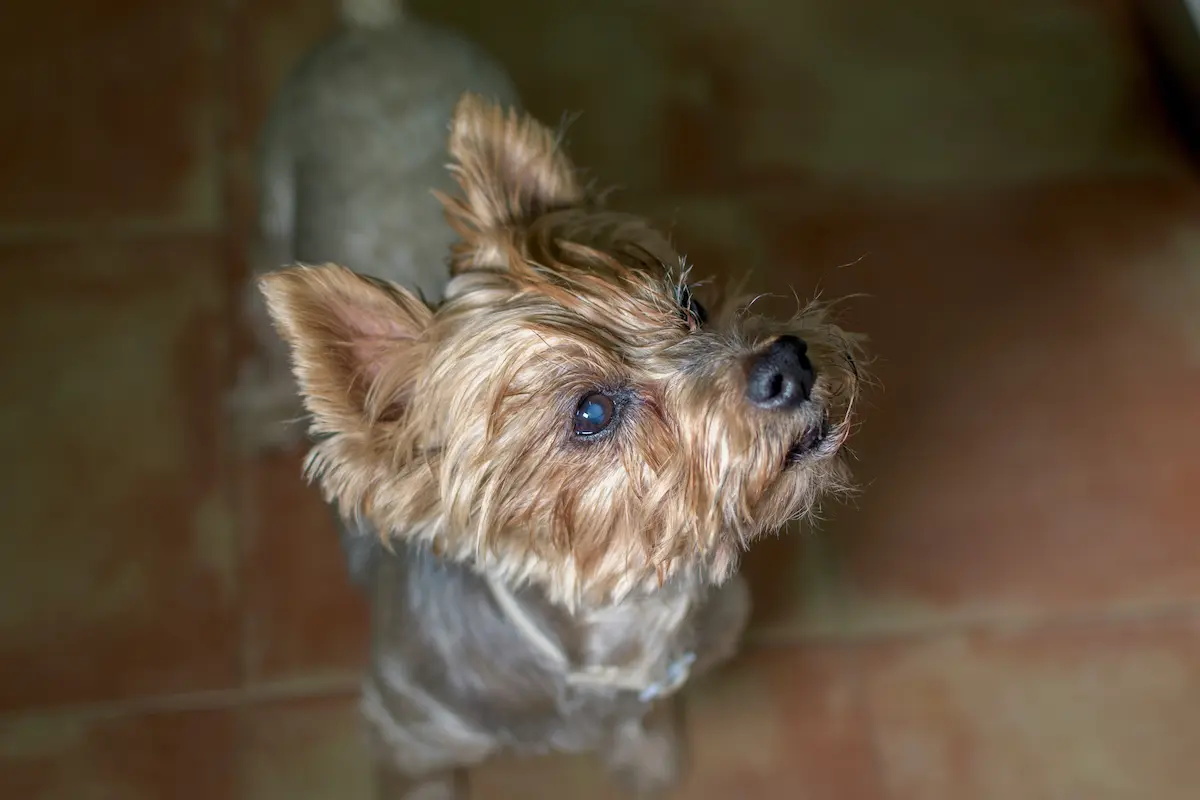
After Robbie was diagnosed with PRA, the ophthalmologist reexamined Robbie every six months, and after 1.5 years she was delighted that Robbie’s retinal function and his small secondary cataracts were both stable.
But three months after his last recheck, Robbie’s vision rapidly declined. Dave thought that the retinas were finally failing and that nothing could be done.
But Jill wanted a recheck ASAP to see if there was anything they could do to help Robbie’s vision. Jill was feeling very guilty, as she had started a new job and not been consistent in giving Robbie his daily vision supplement.
The ophthalmologist diagnosed rapidly progressing nearly mature secondary toxic cataracts in both eyes; 80% of both lenses were cloudy. She said that this was why Robbie’s vision had worsened.
She prescribed a topical antiinflammatory eye drop to help prevent lens-induced uveitis from damaging the eyes. She also said that cataract surgery might be an option for Robbie.
Secondary toxic cataract (see “toxic cataracts”) formation in dogs with PRA starts slowly as pinpoint opacities in the back of the lens, but can progress at variable speeds to cause vision loss over and above that caused by rod and cone cell death.
Clinical Signs
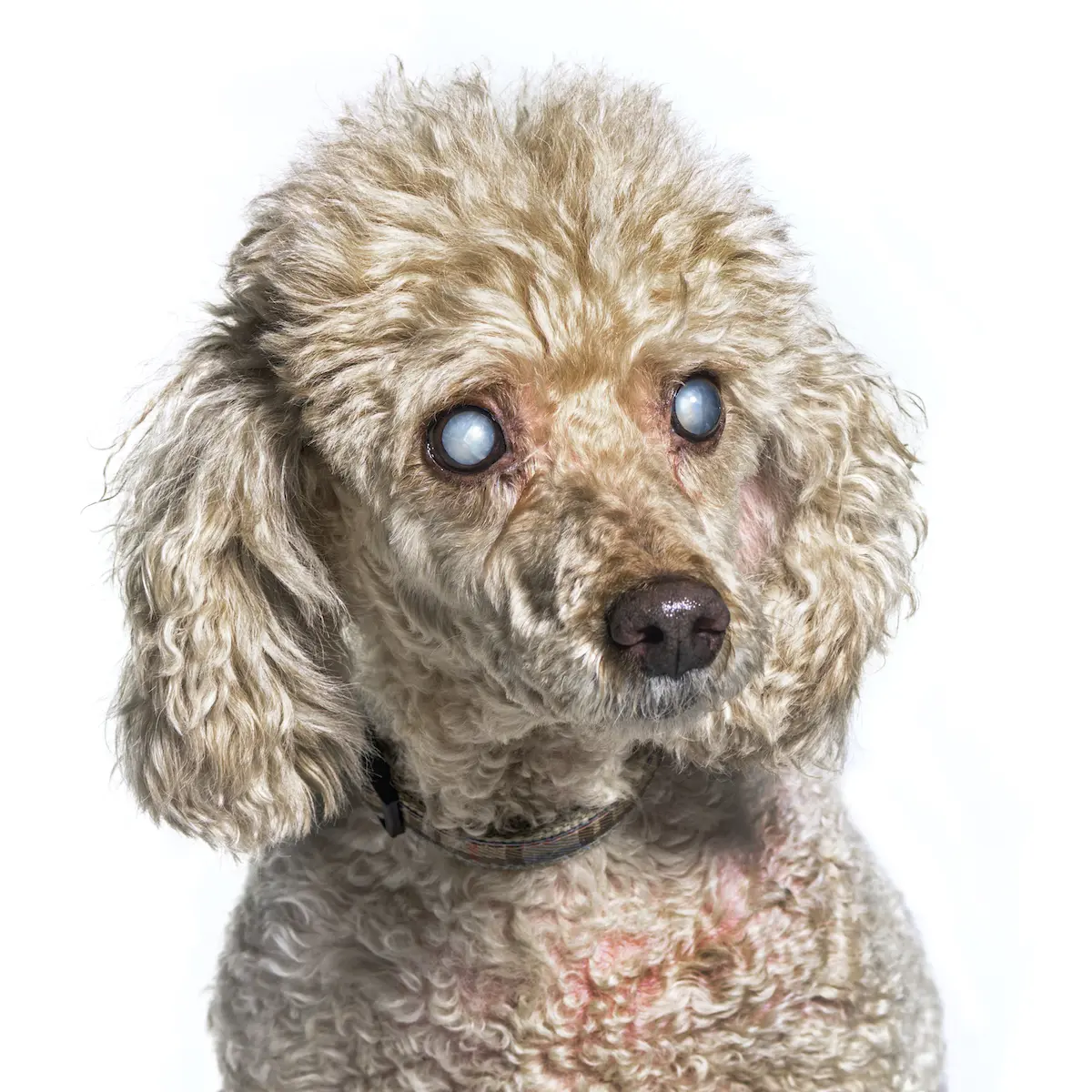
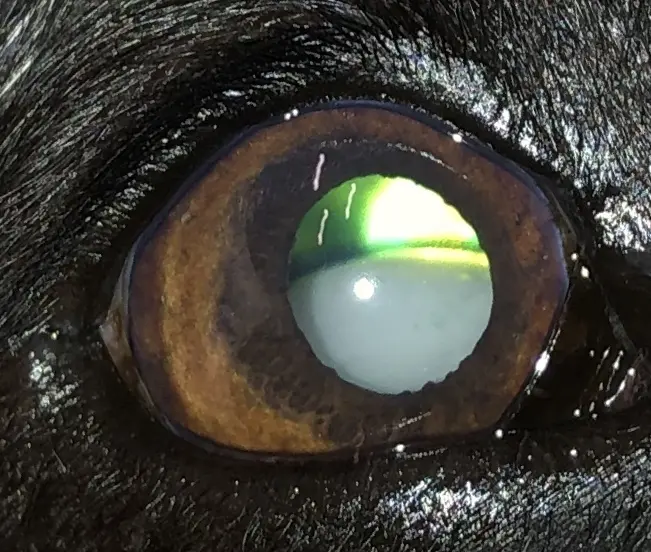
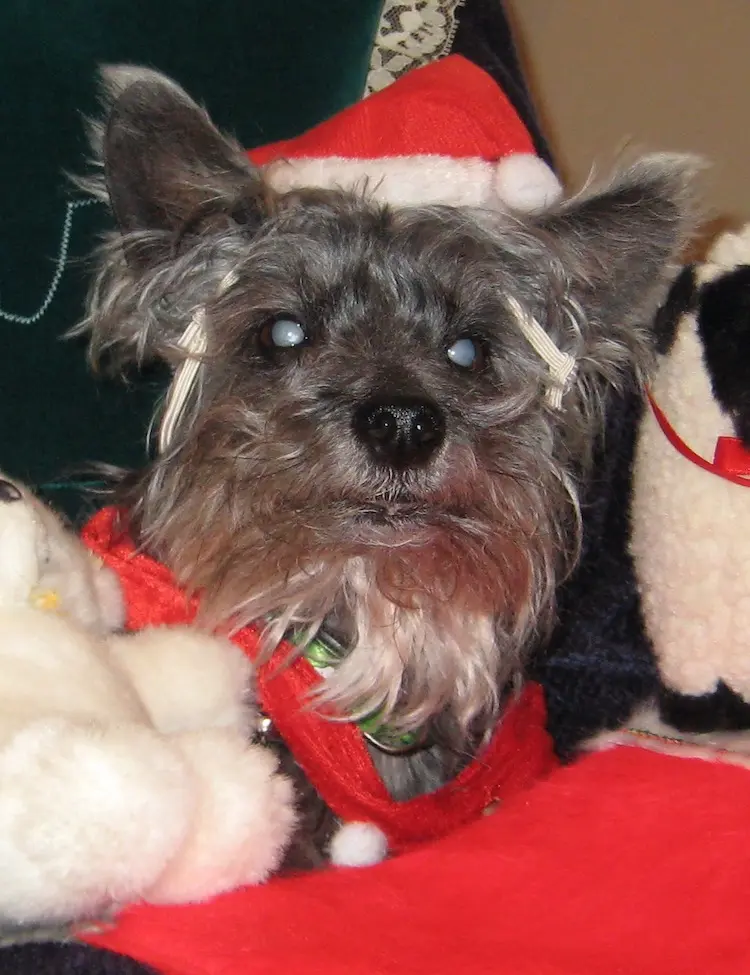
If the cataracts progress, vision decreases and the dilated pupils gradually become cloudier (immature cataract) and can progress to become completely white (mature cataract).
As this happens, the “eye shine” from the dilated pupils becomes less noticeable because the cataract blocks reflective glow.
The lenses can become very cloudy in a matter of weeks to months, and the dog’s vision declines as the cataracts progress.
Dr. Marnie Ford Photo
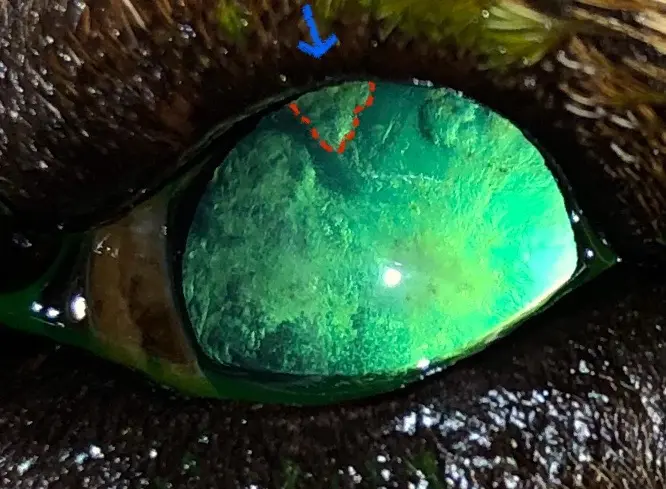
All advanced cataracts cause immune-mediated inflammation inside the eye, called lens-induced uveitis (LIU). This can cause the sclera and conjunctiva to be red and the iris to darken in color.
In severe cases, LIU can cause secondary glaucoma and/or lens luxation. Dogs rarely show signs of pain (squinting, “guarding” the eye, lethargy, sleeping excessively) with secondary toxic cataracts unless lens luxation occurs, which can be very painful.
Advertisement
Diagnosis
Toxic cataracts from PRA are diagnosed by veterinary ophthalmologists (see “veterinary ophthalmologist”). If a dog with advanced PRA and mature toxic cataracts is presented to a general practice veterinarian, it is very common for the doctor to diagnose that cataracts are present but not suspect that PRA is also present.
What does a veterinary ophthalmologist evaluate at each examination?
- How good is the dazzle reflex? (squint response to bright light).
- How well do the pupils constrict in very bright light?
- How well can the dog track treats in dim and bright light? (use high-value dark treats in motion against a light background).Large square flat treats work well that are soft, easily chewed, have a strong odor, and contain no beef or chicken. They can also be easily cut or broken into smaller pieces for small dogs. I like the following treats and used them for all of my canine vision evaluations:
- How well can the dog navigate an obstacle course in dim and bright light?
- Slit lamp biomicroscopy, indirect ophthalmoscopy, and intraocular pressure measurement
Direct or indirect ophthalmoscopy to evaluate how healthy the retinas (see “retina”) look is not very useful for monitoring dogs with more advanced PRA, as the retinas will always look severely degenerated, even if cone function is preserved.
In the normal dog retina, 97% of the 120 million photoreceptors are rods and only about 3% are cones. If all the rods are dead from PRA but all the cones are still living, the retina will always look quite degenerated because only 3% of the photoreceptors are alive. But the eye would have vision in lighted conditions, because the cones are still working.
Many dogs with PRA have advanced cataracts at initial examination, and it is more difficult to diagnose PRA in these patients because the cataract blocks the doctor’s view of the retina, making it necessary for special testing (electroretinography [ERG]) to measure retinal function in order to determine if the dog has PRA.
While ERG testing reliably diagnoses PRA in affected dogs initially presented with mature cataracts (where the retinas cannot be viewed), ERG testing does not do a reliable job of determining how much useful vision remains, or if the dog might be a candidate for cataract surgery. In response to a bright light source, acceptable candidates have good dazzle reflexes and usually have good pupillary light reflexes.
ERG results can even be “flat lines” while dogs with PRA still have some useful vision, because ERG testing evaluates the retina’s mass electrical responses to light from the 120 million rods and cones.
In a dog with PRA, if all the rods and some cones are dead but some cones are still alive, the ERG might not be able to detect the small cone response to light. But those surviving cones can be sufficient to provide some useful vision in bright light.
Advertisement
Treatment
Affected dogs are best monitored by veterinary ophthalmologists every six months. If toxic cataracts are more advanced, the eyes should be treated with lifetime topical antiinflammatory medications to help control LIU, and also be monitored for potential complications such as glaucoma and lens luxation. Lifetime antioxidant vision supplementation should be provided to help preserve remaining cone function for as long as possible.
Dr. Marnie Ford Photo
If your dog with PRA and cataracts shows signs of pain (squinting, “guarding” the eye, lethargy, sleeping excessively), seek veterinary care ASAP (ideally by a veterinary ophthalmologist), as acute lens luxation and/or glaucoma may be present.
If a dog with PRA still has some useful retinal function but has developed late immature or mature secondary cataracts with rapid loss of remaining vision, is cataract surgery possible? Before the availability in 2010 of a specific veterinary antioxidant vision supplement (Ocu-GLO™), cataract surgery was never performed on dogs known to have PRA. A shift in perspective among some veterinary ophthalmologists has occurred since 2010.
Long-term clinical experience with affected dogs given daily antioxidant vision supplementation has convinced some ophthalmologists (including the author) that surgery can be beneficial for the right dog with the right owner.
Most pet parents would not be the right owner; i.e., they would not opt for cataract surgery for their dog in the presence of a genetic, progressively blinding disease.
But in rare cases, cataract surgery can be done– with the goal of not curing vision loss, but “buying some time” in restoring some useful vision, just as antioxidant supplementation is given to support the retina and help “buy some time”.
While cataract surgery won’t prevent progression of PRA, it may allow the dog to regain some useful vision for as long as any significant retinal function exists.
Is your dog with PRA and advanced cataracts a candidate for cataract surgery?
- How well did your dog see before the cataracts progressed? Could they at least detect movement in bright light? If cataract surgery was performed, the goal would be to restore the dog’s vision to what it was before the cataracts progressed, and for as long as possible.
This means that if the “before” vision was quite minimal, cataract surgery is not an option, as vision could not be significantly improved (and surgery will not improve vision in dim light).
This goal is not the same goal as with “regular” cataract surgery in dogs with normal retinas, in which we aim for the restored vision to be as normal as possible for the rest of the dog’s life.
Sometimes, the extent of vision before cataracts worsened is unclear because the dog wasn’t examined by a veterinary ophthalmologist until after the cataracts had advanced, making it impossible to assess the retinas.
This is particularly common in dogs with PRA that were adopted after mature cataracts had already developed.
- Would cataract surgery improve your dog’s quality of life? If your dog can’t cope with vision loss from the cataracts, surgery may provide the dog with a period of improved visual function and well-being.
Cataract surgery in general is an elective quality of life surgery, and thus a personal choice for pet parents. There is no one right choice.
Many surgeries are performed in people even if the goal of surgery is not a “fix” but rather to provide improved health for less than a lifetime. The same is true for our pets on a case by case basis. Dogs live shorter lives when compared with us.
For example, if cataract surgery is done in a dog with PRA and useful vision ends up being restored for 18 months in a dog of a breed projected to live 12 years, this is 12.5% of the dog’s lifetime.
Compare this with a human projected to live 90 years, in which improved vision for 12.5% of their life would equate to 11 years and 3 months.
- No guarantees of outcome. The pet parent must accept that no promises can be made regarding the outcome of any cataract surgery, especially for dogs with pre-existing PRA.
The ideal pet parent of dogs undergoing cataract surgery must have a history of being very compliant with all instructions given by veterinarians, and with reexamination schedules.
- Is your pet in good health? Cataract surgery is an elective procedure, and if your pet has any health concerns that cause significant anesthetic risk, then surgery cannot be performed.
- Are your pet’s eyes in good health other than the PRA and the cataracts? If LIU is present, it must be controlled. Ocular ultrasonography testing must show that there are no retinal detachments (see “retinal detachment”).
- Antioxidant supplementation. Has your pet been given a daily specific veterinary antioxidant vision supplement for at least one month prior to surgery, and will you give the supplement daily after surgery for the dog’s lifetime?
- How important is useful vision for your dog? Vision is important in dogs, but not as important as hearing and sense of smell.For dogs, movement detection is very important, and there is a functional difference between a dog that can detect movement, a dog that has only light/dark perception, and a dog with no vision at all.But these dogs would be expected to adapt well if they are otherwise normal and their environment is stable. Vision is more important in a dog if any of the following are true:
-
- If your dog is hearing-impaired
- If your dog’s sense of smell is impaired
- If your elderly dog has cognitive dysfunction, as they are likely hearing-impaired and have reduced sense of smell
- If your dog is fearful and anxious
- If your home layout is not stable (e.g., children leaving toys on the floor) If your dog’s vision decreases in a multi-pet household, as the “pecking order” can be disturbed
Dr. Terri McCalla Photo
Dr. Terri McCalla Photo
Potential Outcomes
If the cataracts become mature, vision is limited to light and dark perception.The risk of LIU occuring is high, and LIU in turn can cause any or all of the following complications: discomfort; glaucoma; and/or secondary lens luxation.
If uncontrolled LIU is present, secondary glaucoma and/or lens luxation can occur, especially in dogs genetically at risk of developing these conditions. Glaucoma requires daily topical medication and close monitoring of the intraocular pressure, which can be costly due to lifetime expensive medications and frequent exams with intraocular pressure measurement.
Because uncontrolled glaucoma results in total vision loss and headache-like discomfort, the ophthalmologist may recommend surgery such as eye removal, or an intravitreal injection procedure under sedation.
Lens luxation occurs when the lens shifts out of position (luxates), and can end up in front of the pupil (anterior lens luxation [ALL]) or behind the pupil (posterior lens luxation [PLL]). When an ALL occurs it causes extreme pain, can cause acute severe blinding glaucoma, and is a true emergency.
If ALL is present in a dog with PRA, surgical removal of the painful eye is often the best decision, as vision is already compromised from the PRA and surgical removal of the lens does not make good sense, given the risk of complications from both the ALL and from surgery. If PLL is present, eyes are typically comfortable and can often be successfully medically managed.
If cataract surgery is performed in a dog with PRA, what are the possible outcomes? The hoped-for outcome is that the dog’s vision is restored to what it was before the cataracts progressed.
In a case series of eight dogs with PRA that underwent cataract surgery, six of the eight dogs recovered useful vision and their owners were also very happy with the outcome.
Following successful surgery, it is unknown how long useful vision will last. Vision might be functional for 6 months, 1 year, 2 years, etc., or for the rest of the dog’s life. In the six dogs with PRA and successful cataract surgery, useful vision was retained during an average followup time of 25 months.
Other possible post-surgery outcomes include no improvement in the dog’s vision, and any of the potential postoperative complications of cataract surgery for all dogs, including glaucoma, uncontrolled inflammation, and retinal detachment. All vision might be lost, and (rarely) eye removal might be necessary.
Advertisement
Prevention
There is nothing that can prevent cataract formation or progression. And nothing can reverse cataracts; they can only be eliminated by cataract surgery.
Daily specific antioxidant vision supplementation supports overall eye health and may help reduce the risk of cataract formation or progression, or complications from LIU.
Supplementation is recommended as soon as a dog is diagnosed with PRA. It is the author’s clinical experience that starting these dogs early before cataracts are present may reduce the risk of significant secondary cataract formation.
If small (incipient) (see “incipient cataracts”) cataracts are already present, supplementation may help reduce the risk of progression.
If the cataracts involve more of the lens (are immature) at the time of diagnosis of PRA, it is likely that they will progress no matter what.
Supplementation is still recommended, however, as it may help slow down the rate of progression of PRA and also helps support the retina and protect other eye tissues such as the cornea and iris, which is important if LIU is present.
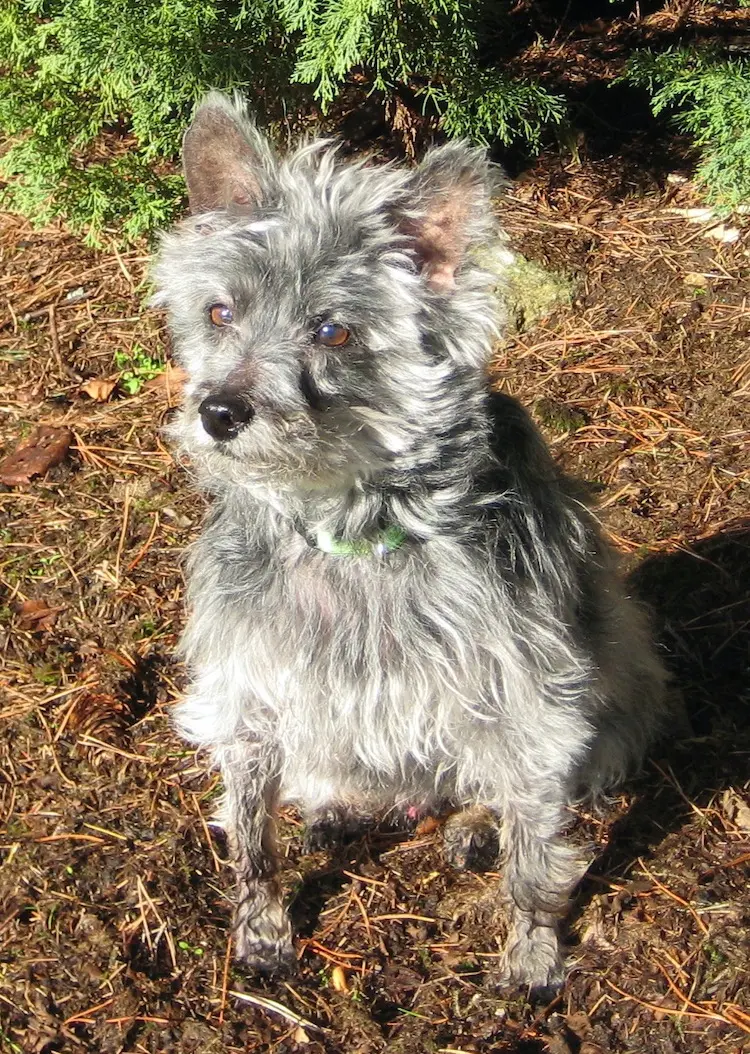
Jill and Dave decided not to pursue cataract surgery for Robbie, as he was adapting quickly to his increased vision loss. They focused on learning what they could do to make his environment safe, enriching, and stable so that Robbie would always be a happy, confident little guy in their home and yard. Robbie also received his daily vision supplement and was rechecked by the ophthalmologist every six months.
Conclusion
Secondary toxic cataracts are common in dogs with PRA and can rapidly progress to interfere further with vision.
If lifetime support with acceptable antioxidant vision supplementation is started in the early stages of PRA, the risk of cataract formation and progression may be reduced, plus supplementation supports health of the remaining rods and cones and all cells of the eye.
If your dog has PRA, it is important to contact your veterinary ophthalmologist ASAP if your dog’s vision rapidly declines, as decline may be due to secondary toxic cataract progression and not due to progression of PRA.
Dogs with advanced cataracts need treatment for LIU and might even have secondary complications of LIU, such as glaucoma and/or lens luxation.
Rarely, cataract surgery might be an option if the dog is a suitable candidate for surgery and the owner understands the goal and the risks of surgery.
Please read Part 3 of this three-part series about PRA, to learn about treatment, management, and potential outcomes of PRA in dogs.

By Terri L. McCalla BSc, DVM, MS, Diplomate ACVO
Dr. Terri McCalla Dr. McCalla received a BS in Animal Health Science from the University of Arizona, followed by her DVM degrees from both Oregon and Washington State Universities in 1984. She completed a 3 year residency in Comparative Ophthalmology from the University of Missouri and became board-certified in the American College of Veterinary Ophthalmologists (ACVO) in 1989.