 Pet News


Summary
This article provides an in-depth look at feline vision, explaining that while cats have lower visual acuity than humans, they excel in night vision due to adaptations like numerous rod photoreceptors, a reflective tapetum, and slit pupils. The article discusses cats’ sensitivity to motion in low light and their color vision, which is limited to shades of blue and yellow-green.
It emphasizes that vision in each species, including cats, is uniquely adapted to its environmental and lifestyle needs, making it inappropriate to compare across species. The article covers various aspects of feline vision, including field of view, depth perception, and the role of the brain in processing visual information, ultimately highlighting the specialized nature of cat vision in their ecological niche.
Introduction
Many factors contribute to the visual experience and the strength of each factor varies by all animals, including humans. Second, what animals see is a direct function of what information reaches the brain for interpretation. The eyes do not “see”, but rather are simply the receivers of information about the environment which is sent to the brain where the “picture” is assembled and processed. Put simply, we “see” with our brains, and not with our eyes.
Advertisement
Visual Acuity in Cats
When we ask about vision we often mean visual acuity. In other words, how well we distinguish two close objects separately and unblurred. Visual acuity plays a prominent role in the human visual experience but is only one aspect of vision for all animals. For you and your cat, the complete visual experience is made up of various components including acuity.
These include the ability to perceive light and motion,visual perspective, field of view (FOV),depth perception, and color vision. You and your cat utilize all components. It is natural to assume that because acuity in humans far exceeds that of most animals, that the human visual experience is superior to that of other animals.
Despite humans having superior acuity compared to most animals, other components of vision can be more impressive in animals. It is absurd to believe that a tiny camera attached to an animal’s head can reveal its visual understanding. Such a device can only offer limited insight into the animal’s perspective of its environment.

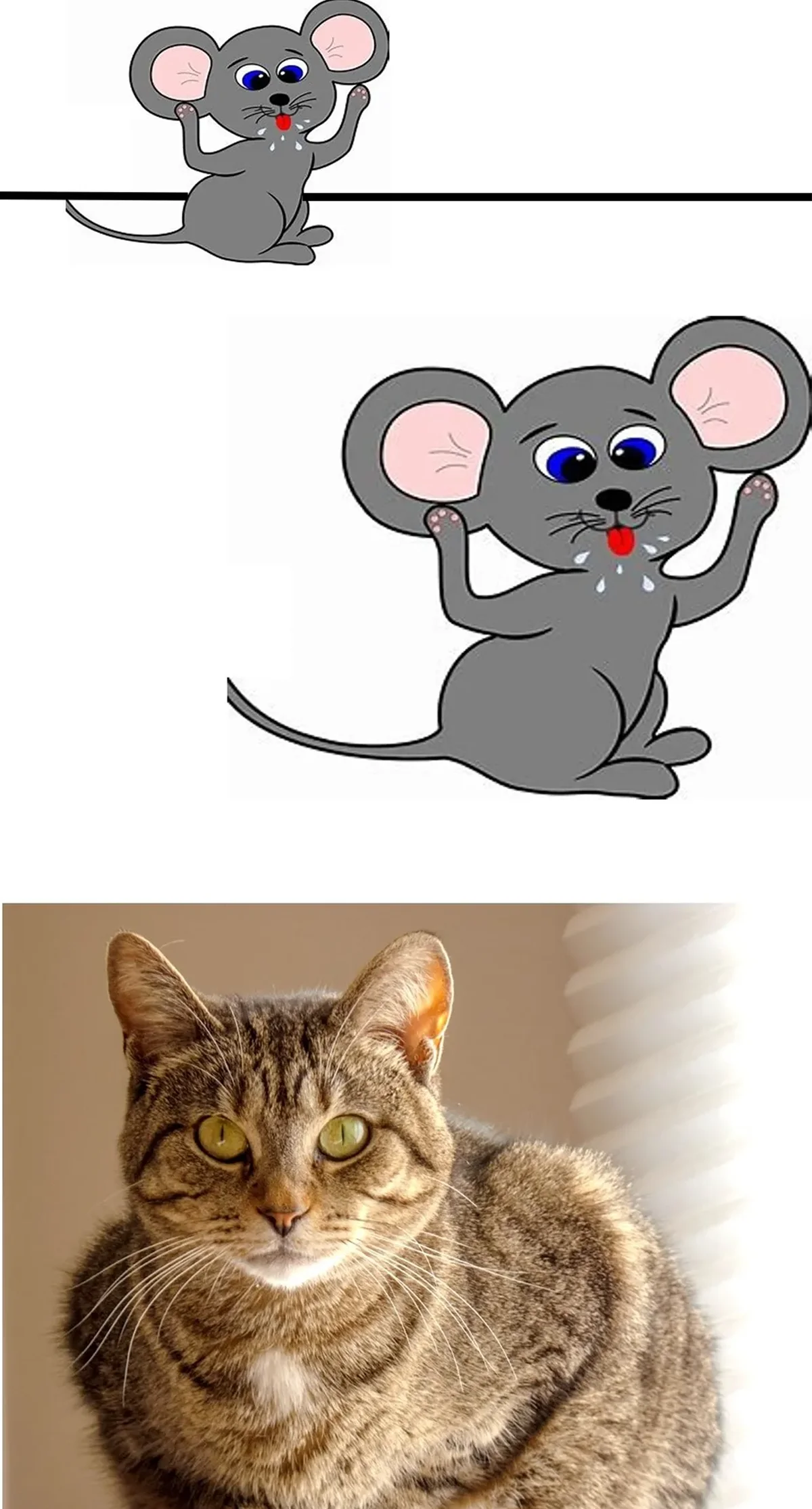
For example, owing to the distribution of photoreceptors in the retina and the shape of the lens and curvature of the cornea ,visual acuity in cats is different from humans. Cats have poorer acuity compared to humans.
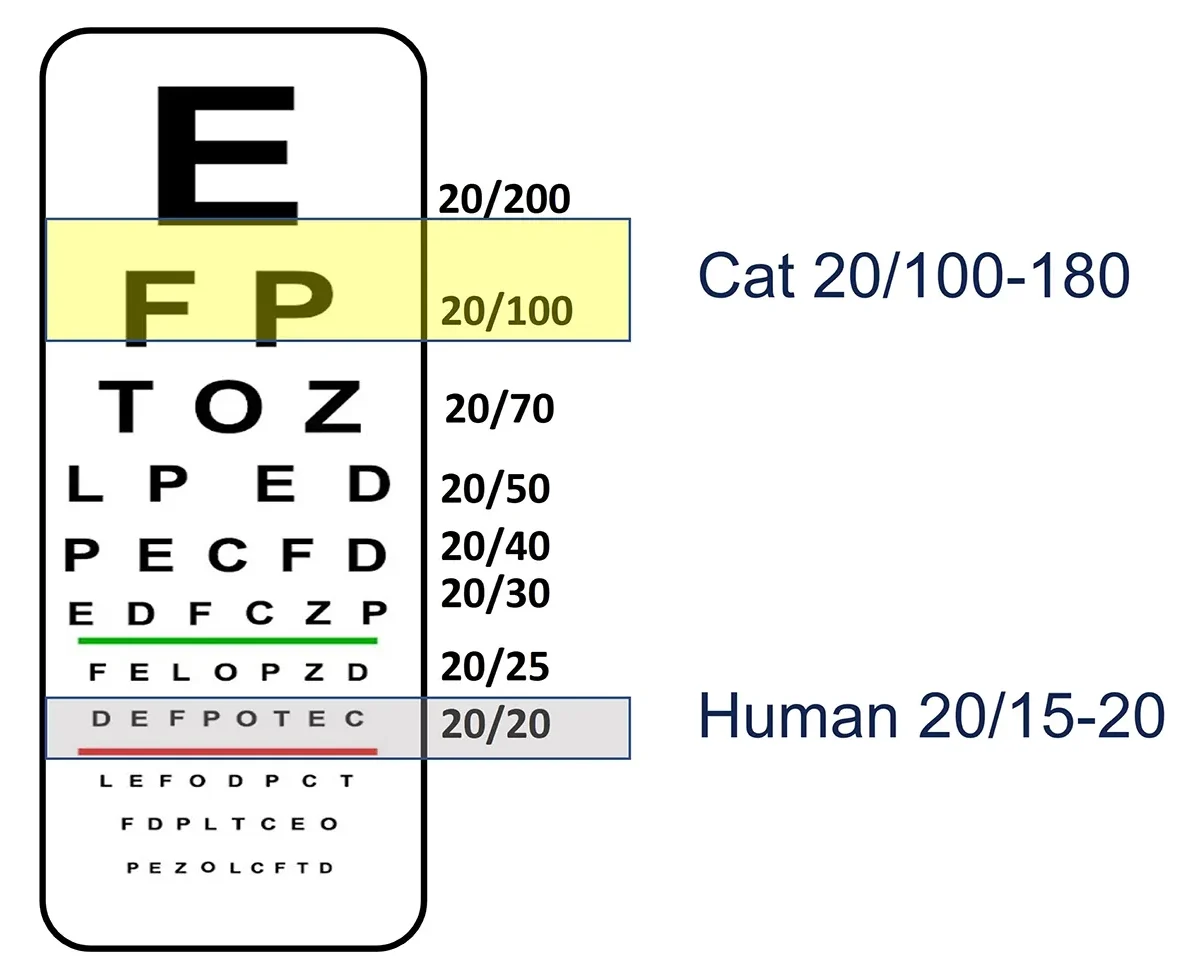
The Snellen Eye Chart is used to estimate the visual acuity of humans.The average human can detect the letters on line 8 at 20 feet away from the chart and as such, are described as having 20/20 vision. By comparison, cats have been estimated to be much poorer.
What a human with average vision can see clearly at between 100-180 feet, a cat must be at 20 feet to see with the same clarity! As outlined above, there is more to vision than acuity. Read on to learn how.
Low Light Vision
The ability to perceive low light in most animals, including cats, far exceeds that of humans. Cats have several adaptations that allow for superior vision in dim light that include: far more rod photoreceptors, a very large tapetum, a large cornea, and a slit pupil.
Photoreceptors come in two forms, rods and cones. Rods are used to collect information in low light levels (think of hot-RODding at night) and cones are used to collect information about color and fine detail (think of eating an ice cream CONE during the day).
The tapetum is a mirror-like structure in the back of the eye that functions to reflect light (often moonlight) back into the eye to re-stimulate the rods for a second time. The tapetum is responsible for the bright reflection (“eyeshine”) you may notice in your cat’s eyes at night.
Without a tapetum, vision in low light is extremely poor. In addition, a large cornea and a slit pupil that can dilate faster and more completely than a round pupil, both serve to allow more light into the eye. With these changes, a cat can see at 1/6th the light levels that a human can!

Motion Sensitivity
Cats and humans are more sensitive to motion than to stationary objects. However, this sensitivity differs under various lighting conditions. Cats, due to their higher number of rod photoreceptors, have better motion detection in dim light compared to humans.
In bright light, humans, with more cone photoreceptors, have better motion sensitivity than cats. It cannot be overstated that having more rods or more cones is not better than the other. The differences in the number of rods or the number of cones between different animal species is best for THAT animal’s lifestyle.
Advertisement
Visual Perspective and Behavior
Like all animals, the perspective gained of the surroundings is greatly influenced by the height of the eyes above the ground. The variation is minimal between adult humans and between adult cats.
However, how cats interact with their environment is related to the perspective they have of that environment. This contributes not only to interpretation of their environment, but also to some behavioural traits.
For example, being smaller than most other animals they interact with, many cats feel more secure when perched higher off the ground (e.g., on a shelf/on top of the refrigerator) and can look down on their ‘kingdoms’, or hunt by slinking close to the ground where most of their prey live.
Field of View and Depth Perception
The field of view (FOV) is the area that can be seen by one or both eyes when it is fixed on one point. The FOV of one eye is called the monocular FOV, the overlapping view of the two eyes is called the binocular FOV, and when the views of both eyes are considered together as a whole, it is called the total FOV. Cats, who have forward facing eyes, have a smaller total FOV but a much wider binocular FOV and consequently, greater depth perception.
Depth perception is augmented by the size of the pupil. The pupil, which behaves similarly to a camera aperture, allows more or less light into the eye.
The slit pupil, which can quickly dilate, further enhances their depth perception. In doing so, a cat can allow more light to enter the eye and put an object of interest into greater focus quickly but with shorter depth of field.
Alternatively, when very narrow, the pupil allows light into the eye but only through a narrow slit that forces light to travel through the curved lens without much deviation of the light rays. This allows for a longer depth of field and the ability to see more objects clearly at varying distances away.

Color Vision in Cats
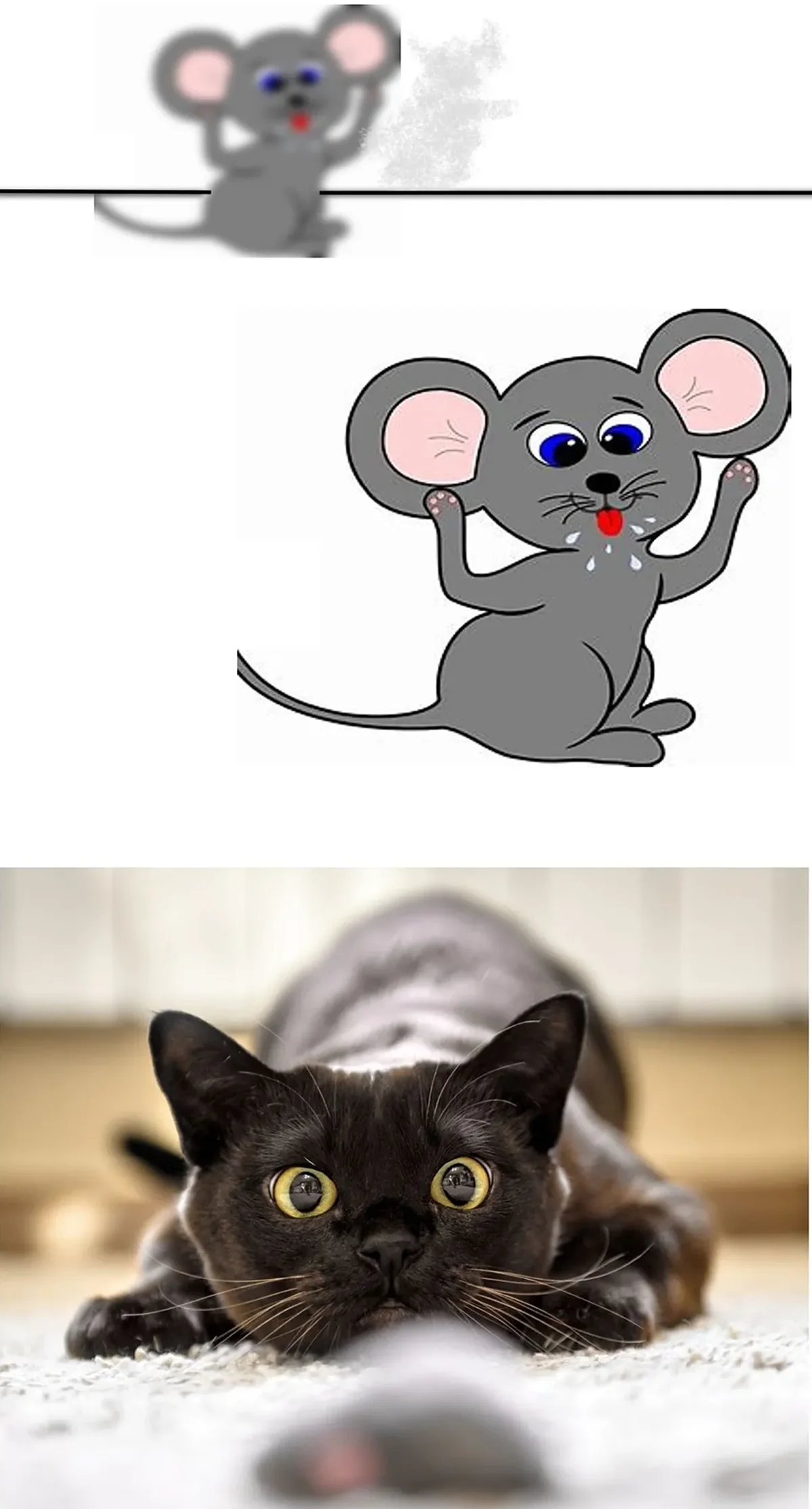
The extent of color vision in cats is not fully understood. We do know that cats have color vision and that the range of color detection is more limited than that of the human range. Humans have three types of cone photoreceptors that can detect red, green, and blue to give the full spectrum of color detection from violet to red.
Cats have only two types of color receptors and see blue and yellow-green; however, the intensity of color is more ‘milky’ than that of a human and has been compared to humans who are red-green colorblind. It is generally believed that a cat’s ability to detect color is similar to that of a dog.
Where reduced color detection is present, an animal must rely on other clues such as position, relative brightness, smell, taste, and texture to identify objects. Before you feel too bad for cats and their reduced color vision; unlike humans, cats can visually exploit their environment through a wide range of other skills that humans largely lack.
Advertisement
Conclusion
Vision plays an important role in the lives of cats by helping them to interact with and thrive within their environments. Each component of the complete visual experience varies between all animals and has evolved to exploit the specific niche within which that animal lives.
While certain components of the complete visual experience may excel in some species of animals over others, comparison and ranking of the total visual experience between animal species cannot be made. Every species has evolved so that the vision they have is perfect for THEM.
For example, vision for a cat is not inferior to that of a human. It is perfect for being a cat and seeing what cats have evolved to NEED to see and HOW to see it.
For further information please visit How and What Animals See, and How and What Dogs See, where we will explore the same concepts as those above but in greater detail, as well as Vision in Dogs (1995) Journal of the American Medical Association, 207(12): 1623-1634 by Miller PE and Murphy CJ.
For further information please visit How and What Animals See, andHow and What Dogs See, where we will explore the same concepts as those above but in greater detail, as well as Vision in Dogs (1995)Journal of the American Medical Association,207(12): 1623-1634 by Miller PE and Murphy CJ.
By Marnie Ford PhD, DVM, Diplomate ACVO
Dr. Ford graduated from the Ontario Veterinary College in 2000 after completing a Bachelors in Zoology at the University of British Columbia and a PhD in Physiology at Monash University in Australia. Following a rotating small animal internship at the University of Minnesota in 2001, Dr. Ford achieved Diplomate status from the American College of Veterinary Ophthalmologists in 2006 after completing a 3-year residency in Comparative Ophthalmology at the University of Missouri. After co-founding a private referral hospital, West Coast Veterinary Eye Specialists, in New Westminster (2004-2013) she opened Pacific Animal Eye Specialty services, providing mobile medical and surgical ophthalmologic care to patients in the Lower Mainland, Vancouver Island, and the Interior of BC (2013-2019). In 2019, she returned to Australia where she worked full-time in both medical and surgical ophthalmology as well as resident training at Animal Eye Care in Melbourne Australia. In 2023, Dr. Ford returned to Vancouver to provide locum services to ophthalmologists across Canada.