 Pet News


Summary
Ophthalmic examinations are vital across various life stages, from neonates to seniors, with breed-related longevity differences challenging age assignment and blurring temporal boundaries. This article focuses on very young patients, defining this stage as the first three months of life. Initial examinations at eight to ten weeks play a pivotal role in establishing strong veterinary-client-patient relationships, facilitating owner education, and early detection of ocular issues in a stress-free environment.
Techniques to aid examination of wiggly animals help to maintain a relaxed atmosphere, aiding in future eye examinations. Vision assessment relies on simple methods like observing responses to visual stimuli or pupillary light reflex testing in a darkened room. Eyelid development progresses gradually, with interventions required for premature eyelid opening or pathologic conditions like ankyloblepharon or symblepharon.
Congenital abnormalities, including persistent pupillary membranes, eyelid dermoids, or microphthalmia, may manifest early or later in life, necessitating early identification and appropriate management for optimal ocular health. Navigating ophthalmic examinations in young animals requires a systematic and patient-centered approach, incorporating gentle handling and age-appropriate testing to achieve accurate diagnoses while fostering supportive environments for animals and owners alike.
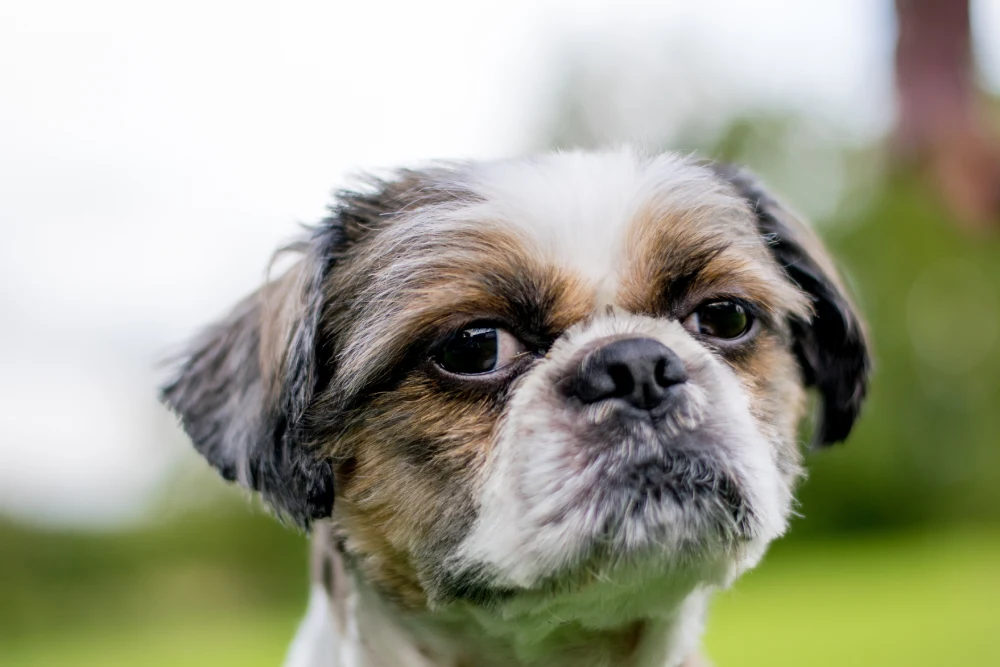
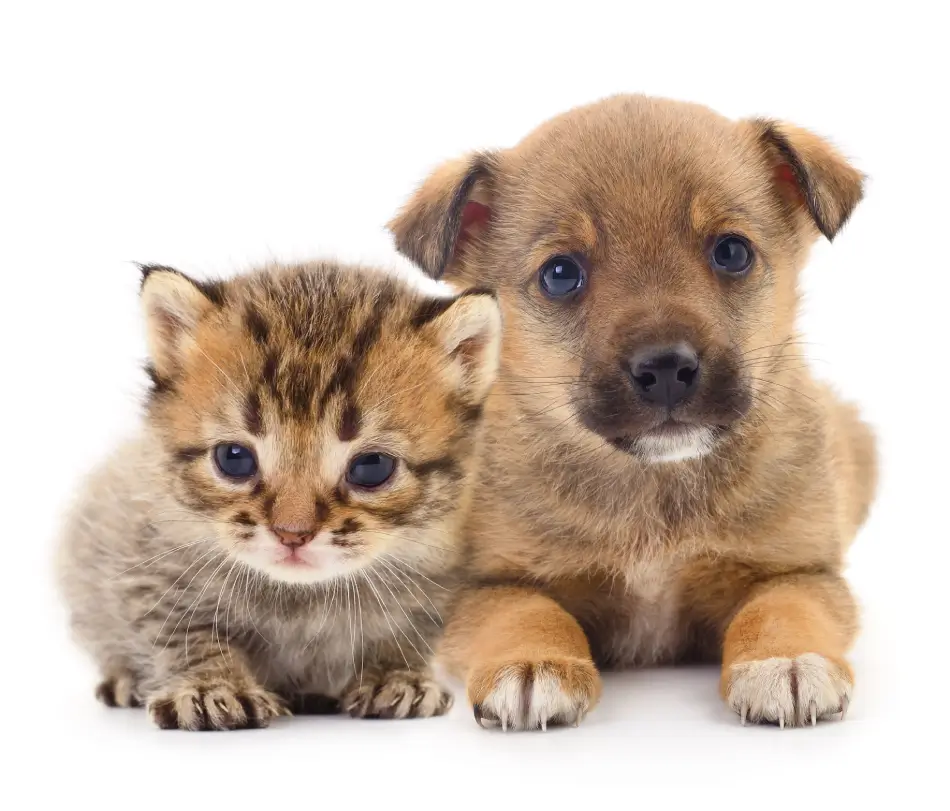
In the quaint neighborhood of Willow Lane, nestled between blooming gardens and cozy cottages, there lived two furry companions who captured the hearts of all who knew them: Kate the kitten and Pete the puppy.
From the moment they first met, Kate, with her shining eyes, and Pete, a playful pup, were inseparable. Their friendship blossomed under the caring eyes of their owner, Mrs. Thompson, who understood the importance of early veterinary care.
At eight weeks old, Kate and Pete had their first ophthalmic examination. Dr. Smith, their gentle veterinarian, made sure the atmosphere was relaxed, ensuring the tiny patients felt safe and secure. Kate, lightly scruffed in a towel, and Pete, suspended in mid-air, enjoyed the attention and treats sprinkled throughout the exam.
Testing their vision was a challenge, but with a cotton ball tossed gently across their line of sight, both pets responded with curiosity and enthusiasm. Pete’s playful barks echoed in the clinic as he chased after the cotton ball, while Kate’s cautious approach earned her a gentle pat on the head.
During the examination, Dr. Smith detected a minor eyelid abnormality in Kate, which required a simple intervention to prevent any future complications. With Mrs. Thompson’s reassurance, Kate underwent a quick procedure to correct the issue, returning home with Pete by her side, both sporting matching bandages around their heads.
As they played in the sun-drenched garden, Kate and Pete embodied the joy of friendship and the importance of early veterinary care, a testament to the bond between pets and their devoted owners on Willow Lane.
Introduction
A well-planned new puppy/kitten examination at eight to ten weeks of age is critical in the establishment of a healthy vet-client-patient relationship (VCPR). This examination is as much about educating you, the owner, as it is about examining the patient in a quiet, low-stress environment. The examination should be fun and avoid triggering anxiety or aggression, thus establishing no-fear exams for the lifetime of the patient. The prognosis for good ocular function and cosmesis is increased with early identification and treatment of complex ophthalmic conditions.
Wiggly puppies can be vertically or horizontally suspended behind their armpits with no support of feet or spine so that they feel like they are floating in space, and kittens can be lightly scruffed or gently wrapped in a towel. Scruffing is neither harmful nor painful for your kitten and mimics the way the mother cats carry their young.
It is helpful for future eye examinations for owners to desensitize the animal to bright lights shone briefly in the eyes or touching around the face and reinforce good behaviour with treats throughout the exam. Minimal ophthalmic testing is needed with very young patients. More thorough testing is needed when increased or persistent squinting, tearing, redness, rubbing, cloudiness, or vision deficits are noted.
Advertisement
Ophthalmic Examinations
Ophthalmic examinations begin with an evaluation of vision, which is challenging in very young animals. Testing for vision in these young patients is typically as simple as identifying if the patient can follow a cotton ball when tossed across their line of sight. In older animals, a threatening gesture (without contact with the patient) is used instead. This is called the menace response and is a learned response that is not consistently present in patients under three to four months of age. A positive response results in a blink of the eyelids and is more subtle and incomplete in cats than dogs.
Direct and consensual (indirect) pupillary light reflex (PLR) testing is best performed in a dark room with a strong focal light source. An indirect PLR from the stimulated eye (illuminated eye) to the opposite eye aids in evaluation of retinal function of the stimulated eye as well as iris muscle function of the opposite eye.
Newborn Puppy and Kitten Eyelids
When born, the eyelids of puppies and kittens cannot normally be opened. This is called congenital ankyloblepharon. The eyelids will naturally open between 10 to 14 days of age. Premature opening of the eyelids is a serious condition that can be harmful to the eyes through over exposure and drying of the corneas (exposure keratitis), ulceration, and inflammation in the eyes (uveitis). In these cases, lubricating ointments, or gels, used around the clock, protects vulnerable ocular surfaces.
Pathologic ankyloblepharon is an infrequent and often bilateral failure of the eyelids to open and can lead to an infection under the closed eyelids called ophthalmia neonatorum. This condition is strongly suspected when the closed lids are swollen, and/or a small amount of purulent discharge is noted at the inner corner of the eyelids.
Opening the palpebral fissure can be attempted by applying warm water compresses to the eyelids, followed by gentle massage to open the lids. Your veterinarian will be able to open the eyelids and treat any eye changes that may have resulted from the infection that developed under the eyelids. This will typically require the application of antibiotic drops. Alternatively, symblepharon is the acquired fibrotic adhesion of conjunctiva to cornea, or conjunctiva to adjacent conjunctiva. This condition is most commonly seen in kittens as a consequence of fetal or neonatal herpes virus infection.
Congenital Eye Abnormalities

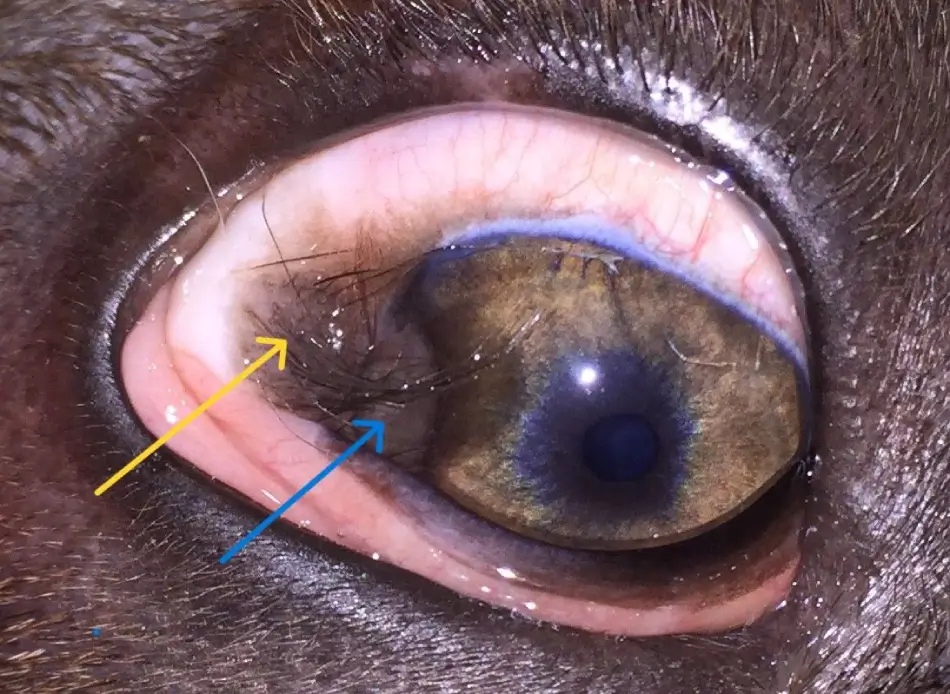

Eye abnormalities that are present at birth are called congenital. Common congenital abnormalities include persistent pupillary membranes (PPMs), and eyelid or corneal dermoid in dogs and cats, or eyelid agenesis in cats.
Eyelid agenesis is the congenital absence of eyelid margin tissue; typically the upper outer eyelids. Surgical repair of eyelid agenesis is often mandatory to prevent hairs (trichiasis) of the upper eyelid from rubbing on the cornea to cause damage. A dermoid is a benign growth composed of normal skin tissue that develops in an abnormal location on or near the eye. Specifically, it occurs on the cornea or the conjunctiva.
Dermoids may appear as whitish, pale pink, or even light brown in colour and often with hairs growing from the surface towards the cornea. Although they can cause irritation, discomfort, and reduced vision, they do not necessarily pose significant health risks. Surgical repair of eyelid agenesis or dermoids can be performed when the patient is old enough for safe general anesthesia; until then, application of a lubricant to protect the cornea against trichiasis is recommended.
PPMs are remnants of normal tissue that, during fetal development, covered the pupil to protect the growing retina. While this tissue normally dissolves fully by the time of birth it can remain as strands of tissue that extend from iris to iris, iris to cornea, or iris to lens. Happily, PPM’s cannot worsen with age, and in some animals will even improve with age.
Advertisement
Congenital Changes

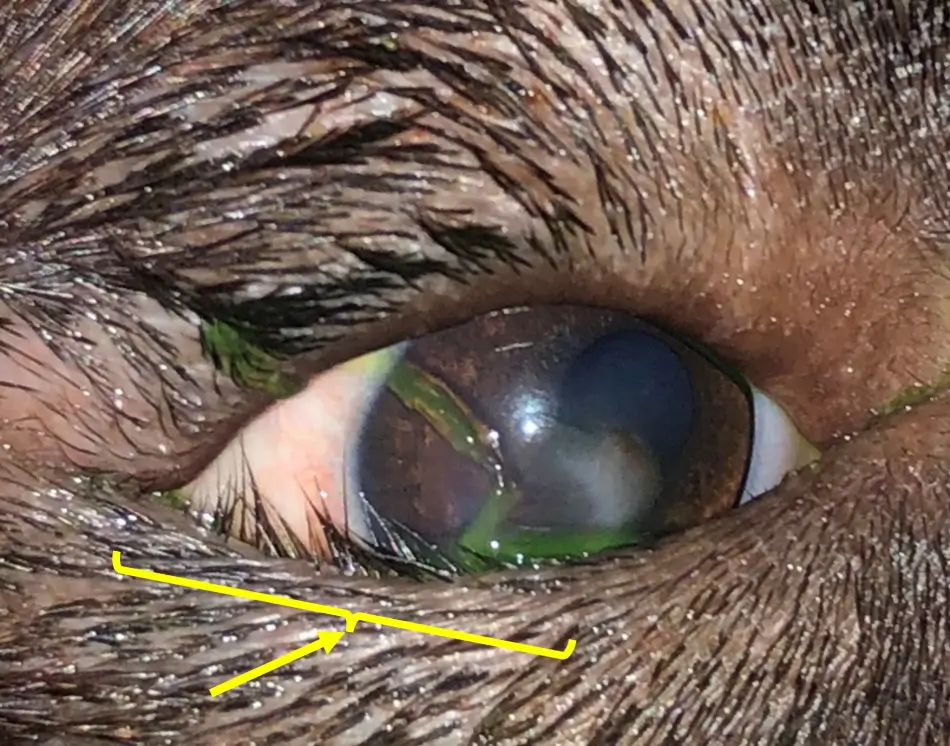
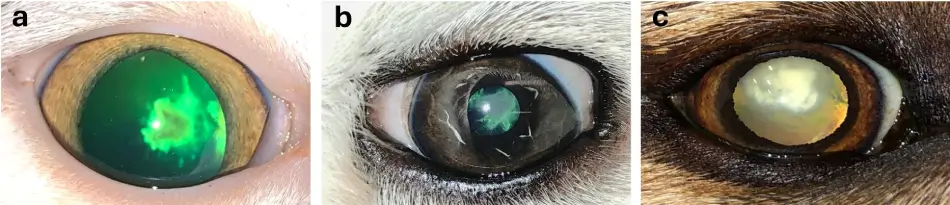
Congenital changes that may be not obvious until the patient is a little older include microphthalmos, entropion, and cataracts. Microphthalmos, characterized by a small eye, occurs when the eye fails to develop properly during gestation.
There are various reasons why microphthalmos may occur, ranging from genetic factors to environmental influences. Often the underlying cause is never known. Entropion may be present congenitally but often worsens with age, increasing discomfort and the risk of corneal ulceration.
To avoid surgical under- or overcorrection of entropion if surgery to correct the condition is performed too early, patients are treated with either application of a corneal lubricant to help protect the cornea, or by placement of temporary tacking sutures which roll out the offending eyelid until the patient is of sufficient age for surgical correction of the eyelid conformation (blepharoplasty).
Cataracts can be congenital or nutritional; nutritional cataracts are induced by artificial milk replacer diets at critical periods of postnatal lens development. For more information, please see the Related Articles to this article.
Ophthalmic examinations can be challenging but when started early, and by using a systematic approach that is fun and painless, proper diagnoses can be achieved.
During the examination, Dr. Smith detected a minor eyelid abnormality in Kate, which required a simple intervention to prevent any future complications. With Mrs. Thompson’s reassurance, Kate underwent a quick procedure to correct the issue, returning home with Pete by her side, both sporting matching bandages around their heads.
As they played in the sun-drenched garden, Kate and Pete embodied the joy of friendship and the importance of early veterinary care, a testament to the bond between pets and their devoted owners on Willow Lane.
By Marnie Ford PhD, DVM, Diplomate ACVO
Dr. Ford graduated from the Ontario Veterinary College in 2000 after completing a Bachelors in Zoology at the University of British Columbia and a PhD in Physiology at Monash University in Australia. Following a rotating small animal internship at the University of Minnesota in 2001, Dr. Ford achieved Diplomate status from the American College of Veterinary Ophthalmologists in 2006 after completing a 3-year residency in Comparative Ophthalmology at the University of Missouri. After co-founding a private referral hospital, West Coast Veterinary Eye Specialists, in New Westminster (2004-2013) she opened Pacific Animal Eye Specialty services, providing mobile medical and surgical ophthalmologic care to patients in the Lower Mainland, Vancouver Island, and the Interior of BC (2013-2019). In 2019, she returned to Australia where she worked full-time in both medical and surgical ophthalmology as well as resident training at Animal Eye Care in Melbourne Australia. In 2023, Dr. Ford returned to Vancouver to provide locum services to ophthalmologists across Canada.