 Pet News

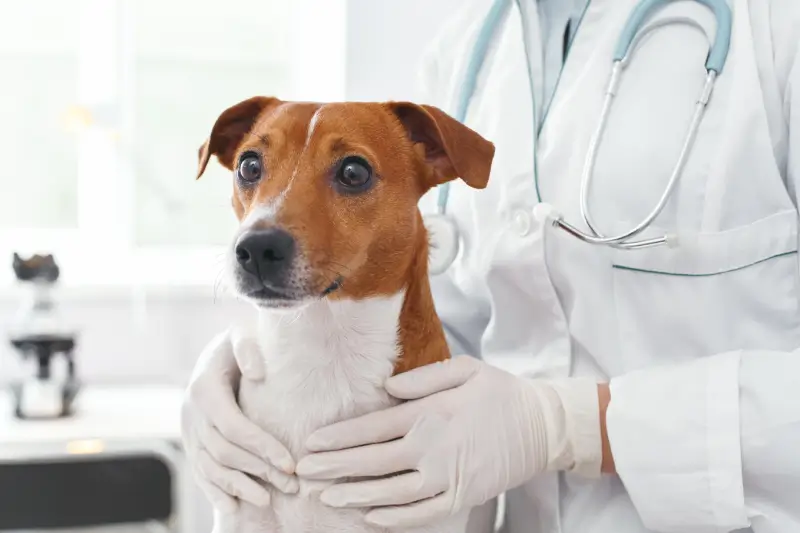
As a veterinary ophthalmologist (eye specialist), pet owners frequently ask, “How do I know if my pet has an eye problem?” or “What should I be looking for, that might indicate an eye problem?”. Great questions and ones that can be answered in one word: persistence.
Persistence of any eye change warrants a visit to your veterinarian. If required, your veterinarian can refer your pet to see an ophthalmologist. Eye changes can manifest behaviourally and / or physically. A change in behaviour including eating, sleeping, or activity can indicate pain. Sometimes these behavioural changes can be very subtle.
Eye changes are innumerable and can occur in one eye or both. Complicating this, sometimes the eye can have more than one problem! Put simply, most eye problems can be associated with one or more of five specific things: Squinting, Discharge, Redness, Rubbing, and Vision changes.
Of these, a persistent ocular discharge is the most reported observation, but persistent squinting often indicates a more serious ocular condition. Persistent squinting is not normal behaviour for a dog or cat. A patient who persistently squints their eyelids for longer than one day needs to be examined by a veterinarian urgently. Squinting of one eye or both is a response to pain or irritation and the source of this is typically from the clear surface of the eye (the cornea) or from inside the eye.
Squinting is often accompanied by a discharge from the eye. The discharge noted may be thin or thick, clear or discoloured. A discharge can indicate irritation from a physical irritant (eg foreign material, corneal ulcer) or an invisible irritant (e.g. cold air, internal eye changes), or may occur secondary to low tear production.
Persistent redness and persistent rubbing usually occur together and are often also present with squinting and/or tearing.
Squinting, discharge, redness, and rubbing can occur in one eye or simultaneously in both. In contrast, vision changes may only be obvious if both eyes are affected at the same time. This is because most animals will compensate without a change in behaviour or activity when vision is lost painlessly in one eye.
An easy way to remember the five changes listed above is to think about yourself. What would you do if you got sand in your eye at the beach? You would squint your eyelids tightly, you would tear to try to flush the sand from your eye, the white of your eye would become bright pink/red, you would try to rub at your eye, and more than likely, you would not want to walk around much until you could see better.
With magnification and/or specialized equipment, your veterinarian or ophthalmologist will be able to diagnose the reason for the persistent changes you noticed. Below are some examples of common diseases or conditions regularly diagnosed from these 5 signs.

1. Squinting
Squinting can be caused by pain from the surface of the eye, the cornea (corneal ulceration, foreign material), inside of the eye (uveitis, glaucoma), or from overwhelming brightness (iris atrophy, pupil dilation)
2. Discharge
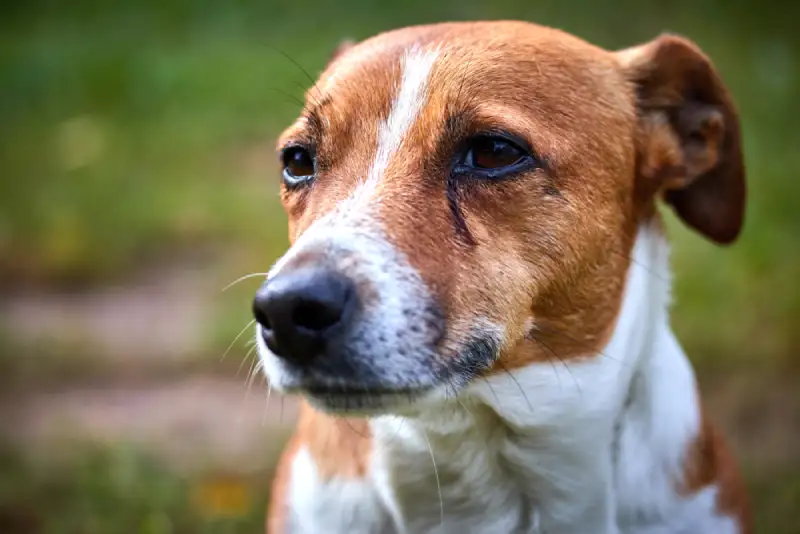
Discharge from one eye or both may be secondary to irritation, obstruction of tear drainage away from the eye, or a tear deficiency. When irritated by a physical irritant (eg foreign body, ulceration, abnormal eyelid conformation) or an unseen irritant (eg cold air, allergens) the discharge is similar to tears and may stain the hair below the eyes.
Did you know that dog and cat tears are naturally tinted and can range from faint brown to blood red? Alternatively, sometimes increased teary discharge may be noted when the normal drainage path (the tear duct(s)) becomes obstructed.
Obstruction of the tear duct(s) may be present but may occur later in life if the duct becomes blocked by debris, scar tissue, or even tumour formation.
Advertisement
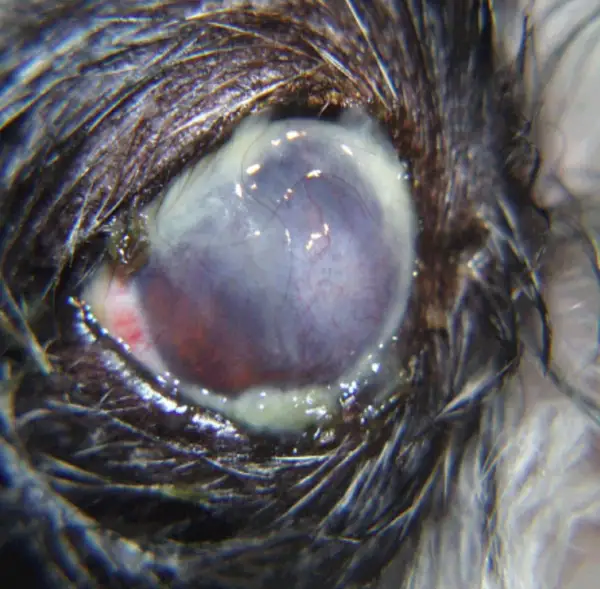
When the discharge is noted to be thick or mucky, concern for low tear production (dry eye) or foreign material within the tear duct is raised. All discharge starts out clear but quickly changes from clear to grey to yellow to green the longer it remains on the eye. The colour change is the result of bacterial growth within the mucus.
3. Redness and Rubbing
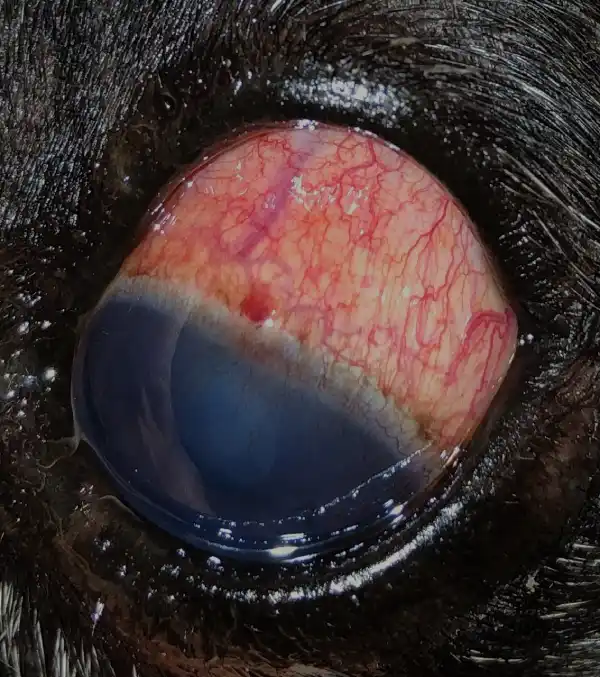
As outlined above, redness and rubbing are non-specific changes that are almost always associated with squinting and/or ocular discharge. By identifying the underlying cause, redness and rubbing can be alleviated.
Common causes of redness and rubbing include allergenic irritation, eyelid conformation changes whereby eyelid hair is misdirected to rub on the cornea (entropion, ectropion), and abnormal eyelid hairs (distichia, trichiasis, ectopic cilia).
4. Vision changes
Vision changes can occur from changes that develop on the surface of the eye such as increased corneal pigment (pigmentary keratitis) or, more commonly, inside the eye.
Progressive corneal changes can result in corneal pigmentation that might appear to have developed rapidly but likely progressed slowly over time until that last clear window of cornea became covered over.
Alternatively, some of the most commonly seen causes for blindness that develop from within the eye include: cataract formation, retinal changes (progressive retinal atrophy (PRA), sudden acquired retinal degeneration syndrome (SARDS), retinal detachment), and glaucoma.
If you feel that your pet is experiencing one or more of the five signs listed above, do not wait to see your veterinarian. Eye problems can develop very quickly and without quick diagnosis and treatment, can result in additional problems that may have otherwise been prevented or ameliorated. Early treatment often leads to a better outcome.
By Marnie Ford PhD, DVM, Diplomate ACVO
Dr. Ford graduated from the Ontario Veterinary College in 2000 after completing a Bachelors in Zoology at the University of British Columbia and a PhD in Physiology at Monash University in Australia. Following a rotating small animal internship at the University of Minnesota in 2001, Dr. Ford achieved Diplomate status from the American College of Veterinary Ophthalmologists in 2006 after completing a 3-year residency in Comparative Ophthalmology at the University of Missouri. After co-founding a private referral hospital, West Coast Veterinary Eye Specialists, in New Westminster (2004-2013) she opened Pacific Animal Eye Specialty services, providing mobile medical and surgical ophthalmologic care to patients in the Lower Mainland, Vancouver Island, and the Interior of BC (2013-2019). In 2019, she returned to Australia where she worked full-time in both medical and surgical ophthalmology as well as resident training at Animal Eye Care in Melbourne Australia. In 2023, Dr. Ford returned to Vancouver to provide locum services to ophthalmologists across Canada.