 Pet News

Summary
Itchiness in cats can be more serious than just a minor annoyance. When your cat does more than occasional scratching, they may have underlying problems that require veterinary intervention. Excessive itching can lead to wounds, infections, and severe skin trauma. This comprehensive article sheds light on the primary causes of pruritus in cats, including parasitic, allergic, bacterial, fungal, and environmental triggers.
Additionally, the article provides a deeper understanding of the types of pruritus, diagnostic procedures, and treatment strategies that can help ensure your cat remains itch-free. This article will help you discover more about safeguarding your cat’s skin and overall health.
In a cozy corner of the city, Blossom the cat and her owner, an administrative assistant at a local veterinary hospital named Mrs. Nesbit, share a life filled with warmth and mutual care. When Blossom began to scratch incessantly, transforming from a peaceful pet into a figure of discomfort, Mrs. Nesbit was quick to notice. Armed with a deeper understanding of pet health from her work environment, she recognized that Blossom’s excessive scratching was a cry for help.
Guided by her knowledge and insights from an article on pruritus in pets by Karen E. Mueller, DVM, Mrs. Nesbit embarked on a mission to find the root cause of Blossom’s discomfort. Understanding that the itch could stem from various issues like allergies or parasites, she was determined to alleviate Blossom’s suffering.
Through a series of diagnostic tests and treatments, from hypoallergenic diets to immunotherapy, Mrs. Nesbit and her veterinary colleagues sought to ease Blossom’s pruritus. This journey wasn’t just about treating an itch; it became a testament to Mrs. Nesbit’s dedication and the power of informed pet care.
Blossom’s story is a touching narrative of resilience, highlighting the special bond between pets and their owners. It reflects the challenges and commitments of pet ownership, especially when equipped with the right knowledge and resources.
For Mrs. Nesbit, managing Blossom’s health wasn’t just a duty; it was a labor of love, showcasing the deep connection and responsibility she felt towards her feline friend. Blossom’s transition from distress to comfort under Mrs. Nesbit’s care is a reminder of the impact of compassionate, informed care in the lives of our pets.
Introduction
Itchiness is probably the single most irritating symptom to both cats and cat owners alike. It’s also the symptom most-often googled, most-frequently asked about by cat owners, and most-often scheduled for veterinary visits.
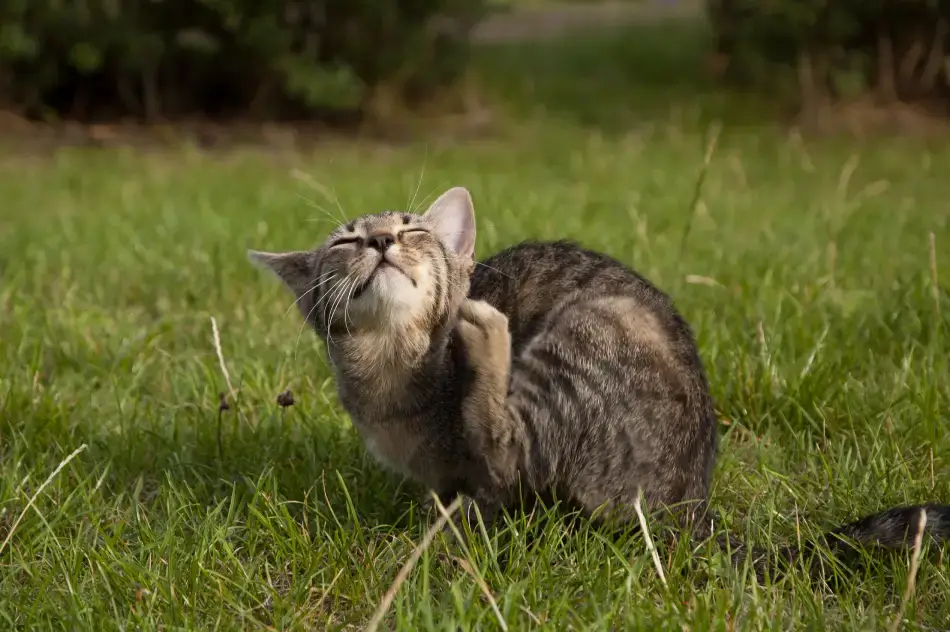
Although some scratching of the occasional itch is normal in cats, just like it is in humans, repeated scratching, biting, licking, or rubbing can cause trauma to the skin that can become severe. Wounds from self-trauma can become secondarily infected and require further treatment.
If your cat is scratching themself more than just occasionally, they may have an itching problem that needs veterinary attention. This article is an overview of the main reasons that cats itch. Please search Pet Health Harbor for further information on causes of itching found within this article.
Possible Causes of Pruritus
There are many causes of pruritus in cats.
- Parasitic Causes (or: Parasitic Pruritus)—Fleas, Demodex mites (Demodectic mange), Sarcoptes mites (Scabies), Otodectes mites (ear mites), and others including lice.
- Allergic Causes (or: Allergic Pruritus)—flea allergy, atopic dermatitis, food allergy, contact allergy, drug allergy, bacterial hypersensitivity, and Malassezia (yeast) sensitivity.
- Bacterial/Fungal Causes (Bacterial or Fungal Pruritus) —Staphylococcus and Malassezia; rarely dermatophyte (ringworm).
- Miscellaneous Causes (or: Miscellaneous Pruritus)—there can be other medical causes of itching such as seborrhea, cancers such as mast cell tumors, and immune-mediated diseases.
Types of Pruritus
Cats that itch excessively will typically show some degree of hair loss, called alopecia. Your veterinarian can gain some information based on the amount of pruritus and inflammation shown. Keep in mind, some animals will scratch, bite, rub, or pull their hair while away from their owners, or “on the sly”, so you can’t always be sure how much they are actually scratching.
- Severe pruritus usually means scabies, allergies such as fleas, food, or atopy/environmental, or Malassezia, all of which usually have an acute onset, except for Malassezia, which is slower in onset.
- Hair loss without pruritus may be due to hormonal disease, and need blood testing to further investigate.
- Ringworm, Demodex, superficial pyoderma (bacteria skin infection), Malassezia, immune-mediated dermatoses, seborrhea, some cancers in the skin, and unusual diseases such as leishmaniasis may cause alopecia with inflammation and pruritus that will vary.
- Cats in particular can sometimes develop psychogenic pruritus (caused by mental, emotional, or behavioral factors).
- At first, atopic diseases including dermatitis, asthma, conjunctivitis, and rhinitis, are responsive to steroids and are seasonal, but often progress to year-round pruritus.
- Flea-allergic and food-allergic pets may also develop atopic disease and show similar signs. Food allergies are reported to be less common than these allergies.
Advertisement
Diagnosis and Treatment Approaches
It is important for your veterinarian to get a good history. For example, how long has the itching been going on? Was it a sudden onset? Does your pet board at a kennel, go outside, or visit other cats? Are they on monthly flea control, and if so, what brand? Does the itching come on more seasonally?
Your veterinarian should be able to consult your pet’s file to see what medications they have been on, and/or document any meds that you are starting, so there is a clear record for your cat as you begin diagnostics and treatment.
I’ll put in a plug here for pet insurance. Please purchase pet insurance for your cat—the earlier, the better. You might not need it, but it can get expensive caring for an allergic cat, and having good insurance will help a lot with the costs!
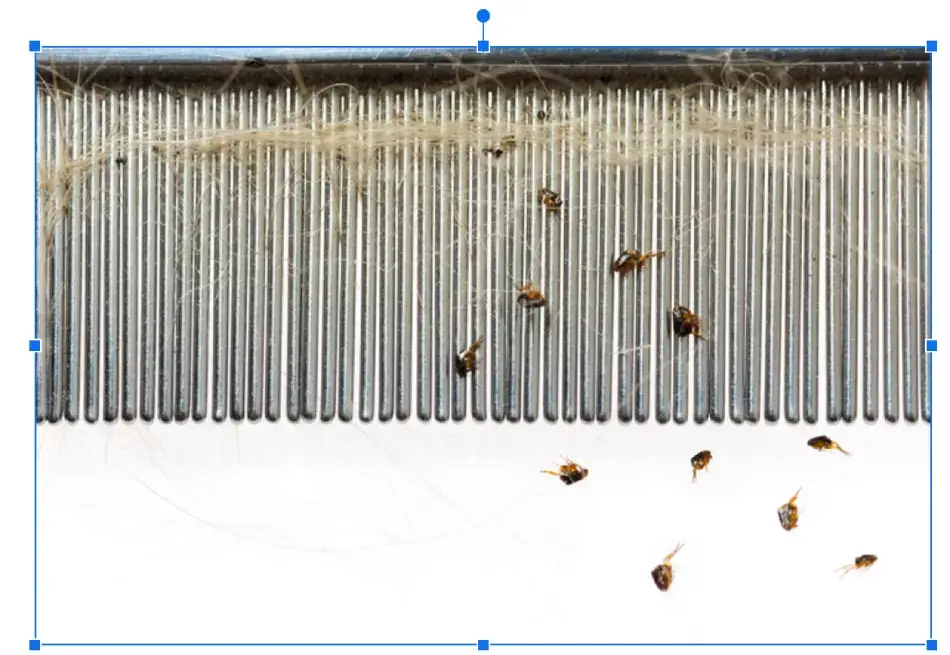
At your pet’s examination, the veterinarian will scrutinize them carefully for signs of fleas, including live or dead fleas, or flea dirt. Even one flea can make an allergic cat go crazy with itchiness. This can actually be good news, because it means that with strict and diligent flea control, a flea-allergic cat can do quite well.
Diagnostic Tests Frequently Done Include
- Skin scraping—usually from 3 different sites, looking for parasites. The veterinarian or technician will gently scrape the cat’s skin a few times to see if any mites are present in the skin. The slide will then be examined under a microscope.
- Skin cytology—getting samples of cells, bacteria, and/or yeast. A dry or oiled slide will be pressed against the cat’s skin to collect cells and bacteria or yeast for microscopic examination.
- Fungal culture—checking for ringworm. A few hairs will be plucked and placed in special culture vials to be sent to the lab for fungal culturing.
The above three tests are often done at your first veterinary visit. They are usually done with gentle restraint and don’t bother your pet very much.
- Skin biopsy—usually done if lesions are unusual or an immune-mediated cause is suspected. Skin biopsies are sometimes done if cats continue to have pruritus that isn’t resolving with typical treatments. This is usually scheduled later and done under sedation or general anesthetic.
Advertisement
Allergy Testing
There are two main types of allergy testing. Skin allergy testing is considered the gold standard, is done at a referral dermatology hospital, and is fairly expensive. Blood allergy testing can be done at most regular veterinary hospitals, and is less expensive. The results are not as reliable but can still give valuable information.
It is highly recommended to pursue allergy testing as soon as possible if your cat does not respond to initial treatments for itching, or has recurrent pruritus, dermatitis, or ear infections. Chances are high that they have allergies and allergy testing can be very helpful to understand what’s going on with your cat.
If the results show positive reactions, allergen-specific immunotherapy (“allergy shots” or oral drops) can be formulated for your cat for home use, based on their local exposure to their environment, and can be administered either subcutaneously or orally.
Treatment for Itching
- Because scabies is difficult to diagnose, and easy to treat and cure, a trial course of treatment for scabies is often done as part of therapy for severely pruritic pets. If the cat quickly stops itching, it’s assumed the cat had scabies and that treatment was successful.
- A food trial of a hypoallergenic diet is often done to help rule out food allergies. Even though this sounds easy, it’s crucial that cat owners take this step very seriously and feed only the diet itself, avoiding all other treats and foods during this minimum 8-10 week trial. If pruritus resolves, the trial is followed by a challenge of the pet’s original diet, and if pruritus recurs, the diagnosis is confirmed.
Remember that cats can have more than one disease process at the same time, and secondary infections are common. This can make the diagnosis more complicated, as there may be a concurrent bacterial or Malassezia infection that is being treated during the food trial, and it may take longer for the pruritus to resolve.
Advertisement
Topical Therapy
- Topical therapy can be helpful. Colloidal oatmeal shampoos can soothe, and last about 2 days.
This is a good quality colloidal oatmeal shampoo. Like most medicated shampoos, it is meant to leave on to soak for 5-10 minutes, then rinse.
This is a good quality colloidal oatmeal cream rinse. It is also meant to leave on for 5-10 minutes, then rinse.
- Topical corticosteroids can be effective. Do not overuse, as even though they are being applied to the skin, topical steroids can cause local and systemic side effects which can be serious.
- Antimicrobial shampoos help control bacterial and/or yeast infections. If you don’t mind bathing your cat, medicated baths 2-3 times a week can be very helpful.
- Lime sulfur shampoo and dips are mildly antipruritic as well as being anti-parasitic, antibacterial and antifungal. They are very smelly, however. They can be a good choice with multiple pets that have ringworm.
Advertisement
Systemic Therapy
- Systemic therapy can be complicated for pruritic patients and your cat may need multiple approaches to their treatment.
- Parasite prevention is crucial for allergic cats, as even one flea can make them very pruritic. If your cat is not already on a monthly flea control product, your veterinarian can suggest one, either oral or topical. If your cat has evidence of fleas, you will need to treat all the pets in your home. You might need to treat your home itself, although often that isn’t necessary when all the pets in the home are treated properly with high-quality flea treatments, on the correct schedule. Allergic pets often need flea control year-round.
This is a good choice if you like to use collars. This one lasts for 8 months.
NOTE: NEVER USE A DOG PRODUCT ON CATS!
- Allergen-Specific Immunotherapy, or “Allergy Shots” are often the best way to treat atopic/environmental allergies. These are allergens made specifically for your cat based on what they are allergic to in their environment. They can be formulated for injection or oral use. The first prescription lasts about 4 months, then a refill is formulated for approximately a year. Some cats have lasting improvement after this length of treatment; most need continued treatment.
- Corticosteroids offer acute relief with few side effects when used for 2-5 days. They are often used for significantly longer but concern for side effects increases with dose and length of time used. It is best to pursue other medications if possible when long-term treatment is needed. Steroids are contraindicated when infection is present as they suppress the immune system.
- Cyclosporine is very useful for atopic dermatitis but can cause side effects including GI upset, gingival hyperplasia, hirsutism, and oral papilloma, and is not useful for quick relief due to slow onset of 4-6 weeks. Blood levels need to be measured initially in cats if the dose is above the standard level.
- Oclacitinib (Apoquel) is a very fast-acting medication (tablet) that controls itching, without the side effects of prednisone. It actually starts working within 4 hours. It does have the potential for immune suppression but is generally very well-tolerated.
Try to be patient with the process of diagnosing and treating your cat’s pruritus.
Your veterinarian will suggest the best diagnostic and treatment plan that makes sense for your cat. They may dispense flea control, run a fungal culture, and start Apoquel to stop the itching while the fungal culture is pending for a week or so. Or they may start antibiotics for a secondary bacterial infection and have you do medicated baths. It depends on what they find—there are so many causes of pruritus, as you now know.
The important thing is to keep at it. Follow up as recommended and check back in with your veterinarian. If you don’t have immediate success with the first treatment, keep moving forward with the diagnostic and treatment plan. Allergy testing may be the next step, or a hypoallergenic food trial, or both. Hang in there, for your pet’s sake. It’ll be worth it for both of you, for their comfort and both of your quality of life.

Mrs. Nesbit manages Blossom’s itchiness that was due to allergies with a hypoallergenic diet, medicated baths and daily Apoquel tablets. Her veterinarian administers occasional Cytopoint injections and she previously underwent six months of allergen-specific immunotherapy, which was effective.
Efforts to reduce Apoquel use continue, but it’s needed to keep her itching at bay. She’s free from recurrent ear infections and excessive scratching, maintains regular health checks, and remains side-effect-free, happy, and healthy.

By Karen E. Mueller DVM, AVCA Certified
Dr. Mueller has over 30 years of experience in general small animal veterinary practice, feline medicine, and shelter medicine. Dedicated to preventing pain in pets and improving their quality of life, she currently has an animal chiropractic practice in Bellingham, WA. Dr. Mueller is also passionate about reducing pet overpopulation and works with high-volume, low-cost spay and neuter nonprofit programs throughout the Pacific Northwest.