 Pet News


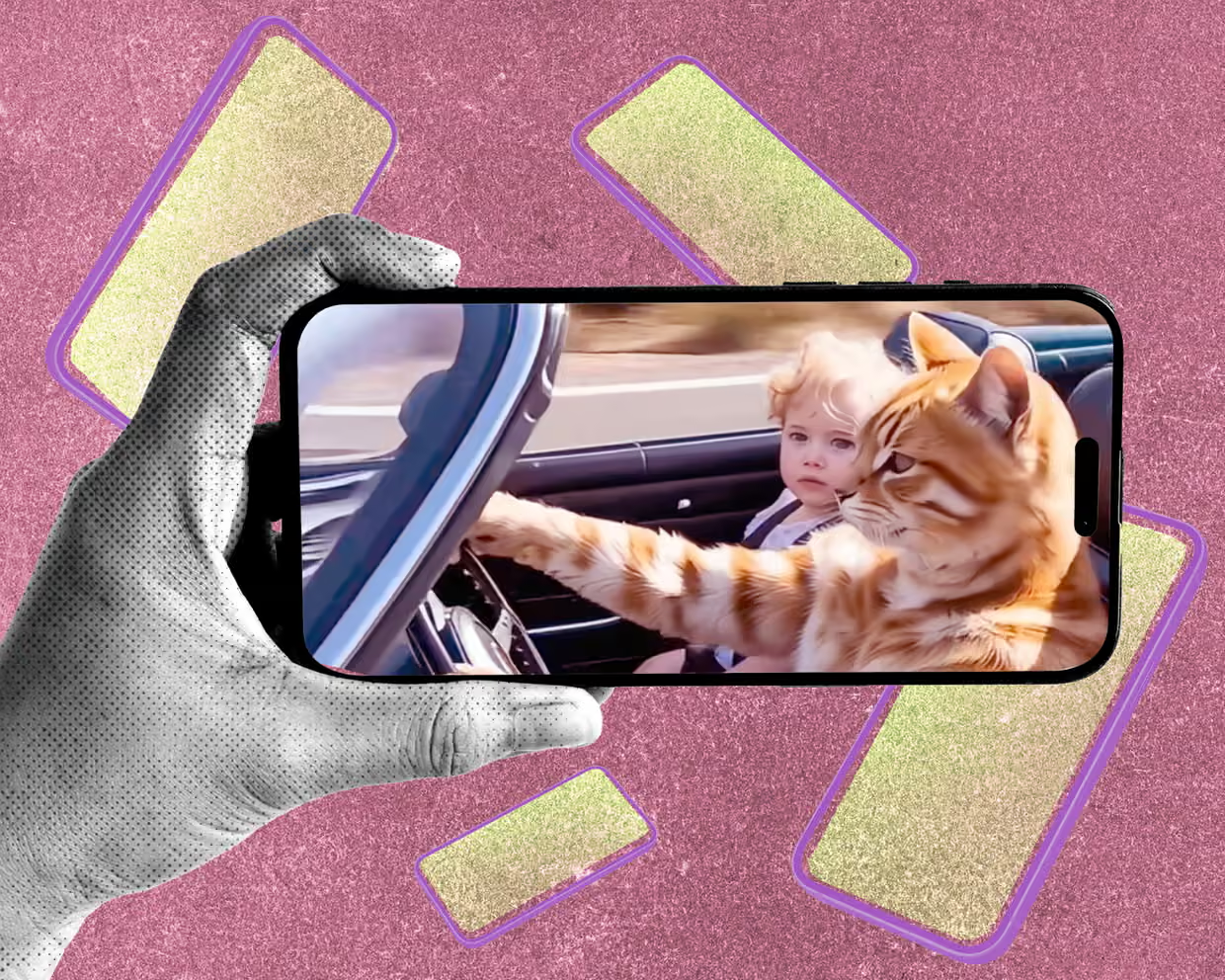
At the tail end of 2024, Billie Eilish sat cross-legged on stage and, to everyone’s surprise, began to miaow. Thousands of fans joined in, their voices off-key but joyful, meowing back at her in unison. It was funny, a little surreal, and yet oddly fitting. Because whether she meant to nod to it or not, one of her songs, What Was I Made For? from Barbie, has quietly become the unlikely soundtrack for a whole new kind of internet obsession: AI-generated cat soap operas.
If that sounds bizarre, that’s because it is. These aren’t your typical “cat falls off a counter” viral clips. Instead, think 30-second melodramas starring uncanny, half-human cats, their every move accompanied by dramatic meows layered over sad pop ballads. One minute, a jacked-up tabby is saving a baby from shark-infested waters. The next, a pudgy orange cat is being cheated on, abandoned, and then nearly murdered by his scorned ex-wife. Millions are watching, sharing, and, in some cases, even addicted.
Advertisement
From Cute to Catastrophic
The internet’s love affair with cats is nothing new. From I Can Haz Cheezburger? to Grumpy Cat, we’ve always anthropomorphized felines for laughs and likes. But these AI creations feel different: they’re faster, darker, and oddly unsettling.
Take one viral clip. Mr. Whiskers, a plaid-shirt-wearing, blue-collar cat, is sawing wood when he accidentally chops off his paw. Within seconds, he’s fired from his job (a sign in the background bluntly reads “All workers must have two arms”), abandoned by his wife, and spiraling into despair. Just when you think he’s turning things around, the ex-wife reappears with an axe. The tension rises, but instead of tragedy, slapstick takes over, she slips into a puddle and humiliates herself. Roll credits.
It’s absurd. It’s grotesque. And it’s also oddly watchable.
In another clip, a muscular grey tomcat wearing Capri pants dives into shark-infested waters to rescue a drowning baby. He punches a great white in the face, adopts the child, and retreats to his Beverly Hills mansion where they live happily ever after. The video is less than a minute long, but like all soap operas, it leaves you hungry for the next chaotic episode.
Cats With Six-Packs and Mortgage Problems
The strangest part isn’t even the storylines; it’s the visuals. These cats aren’t really cats at all. They’re AI hybrids with unsettlingly human traits: six-packs, veiny arms, dramatic haircuts. They wear business suits, drive sports cars, and live in glass-walled mansions.
But for all their wealth and muscle, they’re constantly in peril. Fires, betrayals, drug overdoses, car crashes—you name it, the cats endure it. Sometimes the violence is shocking: a father flings his kitten into a ceiling fan, or a wife poisons her husband’s dinner. Other times, the melodrama is simply kitsch, like a grandma cat collapsing in a grocery store before her heroic grandson storms the “Evil Corp Insurance” headquarters to demand justice.
It’s melodrama with whiskers. Shakespeare by way of TikTok. And millions are tuning in.
Why Are People Watching?
So, why are these bizarre little soap operas so addictive? Part of it is sheer novelty. The AI animation is clunky, the plots are nonsensical, but together they create a surreal scroll-stopper.
There’s also a sense of recognition. Soap operas, telenovelas, even reality TV; they’ve always thrived on betrayal, revenge, and unlikely redemption arcs. These videos cram the same emotional rollercoasters into 30 seconds. You don’t need context, and you don’t need commitment. It’s drama at the speed of the algorithm.
Some viewers argue they’re modern morality plays: warnings about greed, dishonesty, or hubris. Others say they’re just a grotesque evolution of the internet’s long-standing obsession with cats.
And let’s not ignore the soundtrack. The pairing of a sad Billie Eilish ballad with a muscly tabby suffering betrayal is part parody, part pathos. The music does a lot of emotional heavy lifting, making even the most ridiculous plot feel tragic.
A Darker Undercurrent
Of course, not everyone is laughing. Some critics find these videos disturbing. They’re violent, often graphically so, and because AI makes them cheap to produce, the shock factor is escalating. What starts as slapstick comedy can veer into genuinely upsetting territory, with scenes of abuse, starvation, or torture stylized as entertainment.
Experts worry about desensitization. Just as endless doomscrolling can dull empathy, constant exposure to AI-generated cruelty, even in cartoon form, might normalize extreme scenarios.
There’s also the question of children. Many of these videos circulate on platforms with young audiences. A kid searching for funny cat clips could easily stumble into a soap opera where a kitten is poisoned or electrocuted for dramatic effect.
Copycats of History, or Something New?
In some ways, this feels like the logical endpoint of the internet’s cat fixation. We’ve gone from static memes to YouTube bloopers to Instagram influencers like Nala Cat. Now, in the AI era, cats are no longer just pets or punchlines; they’re full-blown protagonists in digital sagas.
But unlike Grumpy Cat or Keyboard Cat, these characters aren’t real animals. They’re synthetic idols, generated endlessly by prompts and algorithms. That means there’s no ceiling, no end to how many soap operas can be churned out, no limit to how weird, violent, or surreal they can become.
One activist described them as “the uncanny valley meets Days of Our Lives.” Another likened them to “biblical parables in meme form.”
Maybe they’re both.
What Comes Next
Like all viral trends, these AI cat dramas may fade. But they’ve already shown how AI is reshaping internet culture, blending nostalgia (cats, soap operas, sad pop songs) with unsettling new possibilities.
They also raise broader questions: If cats can be endlessly reimagined as tragic heroes, what about dogs? Or people? How long before similar short-form dramas featuring AI-generated celebrities flood our feeds, blurring reality and parody even further?
For now, though, the genre belongs to the cats. Whether they’re cheating, grieving, fighting sharks, or scaling office buildings, these furred-up soap stars have pounced onto our screens, and they don’t seem to be leaving anytime soon.
Advertisement
Why AI Cat Soap Operas Work
- They’re fast and chaotic: 30-second arcs deliver maximum drama in minimum time.
- They’re absurdly human: Cats with six-packs and midlife crises hit the uncanny sweet spot.
- They’re emotionally manipulative: Sad soundtracks make slapstick betrayals feel Shakespearean.
- They’re disturbingly watchable: Equal parts parody and pathos, they leave viewers unsettled but hooked.
Conclusion
In the end, maybe these AI cat soap operas are less about cats and more about us. Our appetite for melodrama, our need for fast content, our curiosity about the uncanny; it’s all bundled up into one strange, furry package.
So, next time you hear a chorus of off-key meows set to Billie Eilish, don’t be surprised if it’s not your neighbor’s cat choir … but the latest AI-generated tragedy starring Mr. Whiskers and his very complicated love life.
News Source @ TheGuardian