 Pet News


On a quiet Sunday morning, Ellen Grant noticed something odd.
Her 11-year-old tabby, Jasper, wasn’t at his usual post by the kitchen window. Instead, he was curled up in a corner, eyes half closed, one back leg awkwardly stretched out. When he finally stood, he limped to his food bowl, wincing with each step.
“I thought maybe he’d landed wrong jumping off the couch,” Ellen said. “Cats are tough. I figured he’d walk it off.”
But the limp didn’t go away. In fact, over the next week, Jasper seemed to slow down altogether. No more leaping onto the bed. No more chasing the red dot from the laser pointer. Something was wrong.
What Ellen didn’t know at the time, and what many cat owners overlook, is that Jasper was showing classic signs of feline osteoarthritis, a degenerative joint disease that silently affects countless cats, often for years before anyone catches it.
Advertisement
A Silent, Painful Condition
Feline osteoarthritis is not rare. It can hit any joint in the body but most often targets the hips, knees, elbows, and spine. In older cats, it’s often chalked up to “slowing down with age,” but veterinarians warn that it’s not just a normal part of getting older, it’s a progressive disease that can cause constant pain.
Dr. Mitsie Vargas, a veterinarian with decades of experience, says the condition is often missed because cats are masters of disguise. “In the wild, showing pain is dangerous,” she explained. “Even in our living rooms, they keep that instinct. They hide their discomfort until it’s severe.”
The Telltale (and Often Missed) Signs
The limp Jasper had was obvious. But most cats with arthritis start with quieter changes: avoiding high jumps, hesitating before climbing stairs, sleeping more than usual, or grooming less because certain movements hurt.
“Owners might say, ‘Oh, he’s just not playing like he used to,’” Dr. Vargas said. “But reduced activity is often pain avoidance. They just can’t tell us outright.”
Some cats even become grumpier or more vocal. For a pet who’s been mellow their whole life, sudden irritability can be a big red flag.
How Vets Confirm It
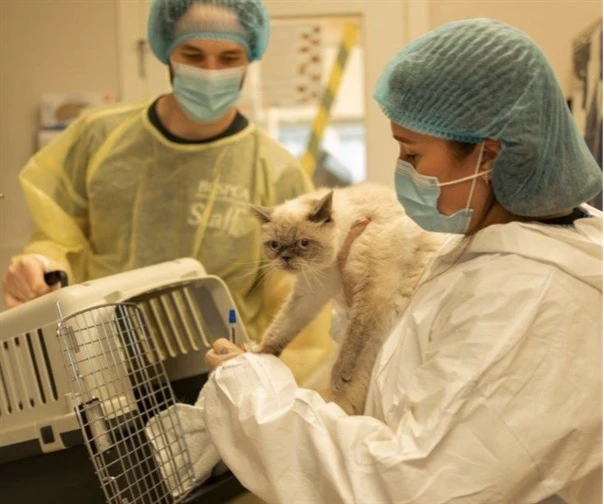
When Ellen took Jasper in, the exam wasn’t just a quick once-over. Dr. Vargas gently bent and extended Jasper’s legs, feeling for stiffness or swelling. Jasper flinched when his hips were touched, another clue.
An X-ray confirmed the suspicion: the smooth cushioning in Jasper’s hip joints had worn away, leaving bone grinding against bone. Bloodwork ruled out other illnesses that can mimic joint pain.
“It’s heartbreaking when we show owners the X-rays,” Vargas said. “They realize their cat has probably been dealing with this for a while.”
Treatment Is About Quality of Life
Once diagnosed, the focus shifts to keeping the cat comfortable and mobile. For Jasper, the plan was layered, diet changes to drop a pound or two, a prescription pain reliever, and something Ellen had never heard of before: Solensia, a monthly injection designed specifically for feline arthritis pain.
Dr. Vargas also suggested adding ramps to Jasper’s favorite spots, swapping his litter box for one with lower sides, and giving him a soft orthopedic bed. “These changes sound small, but for a cat with joint pain, they’re huge,” she said.
Advertisement
Other Tools in the Toolbox
Not every cat’s treatment is the same. Some get joint supplements with glucosamine and omega-3s. Others respond well to acupuncture or gentle massage. For overweight cats, a calorie-controlled diet is critical, even one extra pound can put a lot of extra strain on tiny joints.
The important thing, Vargas stressed, is that arthritis management isn’t one-and-done. “You don’t treat it for two weeks and walk away. This is about ongoing care, checking in regularly, and adjusting when the cat’s needs change.”
The Emotional Side of It
For Ellen, the hardest part wasn’t the vet visits or even the injections, it was realizing how much Jasper must have been hurting before she noticed. “I keep thinking, what if I’d brought him in sooner? Could I have spared him some pain?”
Dr. Vargas says that guilt is common, but misplaced. “Cats don’t make it easy to know when they’re hurting. What matters is that once you see the signs, you act.”
And Jasper’s improvement proved that action was worth it. Within a month, he was back on the couch, via his new ramp, and even batting at the laser pointer again. “He’s not the same as when he was five,” Ellen said, “but he’s happy. That’s all I care about.”
Why Early Diagnosis Matters
Left untreated, feline osteoarthritis can lead to severe mobility loss. Cats may stop moving as much, which can trigger weight gain, muscle loss, and even depression-like behaviors.
But with early diagnosis, many cats live comfortably for years. “I’ve seen 15-year-old cats still climbing and exploring because we caught it early and stayed on top of it,” Vargas said.
What Owners Should Watch For
Vets recommend regular checkups, at least once a year for younger cats, twice for seniors. Between visits, owners should keep an eye out for:
- Limping or stiffness, especially after rest
- Reduced jumping or climbing
- Sudden irritability or aggression
- Changes in grooming habits
- Sleeping in different, more accessible spots
“If something feels off, trust your gut,” Vargas said. “You know your cat better than anyone.”
Advertisement
The Bottom Line
Feline osteoarthritis is common, but it doesn’t have to mean the end of a cat’s playful, active life. With today’s treatments, from modern medications to simple home adjustments, owners have more tools than ever to keep their cats moving comfortably.
For Ellen and Jasper, the diagnosis was a turning point, not a sentence. “He’s still my boy,” Ellen said, smiling as Jasper curled into her lap. “Now I just make sure he can get where he wants to go without pain. That’s the least I can do.”
Because in the end, whether your cat is a kitten or a senior, seeing them limp or slow down isn’t something to shrug off. It’s a sign they’re asking for help, in the quiet, stoic way cats always do.
News Source @USAToday