
 Pet News

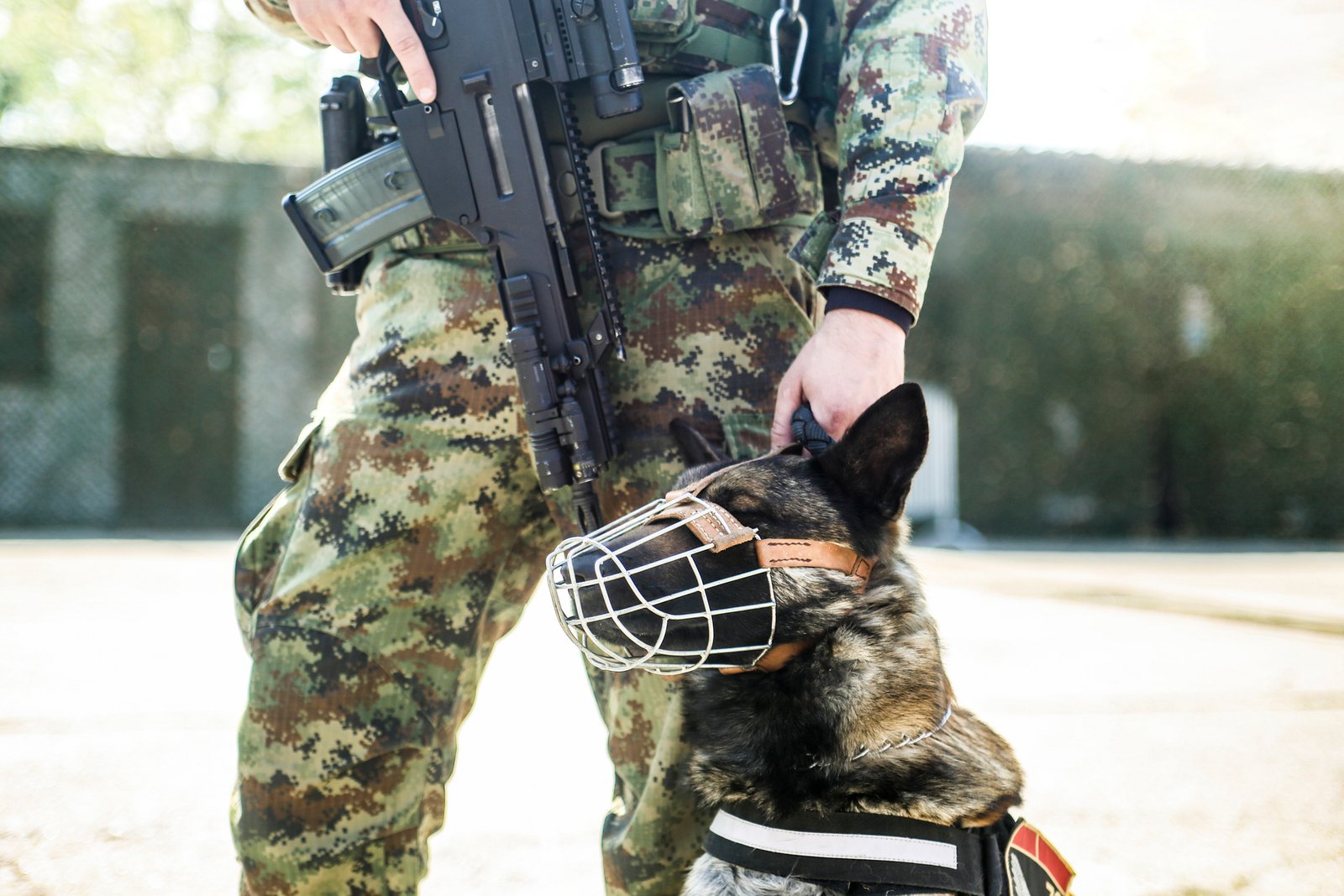
In the early hours of a cold February morning in 2023, Amani Hashash and her four children huddled in a bedroom of their home in the Balata refugee camp in the occupied West Bank. Outside, the sound of military boots and shouting filled the air. Israeli forces had begun yet another raid. Amani called out that her family was inside and unarmed. She hoped, desperately, that doing so would keep her children safe.
What happened next would haunt her forever.
Without warning, the door flew open. A large, unmuzzled dog charged in. Before Amani could react, it sank its teeth into her sleeping three-year-old son, Ibrahim. As the dog pulled the screaming child from her lap, she hit and kicked it, crying out for help. The soldiers stood there, seemingly unable, or unwilling, to intervene. By the time they dragged the animal off, Ibrahim was unconscious and bleeding heavily.
He was rushed to the hospital and into surgery. The doctors counted over a dozen deep wounds, one nearly seven centimeters wide. Ibrahim needed 42 stitches and 21 injections to fight a serious infection caused by the bites. More than a year later, he still wakes up screaming from nightmares.
This wasn’t a freak accident. It was part of a growing pattern that human rights groups say amounts to a deliberate tactic of psychological warfare and physical intimidation. According to new findings by The Guardian and Arab Reporters for Investigative Journalism (ARIJ), many of the attack dogs used in these operations are not bred or trained in Israel, but imported from Europe.
Yes, Europe, where human rights, democracy, and animal welfare are supposed to be non-negotiable values.
The specific breed identified by the Hashash family? The Belgian Malinois. A sleek, muscular dog once used for herding livestock, now repurposed into a weapon by Israel’s elite canine unit known as Oketz. Every year, roughly 70 new military dogs are added to Oketz. And according to a senior American researcher embedded with the Israeli army, 99% of them are bought from European suppliers.
That’s not speculation. That’s an admission the IDF has not even denied.
From the Netherlands to Germany and the UK, companies that specialize in training military and police dogs are exporting a steady supply of Belgian Malinois and German Shepherds, animals that are then trained for aggression in Israel and deployed in raids on Palestinian homes. And increasingly, these dogs are being turned on civilians, including children, pregnant women, and individuals with disabilities.
Take Muhammed Bhar. In July 2024, the young man with Down syndrome and autism was attacked in his home in Gaza City. His mother was forced out of the house by soldiers, who left him to die alone from his wounds.
Then there’s Dawlat Al Tanani, a 68-year-old woman in the Jabalia refugee camp, mauled in her home as caught on video by Al Jazeera. And Tahrir Husni, who was pregnant when a dog tore into her for over ten agonizing minutes. She miscarried shortly afterward.
Animal rights experts have condemned the practice as a violation of ethical norms. Dr. Jonathan Balcombe, an animal behaviorist, put it bluntly: “Dogs don’t choose to fight. They are made into victims of human violence.”
But it’s not just about the dogs. It’s about the systems behind them.
The Dutch watchdog Somo discovered that between October 2023 and February 2025, the Netherlands Food and Consumer Product Safety Authority issued 110 veterinary certificates to export dogs to Israel. Of those, 100 were for a single company, Four Winds K9, a well-known Dutch training facility. The company refused to comment.
In Germany, Diensthunde.eu confirmed that it exported both Belgian Malinois and German Shepherds to Israel. The company insists the dogs were intended for detection work only, not attacks. But how would they know? Once the animals leave their training center and cross borders, who’s responsible for what they’re used for?
That’s the crux of the issue.
Because under current EU export laws, military dogs are not classified as “canine weapons.” They’re not regulated as dual-use items. Which means there are no real checks in place, no obligation for governments to track how many dogs are exported or how they’re used once they arrive.
And Israel isn’t using them solely for bomb-sniffing or patrol duties. According to Euro-Med Human Rights Monitor, since the war in Gaza escalated in October 2023, there have been at least 146 documented cases of dogs being used against civilians.
In the West Bank, Palestinian NGO Al-Haq has logged 18 similar attacks. Amnesty International has called on international treaties to include military dogs as part of conventional weapons regulations. Because the status quo isn’t just negligent, it’s enabling abuse.
It gets worse. There are also allegations of dogs being used inside detention centers to terrorize prisoners. Former detainees told Physicians for Human Rights that dogs were ordered to maul them, even urinate and defecate on them. The United Nations says such actions constitute clear violations of international human rights law.
And still, the trade continues.
The UK has exported 294 dogs to Israel between February 2022 and December 2024. Officials say these were registered as pets, but don’t track the breed or their end use. Belgium and the Czech Republic also claim they have no knowledge of how the dogs they send are used.
How is that possible?
Richard Falk, a former UN special rapporteur, says it’s more than willful ignorance, it’s complicity. “Companies exporting these dogs know exactly how they are used,” he says. “That makes them part of the problem.”
The Israeli military’s response? The usual boilerplate. They claim dogs are only used under strict orders and not for “punitive purposes.” But that’s cold comfort to the families of children like Ibrahim, who wake up every day to the trauma carved into their bodies.
Let’s be honest: if any other country in the world weaponized dogs against children and elderly civilians, Europe would be leading the outcry. But in this case, European companies are fueling the violence. With every shipment of “trained” dogs sent to Israel, they’re helping militarize man’s best friend into a canine weapon of war.
If international law won’t catch up, if governments continue to dodge responsibility, then we’re left with one unsettling truth: this is not a loophole.
It’s a pipeline.
And the victims, on four legs or two, keep paying the price.
News Source @The Guardian