 Pet News




Cats are mysterious and appear to be self-sufficient, but they are not. Often they are misunderstood and their environmental needs are not met, which causes stress and stress-induced diseases such as lower urinary tract disease (feline idiopathic cystitis), and also upper respiratory tract and ocular diseases secondary to feline herpesvirus infection. Indoor cats often miss out on the natural stimulation that outdoor environments provide.
They can become bored without regular engagement, leading to behavioral issues and stress-related illness. Keeping your indoor cats entertained is essential for their mental and physical health. Here’s how you can enrich your indoor cats’ lives.
Why Indoor Cats Get Bored
Cats have retained many behaviors of their ancestor, the African Wild Cat; they are solitary hunters and solitary survivors, eat frequent small meals by themselves, and are very territorial and need to protect themselves. Cats are not small dogs or small people. Their instincts drive them to hunt, explore, and be very curious. While an indoor environment is safest for cats, it can sometimes lack the stimulation needed to satisfy these instincts. This lack of stimulation can lead to boredom and chronic stress.
Signs Your Cats Might Be Bored and Stressed
Recognizing boredom in cats is crucial to addressing it. Common signs include:
- Excessive grooming or over-licking, resulting in hairballs, baldness, and skin lesions
- Scratching furniture or walls
- Aggression
- Inappropriate urination
- Increased vocalization
- Restlessness or pacing
- Lack of interest in toys or usual activities
If you notice these behaviors, have your vet examine your cat, as sick cats often show very few clinical signs of illness. If your vet finds nothing amiss, it might be very helpful to introduce more engaging activities for your feline friend.
Advertisement
Ways to Keep Your Indoor Cat Entertained
Keeping your cats entertained doesn’t have to be complicated. With creativity, you can turn your home into a stimulating environment that keeps your cats happy and active.
Interactive Playtime
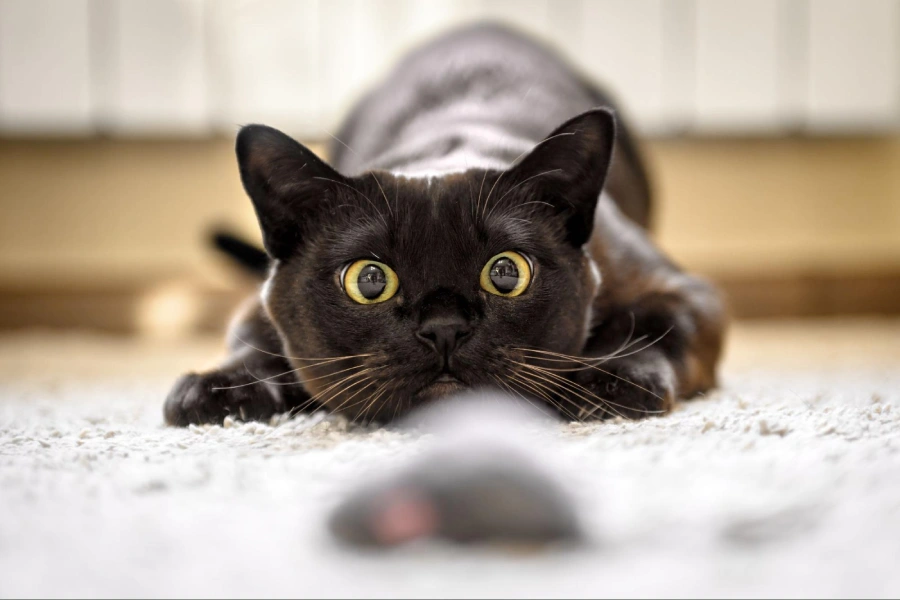
Invest in interactive toys like laser pointers, feather wands, or motorized toys. These mimic the movement of prey and stimulate your cat’s hunting instincts, providing mental and physical exercise. Note: never point the laser beam into the eyes of any pet or human.
For laser pointers, let your hunting cat be successful in capturing his “prey”! Incorporate the laser beam into mealtimes: after each time that you’ve sent your cat scrambling after the beam, send the beam to a single piece of food you have positioned for the cat to find.
Environmental Enrichment
Cats love to climb and observe their surroundings. Increase the vertical space– it allows cats to perch and oversee their domain and to look out windows at the outside world. You can also set up a bird feeder outside a window to entertain your cat.
Even for your indoor cats, you can provide enrichment with safe outdoor spaces, such as a catio or an outdoor cat tent, or free-standing cat fence enclosures to keep your cats in your yard.
Play Time
Does your cat want to play with you? Here’s how to know: Your cat wants your attention or wants you to know they feel secure with you if they come up you and blink at you. Purring and “chirping” are also used to seek attention from humans. So is bunting, where your cat pushes its head against your hands, wanting to be petted to to stay near you.
It is important for pet parents to play with their cats, and if they have multiple cats to play individually with each cat. Cats are hunters, so play time is hunting time. Pet parents need to provide an opportunity for their cats to play and express normal predatory behavior. Do not play using your hands as a play toy, as your cat will learn to “hunt” to get your fingers or hands.
To keep things fresh, rotate your cats’ toys regularly. Introducing “new” toys every few weeks keeps their interest piqued and prevents them from becoming bored with the same items.
Advertisement
Puzzle Feeders
Cats are solitary hunters and want to eat alone. Cats in the wild hunt 10 to 20 small meals each day. If your cats are fed together, they are stressed; they don’t want the other cats to eat their food so they eat fast and often regurgitate and become overweight. Feed your cats separately so they don’t have anxiety about sharing food resources.
Allow your cats to catch their “prey” after they have “hunted”. Puzzle feeders mimic how cats in the wild eat– one small solitary meal (i.e. one piece of kibble) at a time. Challenge your cats to “hunt” for their food. Feeders slow down eating, which supports natural feline behavior, benefits your cats’ digestion, and prevents obesity. Kibble is high-calorie food, so it is important to slow down mealtimes. Your goal is to use a puzzle feeder whenever feeding dry food. Cats will lose weight if fed using a puzzle feeder instead of a bowl.
Another boredom-buster is to feed your cats in high places, so they must scamper up and down a cat tree or window ledge to get the food. Or toss their kibble to make them run after it, which makes them successful hunters.
When Your Cats are Done Playing:
Most cats prefer to rest alone in a safe space that gives them control over their territory. Provide safe resting spaces both on and near the ground and vertically– at least one space per cat and sized to hold one cat. Provide the option for each cat to not be seen, such as the space being high off the ground with a good view of the surroundings, or a cat bed in a safe location with higher sides and/or a canopy.
Consistency is Key
It is important to be consistent in engaging your cats. Establish a routine that includes regular playtime, feeding schedules, and interaction. Cats thrive on predictability, and a consistent routine helps reduce anxiety and boredom.
Happy, Engaged Cats
Your cats need to express their normal behaviors in order to thrive and have their emotional needs met in your home. You can keep their curiosity and playfulness alive with suitable activities. By addressing your cats’ welfare, you are reducing anxiety, behavior problems, stress-associated diseases, and the number of vet visits. Incorporating these tips into your cats’ daily routine ensures that your indoor cats stay happy, healthy, and engaged.
For more tips on keeping your older pets healthy and happy, visit our guide to Caring for Your Senior Cat.

Pet Health Harbour is on mission to Educate, Empower, and Enable pet owners to maintain the health, wellness and well-being of their pets, and to be a trusted source of specialty health information for general practice veterinarians.
Pet Health Harbour is on mission to Educate, Empower, and Enable pet owners to maintain the health, wellness and well-being of their pets, and to be a trusted source of specialty health information for general practice veterinarians.