 Pet News




Halloween is fun and festive but can be a bit spooky for our pets. Many things could harm your furry friend, from costumes to tempting treats. Even pumpkins can be dangerous. Ensuring your pet’s safety during Halloween is essential. Here are some tips to help you keep your pet safe and stress-free during Halloween festivities.
Be Cautious with Costumes
While there are Federal flammability and lead level requirements for commercial Halloween costumes for children, there are none for pets. Dressing up your pet can be adorable, but ensuring their comfort and safety is essential.
Always supervise costumed pets, and never leave a costumed pet alone (or alone with your other pets). If you put a costume on your pet, other pets in the household might freak and even attack the costumed pet (or the costume itself).
Some pets may not enjoy wearing costumes, and forcing them into one can cause stress and anxiety. If you are planning to dress your pet in a costume, do a test run a few weeks before the big night. If your pet has flattened ears and shows other signs of distress and anxiety, take the hint and respect your pet’s choice to not wear a costume.
But if your pet is accepting of the costume, ensure it fits properly and does not restrict movement, breathing, hearing, or vision. Costumes should not cover the eyes or ears. Avoid costumes with tiny, dangling parts that could be chewed off and swallowed by pets and young children alike.
Anything put on or over the head can be pulled off by your pet or twisted and turned so that it could damage their eyes– especially flat-faced pets with prominent eyes such as French Bulldogs and Persian cats.
Don’t Take Your Dog Trick or Treating
Halloween is similar to the Fourth of July in that it can be very scary and stressful for your pets. So can the night of October 30th, which is a night of neighborhood jokes, pranks, and parties in some areas of the country.
Crate your pets or keep them secure in a room while you answer door bells and door knocks to hand out treats. Some pets require prescription medication and/or other calming strategies for this night of spooky fun, so plan ahead.
If your pet is unsecured, in the blink of an eye it could bolt and run out the door into the fearful night. If your pet is also costumed, ID tags should be clearly displayed and not hidden by the costume because if your pet bolts out the door, you want them to be found as soon as possible. Make sure your pet is microchipped and consider a wearable GPS tracking device.
There are too many unpredictable risks if you take your dog trick-or-treating, or just taking them for a walk on Halloween night. Your dog would have to contend with high-energy crowds and unfamiliar sights and sounds, such as strobe lights and ghostly sound recordings at front doors.
Groups passing by you in the dark might include their dogs, increasing the risk of dog fights and bites. Please don’t make your dog wear a costume during your walk; if your dog gets loose and runs away with a costume on, it increases the dog’s fear, confusion, and risk of being injured.
Advertisement
Keep Halloween Treats Out of Reach
One of the biggest dangers for pets during Halloween is the abundance of treats. Chocolate, candy, raisins, and other sweets can harm dogs and cats. So can the wrappers if ingested.
Sugar-free candies and gum containing xylitol are hazardous to dogs and can be fatal; xylitol quickly triggers excessive insulin release with hypoglycemia (low blood sugar), often within 15 minutes after ingestion and may include vomiting, diarrhea, ataxia, collapse, seizures, and coma.
Liver failure might also occur. If you suspect that your dog ate xylitol, don’t wait for signs of illness to show up. Immediately give your dog some sugar (such as Karo syrup or honey. (Do NOT give pancake syrup, as it might contain xylitol!), and call your veterinary clinic while you are loading your dog in the car to seek emergency care. Always keep Halloween candy securely stored.
Mind the Decorations
Halloween decorations and bags can also pose risks to pets. Tinsel and fake spiderwebs attract curious cats and can be harmful if ingested. Jack-o’-lanterns with candles can be a fire hazard if a curious pet knocks them over.
Electrical cords for lights and decorations should be kept out of reach to prevent chewing and potential electrocution. Dogs and cats can become ensnared in trick or treat bags with handles.
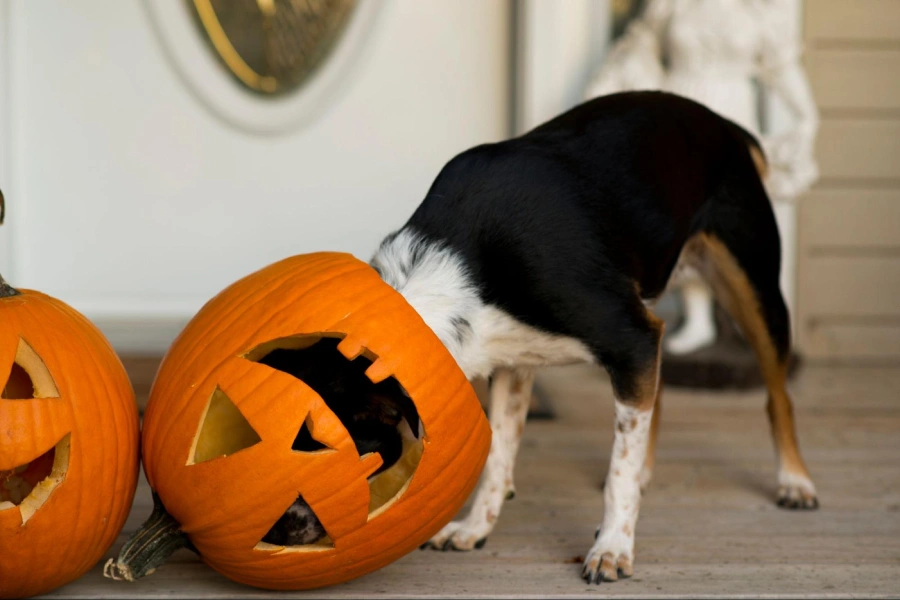
Curious dogs can get their heads trapped inside fake or real pumpkins (worse if there is a lit candle and/or hot wax inside the pumpkin), and also plastic pumpkin trick or treat buckets.
Pet Safety Checklist for Halloween
- Avoid Treats: Keep all Halloween treats, especially chocolate, raisins, and candy, out of your pet’s reach. As soon as those full trick or treat bags enter your home, sort and securely discard all hazardous treats.
- Costume Comfort: If your pet wears a costume, ensure it is comfortable and does not restrict movement or vision.
- Secure the Home: During peak trick or treating hours, keep your pet in a safe, quiet space.
- Safe Decorations: Use pet-safe decorations and avoid open flames and accessible cords.
Advertisement
Recognizing Signs of Stress
Even with all precautions, your pet may still feel stressed during Halloween. Signs of stress include excessive barking or meowing, pacing, hiding, and unusual aggression. If you notice stressful behaviors, try to soothe your pet with their favorite toy or a quiet space away from the action. You might also consider using calming aids like pet-safe pheromone sprays or anxiety wraps.
Enjoy a Safe Halloween with Your Pet
Halloween can be a fun time for you and a peaceful time for your pets if precautions are taken. Following these safety tips ensures that your furry friend stays happy, healthy, and safe during the festivities.

Pet Health Harbour is on mission to Educate, Empower, and Enable pet owners to maintain the health, wellness and well-being of their pets, and to be a trusted source of specialty health information for general practice veterinarians.
Pet Health Harbour is on mission to Educate, Empower, and Enable pet owners to maintain the health, wellness and well-being of their pets, and to be a trusted source of specialty health information for general practice veterinarians.