 Pet News




The holiday season brings joy and celebration, but it can also introduce risks for our furry friends. At Pet Health Harbour, we want pet parents to enjoy a safe and happy holiday with their beloved animals. Here’s a guide to common holiday hazards for dogs and cats and how you can keep them safe.
Dangerous Foods to Avoid
The holiday spread often includes foods that are toxic to pets. While it’s tempting to treat our pets to holiday goodies, certain ingredients can cause serious health issues. Do not leave wrapped food gifts under your Christmas tree.
- Chocolate: Contains theobromine, which is poisonous to dogs and cats.
- Onions, Garlic, and Chives: Common in holiday meals, these can damage red blood cells.
- Alcohol: Just a small amount can lead to vomiting, diarrhea, and more severe effects.
- Grapes & Raisins: Can cause kidney failure, especially in dogs.
- Foods That May Contain Xylitol: Candy, gum, pancake syrup, peanut butter, ice cream, yogurt, and protein bars and powders.
- Bones (cooked and raw)
- Uncooked Yeast Dough: It can ferment and expand in the stomach, causing bloat and discomfort.
- Macadamia Nuts
- Fatty Foods: It can cause pancreatitis, which is painful and can be a serious condition.
Hazardous Holiday Plants
Holiday plants add festive charm, but some are dangerous for pets. Be cautious when decorating with these popular plants:
- Poinsettias: Mildly toxic, causing stomach upset.
- Holly and Mistletoe: Both can cause gastrointestinal distress and, in severe cases, cardiovascular issues.
- Amaryllis: Mildly toxic, causing drooling, vomiting, diarrhea, and abdominal pain.
- Lilies: Particularly dangerous for cats, as ingestion of any parts of the plant (including pollen and even the water in a vase containing lilies) can lead to kidney failure.
Decorations and Pets: A Risky Combo
Decorations like tinsel, ribbons, and fragile ornaments may look inviting to your pet but can pose choking or poisoning risks.
Advertisement
Try to stick with the following kinds of ornaments:
- Non-Breakable: Made of durable materials like wood, fabric, or shatterproof plastic.
- Non-Toxic: Free of harmful paints, glues, or coatings.
- No Small Parts: Avoid ornaments with detachable or chewable pieces like beads, bells, or glitter.
- No Strings or Ribbons: Replace hanging strings with secure hooks or sturdy loops to prevent swallowing.
Key Hazards to Avoid
- Tinsel, Ribbons, and Garland: Cats are especially drawn to shiny objects, which can cause intestinal lacerations and blockages if ingested.
- Ornaments: Ornaments can be made of many different substances and can be choking hazards in addition to causing possible toxic side effects. Glass ornaments can shatter, leading to cuts or ingestion of small shards.
- Electrical Cords: Chewing on cords can result in electric shock or burns. Be sure to secure and hide these whenever possible.
How to Keep Your Pets Safe
Preventing accidents starts with awareness and a few precautionary steps:
- Keep Toxic Foods Out of Reach: Store leftovers promptly and avoid leaving food within reach of pets.
- Secure Decorations: Place fragile ornaments high up and avoid tinsel if you have cats.
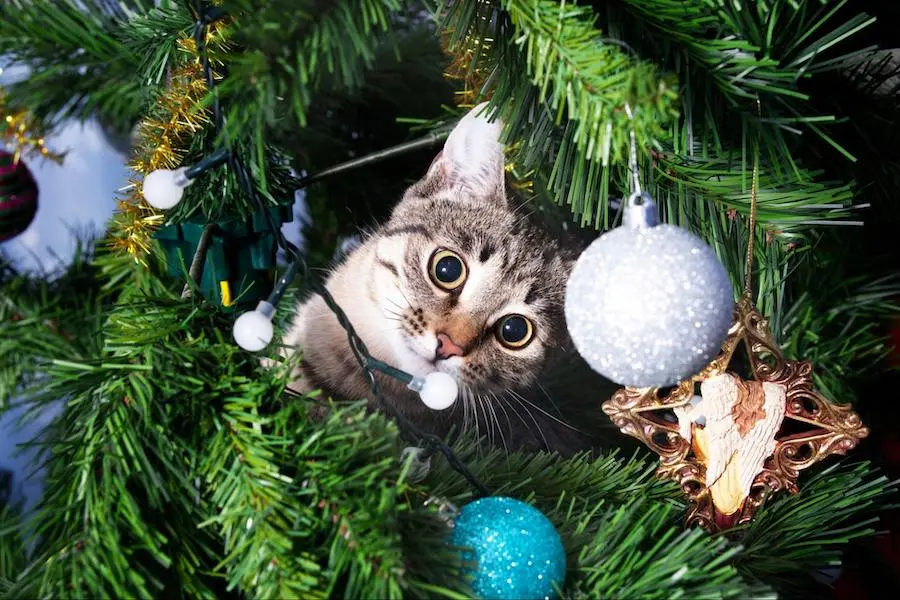
- Try to Keep Cats Out of the Christmas Tree: Use a sturdy tree stand and a weighted base, in case cats attempt to climb the tree. Use a citrus-scented spray or orange or lemon peels near the base of the tree, as cats dislike this scent. Wrap the base of the tree with aluminum foil or double-sided tape.
Place a cat tree or perch nearby so your cat can observe the tree without interfering.
- Keeping Cats Out of Indoor Displays: Strategically place double-sided tape around the perimeter of the display.
- Batteries Not Included: Secure your pets before installing batteries in decorations, and in those gadgets and toys under the Christmas tree. Ingestion of batteries by pets and small children can be deadly, by causing internal burns, poisoning, and “tangling” of the GI tract.
- Monitor Pets Around Guests: With extra people in the house, pets can be over-excited or stressed. Give them a quiet space to retreat.
Advertisement
Pet Health Harbour: Supporting Your Pet’s Safety Year-Round
At Pet Health Harbour, we care about your pets’ well-being every day of the year. By recognizing these common holiday hazards, you can make simple adjustments to keep your pets safe and happy during the season. For more pet safety tips, visit the Pet Health Harbour blog page and ensure your holiday remains a joyful time for all.

Pet Health Harbour is on mission to Educate, Empower, and Enable pet owners to maintain the health, wellness and well-being of their pets, and to be a trusted source of specialty health information for general practice veterinarians.
Pet Health Harbour is on mission to Educate, Empower, and Enable pet owners to maintain the health, wellness and well-being of their pets, and to be a trusted source of specialty health information for general practice veterinarians.