 Pet News



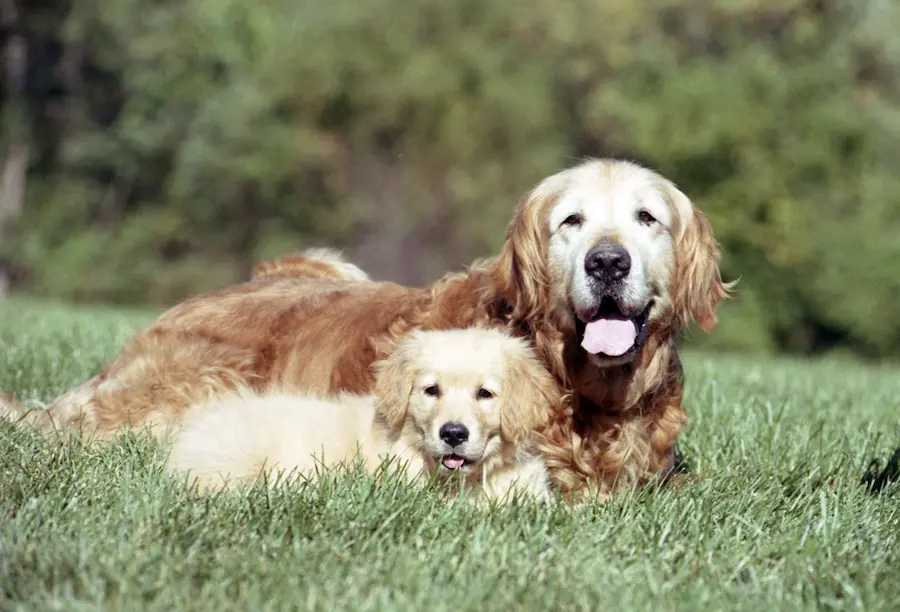
Many Golden Retrievers have a threat to their vision that most of their pet parents are unaware of: Golden Retriever Pigmentary Uveitis (GRPU), which can lead to blindness, discomfort, and even surgical removal of one or both eyes if not diagnosed early or if left untreated. Because GRPU is widespread, it is essential for owners of Goldens to know about the condition.
What Is Golden Retriever Pigmentary Uveitis?
Uveitis is inflammation of the uvea, which is the vascular brown tissue inside the eye including the iris. Uveitis can lead to a cascade of problems, including cataracts, glaucoma, and vision loss. GRPU is a pigmenting disease, meaning it causes dispersion of dark brown pigmented uveal cells within the eye that can block fluid circulation inside the eye and cause glaucoma, which is increased intraocular pressure (IOP).
GRPU primarily affects Golden Retrievers and Golden mixed-breed dogs. It affects both eyes. While dogs are typically diagnosed between 8 and 10 years of age while in crisis in later stages of the disease, GRPU actually starts years earlier.
Advertisement
Cause
GRPU is thought to be inherited in an autosomal dominant pattern with incomplete penetrance, which means that only one parent’s gene is needed to pass on the disease, but not all dogs with the gene will have the condition.
Many affected dogs have been traced to a common lineage in the Northeastern United States in the 1990’s. The disease spread widely, likely due to the lack of early diagnoses and late onset of noticeable clinical signs (i.e. affected dogs are bred before it is known that they have GRPU).
How common is GRPU? The national prevalence in dogs greater than 8 years of age is nearly 24%. So one out of every four Goldens!
Clinical Signs
One of the most concerning aspects of GRPU is that early signs are subtle, often going unnoticed by pet parents or general practice veterinarians (GPDVMs) until the disease is advanced. Common signs include:
- Cloudy or red eyes: Often mistaken for allergies, intermittent redness can be an early sign of GRPU. Cloudiness can be due to secondary complications such as fibrin (inflammatory cells and protein inside the eye), cataracts, and/or glaucoma.
- Pigment deposits on the lens: Brown flecks or spoke-like patterns on the anterior lens capsule are a hallmark of the disease.
- Low intraocular pressure (IOP): Early stages are often associated with low IOP.
- Iris cysts: Tiny fluid-filled sacs inside the eye serve as a “red flag” for GRPU.
- Reduced or absent vision: If one eye is blinded by GRPU but the other eye is visual, pet parents might not notice any issues with vision until the second eye is in crisis.
- Glaucoma: Increased IOP is a late-stage complication that causes blindness if advanced and uncontrolled. Pain from advanced glaucoma is typically a deep headache-like pain, expressed as lethargy and/or sleeping more often.
Sadly, many affected dogs are first presented to a veterinary ophthalmologist in the later stages of GRPU during a crisis, when vision is already severely compromised or permanently lost. This is especially tragic if the dog is a service dog.
If your Golden has chronically red eyes, do not assume this is allergies, even if your GPDVM says it is, and even if topical anti-inflammatory eye drops “get the red out”. PLEASE have your dog examined by a board-certified veterinary ophthalmologist to rule out GRPU!
Diagnosis
Diagnosing GRPU requires specialized equipment and a board-certified veterinary ophthalmologist. General practice veterinarians (GPDVMs) are unlikely to be able to detect early signs or differentiate GRPU from other conditions (such as allergies), but usually are able to measure IOPs.
Advertisement
Treatment
While there is no cure for GRPU, early detection and lifetime treatment can save vision. Treatment depends on the disease stage, focusing on ophthalmic and oral anti-inflammatory medications. All affected dogs should also have their IOPs monitored regularly and be placed on lifetime antioxidant vision supplementation containing ingredients known to support retinal and lens health, reduce inflammation, and be neuroprotective to support the optic nerve if secondary glaucoma is present.
Dogs diagnosed in the early stages of GRPU typically maintain their vision if they remain under the care of an ophthalmologist and if the pet parent is compliant with lifetime treatment and the reexamination schedule. Dogs diagnosed in later stages are at high risk to develop irreversible blindness due to secondary cataract formation and/or glaucoma. Cataract surgery is not possible because the eyes are too compromised. If glaucoma cannot be medically controlled and the eye(s) are blind, surgical removal of the eye(s) is the most common treatment.
Prevention
Reducing the prevalence of GRPU in Golden Retrievers hinges on responsible breeding and vigilant care:
- Annual eye exams: The Golden Retriever Club of America recommends lifetime annual OFA Eye Certification Registry (ECR) exams by veterinary ophthalmologists for all adult Golden retrievers.
- Genetic research: Supporting research efforts can help in the development of DNA tests for GRPU.
- Breeding practices: Avoid breeding affected dogs or those with a history of iris cysts or other GRPU risk factors.
Living with GRPU
Owners of affected dogs should maintain regular follow-ups with a veterinary ophthalmologist, adhere to prescribed treatments, and monitor for signs of discomfort or vision changes.
Golden Retrievers with GRPU can lead fulfilling lives, even if vision is lost. Low-vision and blind dogs still enjoy playing with sensory toys with enhanced scent and/or sound. If some vision is still present, blue toys work best.
However, pain from advanced and uncontrolled glaucoma must be managed surgically to ensure a good quality of life. Blind dogs adapt remarkably well to stable environments with consistent routines, even if both eyes need to be surgically removed.
Conclusion
Golden Retriever Pigmentary Uveitis is a serious and complex disease, but early detection and lifelong management can make a significant difference. As a Golden owner, being proactive with annual eye exams by a veterinary ophthalmologist and supporting genetic research can help protect your dog’s vision and contribute to the long-term health of the breed. By working together, pet parents, veterinarians, and researchers can combat this silent threat to these wonderful dogs.
Please visit Pet Health Harbour to read our in-depth article about GRPU

Pet Health Harbour is on mission to Educate, Empower, and Enable pet owners to maintain the health, wellness and well-being of their pets, and to be a trusted source of specialty health information for general practice veterinarians.
Pet Health Harbour is on mission to Educate, Empower, and Enable pet owners to maintain the health, wellness and well-being of their pets, and to be a trusted source of specialty health information for general practice veterinarians.