 Pet News


In a startling moment during ABC’s presidential debate on September 10, former President Donald Trump revived a sensational, but entirely undocumented, claim that Haitian immigrants in Springfield, Ohio, have been stealing and eating neighborhood pets. “In Springfield, they are eating the dogs. The people that came in, they are eating the cats… they’re eating the pets of the people that live there,” Trump asserted, stirring outrage and confusion worldwide.
No Credible Evidence – Officials Speak Out
City officials and law enforcement in Springfield were quick to debunk the accusation. The BBC Verify team confirmed there have been “no credible reports” of Haitian immigrants harming pets. Similarly, Springfield Police, backed by city leaders, stated there’s no evidence supporting the sensational claims.
Yet, despite emphatic denials, the tweet has racked up over 11 million views, thanks in part to amplification from Republican figures like Senate candidate JD Vance and Right-wing influencers.
The Rumor Mill Behind the Myth
How did this bizarre tale begin? According to BBC’s fact-checking, it appears to have originated after a late‑August Springfield city council meeting. A self-described social‑media influencer made various accusations, like Haitians hunting park ducks, without evidence. Another rumor claimed a neighbor’s cat went missing, reportedly taken for food, again, with no verifiable trace.
A separate incident involving a woman in Canton, Ohio, about 170 miles away, who allegedly killed and ate a cat, became erroneously conflated with these rumors. Canton police confirmed the suspect was U.S.-born, not Haitian.
Reddit posts surfaced showing a man carrying what looks like a dead goose in Columbus, but this was unrelated to the Springfield controversy.
When Media Channels Add Fuel
Once Trump repeated the claim on stage, it took on new life. Vice-presidential candidate JD Vance echoed it on X, later remarking it was “possible” the rumors were false, yet he urged followers to “keep the cat memes flowing”.
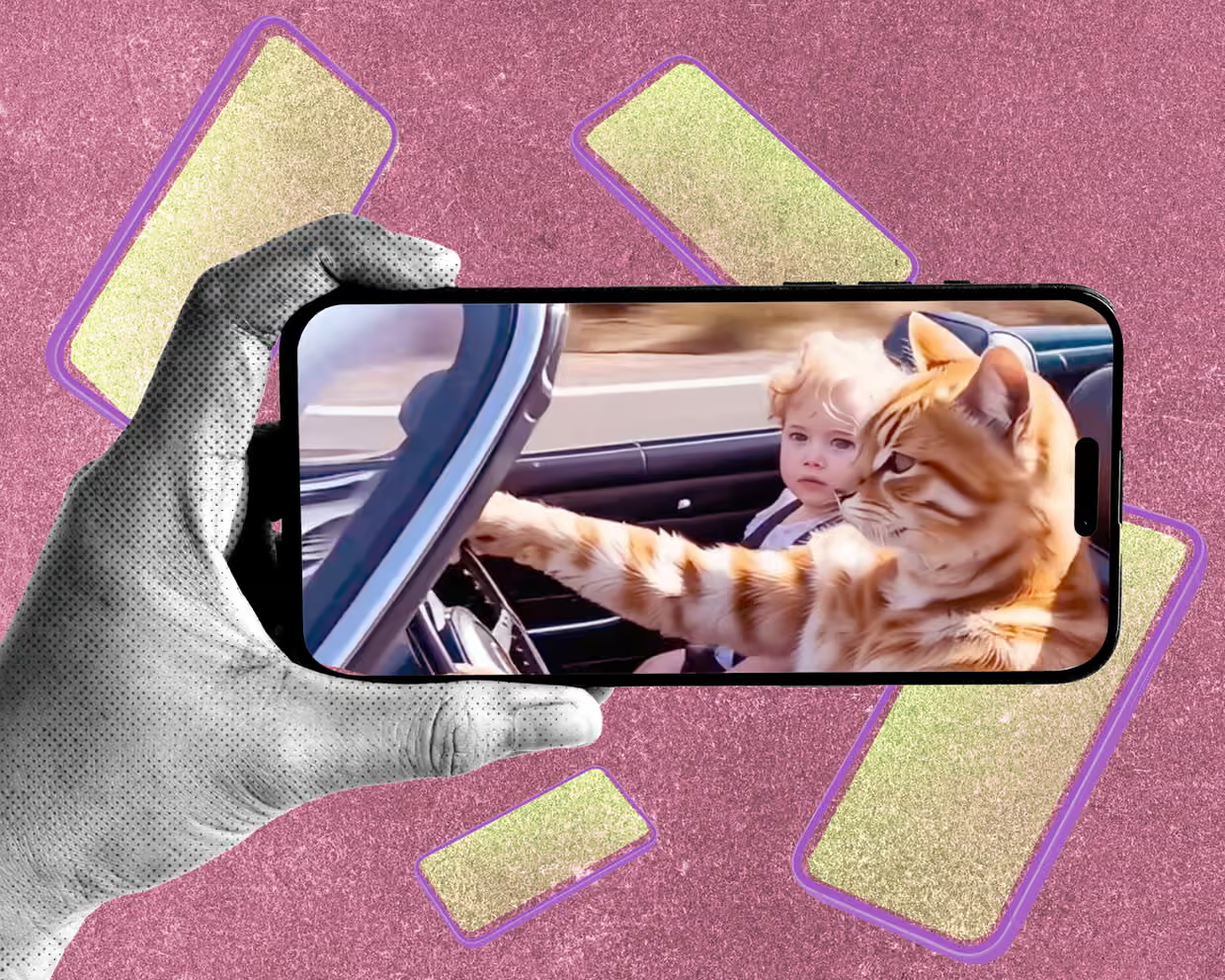
Elon Musk also posted memes referenced by Trump and Vance, gaining wide circulation . Even the Republican House Judiciary Committee ran a post with an AI-generated image of Trump hugging pets and the caption “Protect our ducks and kittens in Ohio!”, seen nearly 70 million times.
Stereotypes That Never Die
Experts say the myth is rooted in a long history of xenophobic propaganda, used repeatedly to paint newcomers as savage or “other.” NPR notes the stereotype of immigrants eating cats and dogs has been leveraged for decades.
The Washington Post highlights how Trump’s claims echo age-old anti-immigrant tropes used against Chinese, Italians, and more. The underlying message? If you don’t conform to our norms, even in what you eat, you’re not welcome.
The Human Toll on Springfield’s Haitian Community
While the rumors gained momentum, the Haitian community in Springfield endured escalating threats. According to The New Yorker, activists received bomb threats, neighborhoods were put on alert, and schools evacuated students. A spokesperson from the Haitian Bridge Alliance described the wave of hostility as “ignorant” and emotionally distressing.
Despite these challenges, Haitian residents have played a vital role in revitalizing Springfield’s local industries and stabilizing its population after decades of decline.
What It Reveals About Political Messaging
Eater magazine takes a broader look, showing how these outrageous claims, rooted in disgusting food-based stereotypes, are used to dehumanize immigrants for political gain. Even mainstream fact-checkers like Snopes and Politifact branded the narrative as baseless or false, with the latter calling the allegations Trump and Vance made “Lie of the Year
Politically, this tactic fits a well-worn pattern: portray immigrants as threats, stoke fear, and position yourself as the sole protector of “normal” society, while bypassing actual data or evidence.
The Bigger Picture: Springfield, Immigration, Politics
Springfield, a Rust Belt city of about 60,000, has welcomed thousands of immigrants, including up to 20,000 Haitians, in recent years. The arrival has stabilized both the workforce and population, yet strains on housing, schools, and healthcare have emerged .
Senator Vance, who hails from Ohio, has focused heavily on Springfield in his campaign. Although he later conceded that the rumors “might be false,” he maintained that raising them was crucial to highlighting local concerns, and committed to keeping the cat memes circulating.
Why It Matters: Social Responsibility in a Viral Age
Rumors migrate faster online than ever. One local Facebook post can trigger national headlines. But spreading unverified claims, especially those with racial or xenophobic undertones, comes with real consequences.
Springfield closed schools and activated law enforcement. Haitian community members feared for their lives. And through it all, the truth remained clear: no credible evidence supports the claim about pet-eating.
When leaders recycle conspiracy theories, even with the disclaimer “maybe false,” they normalize misinformation. It becomes harder to know what’s true in an already polarized climate.
Final Thoughts
Here’s the heart of it: sensational rumors spread rapidly, but responsibility doesn’t. Public leaders must verify before repeating. Audiences must question before retweeting.
Springfield, and many cities like it, deserve better. Immigrant communities deserve protection, not suspicion. With every unchecked rumor, trust frays further.
Whether you laughed at a meme or scrolled past a viral post, it’s worth asking: “Is this really true? Who benefits from this fear?”
Let’s hope we reach a day when facts matter more than fear.
News Source @BBC