 Pet News




Moving to a new home is a major life event, full of excitement and challenges. For our pets, though, this transition can be very stressful and confusing, and there is often a long adjustment period in the new home. It takes people three to six months or more to adjust to a new home, and the same is probably true for your pets. They may not show it, but they are feeling it! Plus your pet knows when you are stressed (and you WILL be stressed!), and this magnifies their anxiety.
Cats and dogs are creatures of habit, and they thrive on the familiar – whether it’s their favorite sunny spot by the window or the smell of their bedding in a well-loved safe spot. When these familiar environments change, it can cause anxiety and behavioral issues. Fortunately, there are several steps you can take to prepare your dog or cat for the move, making the transition smoother for everyone.
In this post, we’ll walk you through practical tips for preparing your pets for a move, ensuring that they feel safe and comfortable every step of the way.
For more advice on how to help your pet deal with stress, check out our blog “Paws & Reflect: Mental Health Awareness for Pets”.
1. Plan Ahead: Reduce Stress by Gradual Preparation
The key to helping your pet adjust to a move is to start preparing well in advance. This will allow your dog or cat to get used to the changes at a slower pace, minimizing anxiety.
It is essential to have your pets microchipped and wear collars or harnesses with ID tags, because your pet could escape at any time before, during, and after the move. Subscribe to become a member of PetHealthHarbour.com to set up the Lost Pet service in your customizable pet Portal Home. You receive your pet’s custom QR code (that you can download and engrave on an ID tag or print on a harness of your choosing) and you can fill out the “Lost Pet” template with the information you want to post on a flyer– printed or online.
Consider using a calming supplement. A good choice for dogs and cats is Zylkene®, which is a milk protein that helps reduce anxiety.
For Dogs:
- Maintain Routine: Dogs are highly sensitive to changes in their daily routine. As you prepare for the move, try to keep their feeding, walking, and play schedules as consistent as possible.
- Get Your Dog Used to the Carrier: Make it your dog’s safe and happy space, with treats and toys and bedding.
- Familiarize with Moving Supplies: Begin packing gradually rather than all at once. Introduce your dog to moving boxes and suitcases over time so they aren’t alarmed when things start disappearing from their usual environment.
- Use Calming Pheromones: Consider using calming aids like Adaptil, a synthetic version of the calming pheromones that mother dogs release. This can help create a more relaxed environment before, during, and after the move.
For Cats:
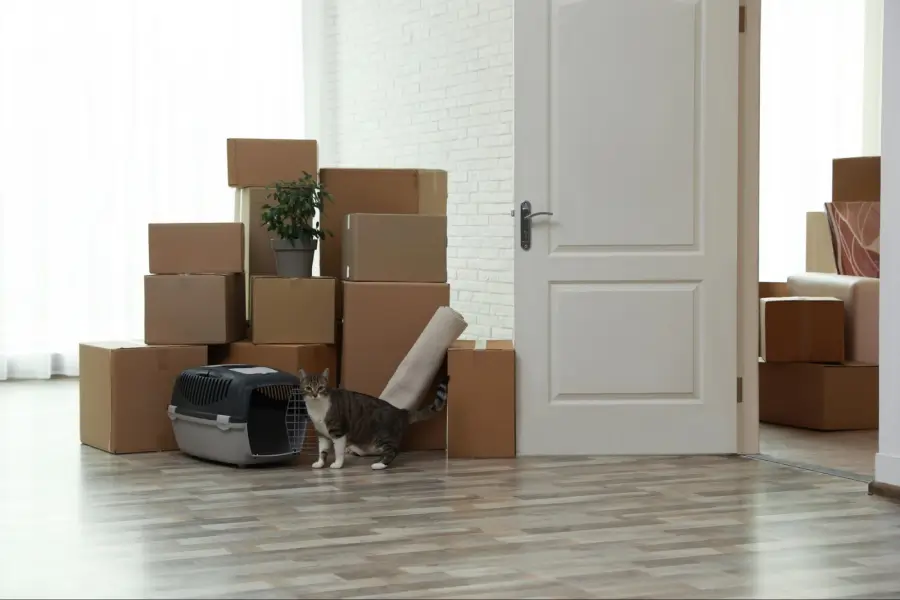
- Introduce Moving Supplies Slowly: Like dogs, cats should be introduced to moving supplies early. Let them explore the boxes and suitcases to reduce their fear of new objects.
- Use Calming Pheromones: Products like Feliway, which mimic calming feline pheromones, can be helpful to reduce anxiety in cats before, during, and long after the move (cats usually take a long time to settle into a new home).
- Get Your Cat Acclimated to the Carrier: Acclimate your kitty to the carrier by training the cat to use it at home as a “safe space”, where they receive refuge and treats. You can also spray the carrier with Feliway as needed.
- Store Your Cat’s “Happy” Scent and Pheromones: Prior to the move and when your cat is relaxed and calm, gently rub a few cloths over its flank and face to harvest the odors, and seal the cloths in a bag. After the move but before bringing your cat into the new home, rub one of the cloths on furniture in the quiet room where you will first place your cat (save the other to use as needed). Also save and bag some items that carry the cat’s scent, such as unwashed beds or blankets (do not wash them before the move!)
- Do You Know Where Your Cat Is?: Cats desperately need to hide from the chaos, and will find small spaces in open boxes and also recliners that then get packed up and loaded– plus the cat— on the van.
- Create a Sanctuary: During and after a move, cats are displaced from their territory. They lose their level of predictability and control, which is very stressful. As you start packing, acclimate your cat to the cat carrier. Set up a quiet, familiar space in a closed room when things get busy. Include their favorite toys, bedding, and litter box to create a safe space. Plan to recreate this sanctuary in your new home; get it set up in a quiet room and the Feliway diffuser plugged in and running before your cat crosses the threshold.
2. Packing for Your Pet: What to Keep Handy
As you pack for the move, it’s essential to create a “pet essentials kit” that will be easily accessible during the move and in the first few days in your new home. This kit should include:
- Food and water bowls
- Enough food for several days
- A “pop-up” place to both hide and restrict roaming (for cats and small dogs)
- Your pet’s favorite toys, blankets, and bedding
- Medications and supplements (if any)
- Litter box (for cats) or waste bags (for dogs)
- Two or more towels for spills, and to help create a hiding place (for cats)
- Scratch pad or post (for cats)
- Any grooming supplies or hygiene products
Having these items on hand ensures your pet will have familiar comforts during the transition and reduces the risk of added stress in unfamiliar surroundings.
It’s also important to have a pet essentials kit for emergencies, which you can read more about here.
Advertisement
3. Before the Move: Visit the Vet
A veterinary visit prior to the move is a good idea for many reasons. Your pet may need a health certificate and vaccinations prior to the move. Get them microchipped too. It is also good to get refill prescriptions to tide you over until you can find a new veterinarian after your move. If your dog or cat experiences significant anxiety, your pet may need short-term anti-anxiety medication to help them through the moving process and for several weeks after the move. However, some medications take four to six weeks to become effective, so give yourself adequate time and see your vet at least 2 months prior to the move. And if a chronic health condition is present, additional planning and time will be needed.
- Update Identification: Make sure your pet’s microchip information and ID tags are updated with your new address and contact information. This is critical if your pet gets lost during the move.
- Obtain Veterinary Records: If you’re moving to a new area, ask your vet for a copy of your pet’s medical records to share with a new veterinarian.
- Travel Advice: Discuss how your pet will travel. If they haven’t traveled long distances before, ask your vet about the best ways to ensure their comfort, whether by car or plane.
4. Moving Day: Minimize Stress During Transport
On the day of the move, it’s important to keep your pets safe, secure, and calm. Here are some tips for handling the big day:
For Dogs:
- Keep Your Dog in a Quiet Room: If possible, keep your dog in a quiet room away from the main activity while movers load boxes and furniture. You can also consider boarding your dog for the day if they’re particularly anxious.
- Travel Safely: When it’s time to transport your dog, secure them in a travel crate or with a pet seatbelt. Bring along familiar items like their blanket or a favorite toy to keep them comforted during the journey.
For Cats:
- Confine Your Cat: Cats are more prone to stress during moves, so it’s best to confine them to a single room or place them in their carrier in a quiet, secure space. Some owners find that boarding their cat for the day is the safest option.
- Use a Carrier: Transport your cat in a well-ventilated, comfortable carrier. Line it with a familiar blanket and use calming sprays to help reduce anxiety during the journey. For Feliway spray, spray all eight corners of the carrier once, and wait 15 minutes prior to placing the cat inside.
Advertisement
5. Settling into Your New Home
Once you arrive at your new home, the adjustment process truly begins. Your dog or cat will need time to acclimate to their new surroundings.
For Dogs:
- Introduce One Area at a Time: Rather than letting your dog have free rein in the entire house, introduce them to one room at a time. Start with a quiet, safe space with their bed and toys, and gradually allow them to explore other areas.
- Stick to Routines: Maintaining their usual routine in the new home (feeding, walking, playtime) will provide a sense of stability and comfort.
- Walk the Neighborhood: Once your dog is comfortable indoors, take them on walks around the neighborhood. This will help them get familiar with their new environment and work off any excess nervous energy.
For Cats:
- Start in One Room: At first limit your cat to a single quiet room (this might take several days) with familiar items like their bed, toys, litter box, and scratching post. Then let them explore the rest of the house gradually in peace at their own pace.
- Strangers Again: If there are two or more cats that were moved at the same time, keep them in separate “sanctuary” rooms at first, because the cats will smell differently and stress differently and might be antagonistic
- Maintain Familiarity: Keep as many familiar items as possible, such as your cat’s favorite blanket or scratching post, to help them feel more at home.
6. Watch for Signs of Stress
Finally, it’s important to monitor your pet for any signs of stress or anxiety during and after the move. Some common signs include:
- Increased hiding (in cats) or clinginess (in dogs).
- Excessive grooming or licking.
- Aggression or fearfulness.
- Toileting outside the litter box (in cats) or accidents in the house (in dogs).
If you notice these behaviors, monitor your pet closely, as they may require veterinary attention. Most pets adjust within a few weeks, but if symptoms persist, consult your veterinarian for advice on how to ease the transition.
But if you notice any of the following, your pet may require urgent veterinary attention.
- Straining to defecate. Cats especially can get constipated from inadequate water intake).
- Straining to urinate.
- Changes in appetite.
- Vomiting.
A special note about cats: they often come down with an upper respiratory tract infection (URTI) 2-4 weeks after a major stressor—and moving ranks right up there. The stress of moving begins at different points for each cat– for example, some cats are OK when you start boxing up your stuff for the move, but other cats are mightily triggered by this action.
Signs of a URTI include sneezing, squinting, nasal and/or ocular discharge, lethargy, and poor appetite. The cause is reactivation of dormant feline herpesvirus. This virus infects almost every kitten and then remains in a dormant state in the body forever unless the cat is stressed– then it flares up again and can affect the upper respiratory system and/or the surface of the eyes. Besides seeking veterinary care, managing stress is critical for these cats.
Advertisement
Conclusion
Moving with pets can be a daunting task, but with careful preparation and patience, it can be a smoother transition for all family members. By keeping your pet’s routine as consistent as possible, creating a safe space, and giving them time to adjust to their new environment, you’ll help them feel secure and at home in no time. Remember, your pet knows you and your stress, and reacts with anxiety if you are anxious. They look to you for comfort and guidance—so a calm, reassuring approach will go a long way in transforming your new home into your pet’s happy home.

Pet Health Harbour is on mission to Educate, Empower, and Enable pet owners to maintain the health, wellness and well-being of their pets, and to be a trusted source of specialty health information for general practice veterinarians.
Pet Health Harbour is on mission to Educate, Empower, and Enable pet owners to maintain the health, wellness and well-being of their pets, and to be a trusted source of specialty health information for general practice veterinarians.